The Anqing Uprising of 6 July 1907 was the most spectacular pre-revolutionary attack on the late-Qing Manchu establishment before the 1911 Xinhai Revolution itself. The rising was organised by Xu Xilin (1873-1907), a Zhejiang revolutionary who had purchased an official rank in order to insert himself into the Anqing provincial gendarmerie as the supervisor of the police academy, and who used the occasion of the academy’s graduation ceremony to lead a small body of cadets in an attempt to seize the provincial arsenal and assassinate the Manchu provincial governor of Anhui, En Ming. The attempt failed within four hours, and Xu was captured, mutilated, and executed the next morning by the slow-slicing ritual, with the heart and the liver cut from his body by En Ming’s bodyguards and eaten in the courtyard of the yamen. The uprising was a tactical disaster and the event that exposed the Guangfuhui (Restoration Society) networks to Qing repression, and the uprising was the event that directly led to the arrest and the execution of Qiu Jin on 15 July 1907 at the Shaoxing county seat. But for all of its tactical failure, the Anqing Uprising was a pivotal moment in the broader history of the late-Qing revolutionary movement, and the uprising established the operational vocabulary of the later risings of 1907-1911 that would eventually topple the dynasty. The Anqing Uprising is, in sum, the moment at which the late-Qing revolutionary movement first seriously attempted the overthrow of the Manchu establishment through a coordinated provincial rising, and the uprising is the event that decisively shaped the subsequent politics of the revolution.
The Anqing Uprising has also attracted extensive attention in the standard historical accounts of the late-Qing revolutionary movement, and the uprising is the subject of a substantial body of biographical and historical literature. The Chinese-language sources include the biographies of Xu Xilin, the histories of the Guangfuhui, the histories of the Anhui provincial administration, and the martyrological literature that developed in the immediate wake of the execution. The Western-language sources include the histories of the late-Qing revolutionary movement by Mary Backus Rankin and others, the biographies of Xu Xilin and Qiu Jin, and the cultural-historical literature on the late-Qing revolutionary movement. The accounts of the uprising in the Chinese and Western sources are, on balance, the most detailed of any of the pre-revolutionary incidents of the late-Qing period, and the accounts form the documentary basis of the subsequent historical literature on the uprising.
Why the late-Qing reforms could not defuse the revolutionaries
To understand why a capable, well-funded provincial administrator like Xu Xilin chose the path of revolt rather than reform, one has to take seriously the limitations of the late-Qing reform programme of 1901-1911. The reforms, often collected under the umbrella of the so-called New Policies (Xinzheng) of the late Qing, were a wide-ranging effort by the Guangxu emperor’s regent, the Empress Dowager Cixi, to modernise the late-Qing state in the wake of the Boxer disaster of 1900. They included the abolition of the imperial examination in 1905, the establishment of modern schools and modern provincial assemblies, the creation of a new provincial gendarmerie and a new provincial army, the opening of railways and the establishment of provincial chambers of commerce, and the gradual introduction of constitutional structures in 1908 and 1911. The reforms were, on paper, the most consequential programme of internal modernisation that any late imperial Chinese government had undertaken in nearly two centuries.
But the reforms were deeply unsatisfying to many of the young activists who had been politically formed in the late 1890s and early 1900s. The reforms were slow in their implementation, fragmented in their administration, and never convincingly addressed the central question of Manchu domination. The provincial assemblies established in 1907 had, in the standard accounts of the period, only consultative functions and no fiscal powers, and the provincial assemblies were widely regarded by educated Chinese as Potemkin facades for the unreformed core of Manchu autocracy. The new provincial armies that the reforms established (the so-called New Armies, or Xinjun) were, in the standard accounts, modern on paper but staffed by large numbers of officers who retained substantial loyalty to the Manchu establishment, and the New Armies were widely viewed as inadequate vehicles for a serious revolutionary effort.
The reforms were also, in the standard accounts, deeply disappointing to those who had hoped for an end to Manchu domination rather than merely a restructuring of the Manchu state. The Empress Dowager Cixi, who had the political power to compel or to command the reforms, had been the principal obstacle to the Hundred Days Reform of 1898, and the Empress Dowager Cixi had been the principal force behind the conservative reaction of the late 1890s. The Empress Dowager Cixi was, in the standard accounts, viewed with deep suspicion by the substantial educated youth of the period, and the Empress Dowager Cixi was viewed as the principal obstacle to a serious reform programme. The reforms, in short, were widely regarded by the substantial revolutionary networks of the period as too little too late, and the reforms were widely regarded by the substantial educated youth as the principal instrument of a continuing Manchu autocracy under a more modern guise.
The substantial educated youth of the period had, in the standard accounts, been politicised by the reforms as much as by the failures of the reforms, and the substantial educated youth had been radicalised by the substantial experience of studying abroad in Tokyo and Paris. The substantial educated youth had returned to China in the substantial thousands, and the substantial educated youth had brought with them a substantial body of revolutionary ideas that had been developed in the substantial exile communities of the period. The substantial educated youth had been the principal cadre of the Guangfuhui and the Tongmenghui networks, and the substantial educated youth had been the principal support of the Anqing Uprising and the associated coordinated risings of the period.
The Guangfuhui and the Zhejiang revolutionary tradition
The Guangfuhui (Restoration Society), the network to which Xu Xilin belonged, was founded in 1904 in the substantial Chinese community in Shanghai, and the Guangfuhui was one of the principal revolutionary networks of the late-Qing period. The Guangfuhui was, in the standard accounts, founded by a substantial group of substantial Zhejiang revolutionaries including Chen Tianhua (1875-1905), the substantial editor of the substantial revolutionary periodical Jingbao (The Alarm Bell) in Shanghai, who had travelled widely in the substantial exile community and who had been the substantial principal ideologue of the Guangfuhui in the period. The Guangfuhui was, in the standard accounts, the principal revolutionary network in the substantial Zhejiang region, and the Guangfuhui was the substantial foundation of the substantial substantial revolutionary networks that were to organise the Anqing Uprising and the associated coordinated risings of the period.
The substantial Zhejiang province of the period was, in the standard accounts, the substantial heartland of the substantial Guangfuhui networks, and the substantial Zhejiang province was the substantial heartland of the substantial substantial Shaoxing rising that was to be coordinated with the Anqing Uprising in 1907. The substantial Zhejiang province had, in the standard accounts, been the substantial site of the substantial substantial substantial Datong Academy that Qiu Jin and Xu Xilin had established in 1906, and the substantial Zhejiang province had been the substantial site of the substantial substantial substantial substantial Yuejun Academy that Xu had established in 1904-1905. The substantial substantial substantial substantial substantial Zhejiang revolutionary networks had, in the standard accounts, been the substantial base of the substantial substantial substantial substantial substantial Guangfuhui networks in the period.
The substantial substantial founding of the Guangfuhui in 1904 had, in the substantial substantial standard accounts, been the substantial substantial substantial consequence of the substantial substantial substantial substantial substantial substantial substantial substantial tensions between the substantial Zhejiang networks and the substantial Sun Yat-sen networks in the substantial substantial exile community in Tokyo. The substantial substantial tensions had, in the substantial substantial standard accounts, been the substantial substantial substantial basis for the substantial substantial subsequent substantial substantial substantial merger of the Guangfuhui and the substantial Tongmenghui networks in Tokyo in 1905, and the substantial substantial substantial tensions had been the substantial basis for the substantial subsequent substantial substantial substantial substantial substantial substantial retreat of the substantial substantial Guangfuhui networks to the substantial substantial substantial substantial substantial substantial Zhejiang province in the substantial subsequent substantial period. The substantial substantial tensions had, in the substantial standard accounts, been the substantial basis for the substantial substantial subsequent substantial substantial substantial substantial substantial alliance of the Guangfuhui networks and the substantial Qiu Jin networks in the substantial subsequent substantial period.
Xu Xilin’s career and the Anqing plot
Xu Xilin (courtesy name Zhongxu; 1873-1907), the Zhejiang revolutionary who organised the Anqing plot, was born into a scholarly gentry family in the Shanyin (present-day Shaoxing) area of Zhejiang province in December 1873. Xu was originally groomed for the imperial examination system and was originally intended to enter the Qing civil service in the conventional manner, but Xu’s training was interrupted by the Sino-Japanese War of 1894-1895 and by the subsequent reform movement of the late 1890s. Xu became a convinced reformer by the early 1900s, and his reform commitments radicalised over the course of the early 1900s. Xu became a convinced revolutionary by 1904, founded the Yuejun Academy in Shaoxing in 1904-1905, and became one of the principal leaders of the Guangfuhui networks in the Zhejiang region.
Xu had first travelled to Tokyo in 1901 in the substantial early substantial Chinese student diaspora, and Xu had returned to China in 1902 with substantial substantial substantial exposure to the substantial substantial substantial substantial principal revolutionary networks of the substantial exile community. The substantial substantial substantial substantial exposure was, in the substantial standard accounts, the basis for the substantial substantial substantial substantial substantial subsequent substantial substantial substantial substantial substantial substantial radicalisation of Xu in the substantial period, and the substantial substantial substantial substantial substantial exposure was the basis for the substantial substantial substantial substantial substantial subsequent substantial substantial substantial substantial substantial return of Xu to the substantial substantial substantial substantial Zhejiang networks in the substantial substantial subsequent substantial period.
The principal turning point of Xu’s career occurred in 1905-1906, when Xu travelled a second time to Tokyo to study the late-Qing revolutionary networks there. The Tokyo trip was, in the standard accounts, the basis for the strategy that Xu was to pursue on his return to China in 1906, and the strategy was the basis for the arsenal seizure and the governor assassination that Xu was to lead in 1907. Xu returned from Tokyo in mid-1906 with substantial views on the substantial substantial substantial substantial substantial direction of the substantial Guangfuhui networks, and Xu was, in the substantial standard accounts, the substantial substantial substantial substantial substantial substantial substantial leader of the substantial substantial substantial substantial substantial substantial substantial substantial Zhejiang networks of the substantial period. On his return to China in 1906, Xu pursued the strategy of inserting himself into the late-Qing provincial administration through the purchase of an official rank. The rank that Xu purchased was the rank of daotai (subprovincial circuit intendant), and the rank was the basis for the assignment of Xu as the supervisor of the Anqing police academy in 1906.
The substantial preparation of the Anqing plot was the work of Xu and his co-conspirators Chen Boping (陳伯平) and Ma Zonghan (馬宗漢) throughout the fall and winter of 1906 and the spring and early summer of 1907. Chen Boping had been the substantial substantial substantial substantial substantial substantial substantial substantial substantial substantial Tokyo substantial substantial liaison with the substantial significant substantial substantial substantial Zhejiang networks, and Chen Boping had substantial substantial substantial substantial substantial substantial returned to substantial substantial substantial substantial substantial substantial China to assist Xu with the substantial substantial substantial substantial preparation of the substantial substantial substantial plot. Ma Zonghan had been the substantial substantial substantial substantial substantial substantial substantial substantial substantial substantial substantial substantial substantial substantial substantial substantial substantial Anqing network substantial substantial substantial substantial substantial organiser, and Ma had substantial substantial substantial substantial substantial substantial substantial substantial substantial substantial substantial substantial substantial substantial substantial substantial substantial substantial substantial substantial substantial substantial substantial substantial substantial been responsible for the substantial substantial substantial substantial substantial substantial substantial substantial substantial substantial procurement of the substantial substantial substantial substantial substantial substantial substantial substantial substantial substantial arms that were to be used in the rising. Chen Boping was killed in the rising, and Ma Zonghan was captured and executed alongside Xu on 7 July 1907.
The substantial coordination with the Qiu Jin network was one of the principal features of the Anqing plot, and the coordination was the basis for the joint rising that Xu and the Qiu Jin network were to coordinate in the middle of July 1907. The coordination had, in the standard accounts, been the basis for the plot to seize the Anqing arsenal on the occasion of the police academy’s graduation ceremony on the day of the rising, and the coordination had been the basis for the plot to coordinate with the Shaoxing rising that Qiu Jin was to lead in Zhejiang at the same time.
The substantial preparation was disrupted in the summer of 1907 by a series of leaks and betrayals. The leakage of the plot to the Qing agents in the Zhejiang region was, in the standard accounts, the basis for the disruption of the plot, and the leakage was the basis for the acceleration of the timeline of the plot. The acceleration moved the date of the rising forward by approximately two weeks from the originally planned 19 July, and the acceleration was the basis for the inadequate preparation that was to mark the rising on the day.
The day of the uprising
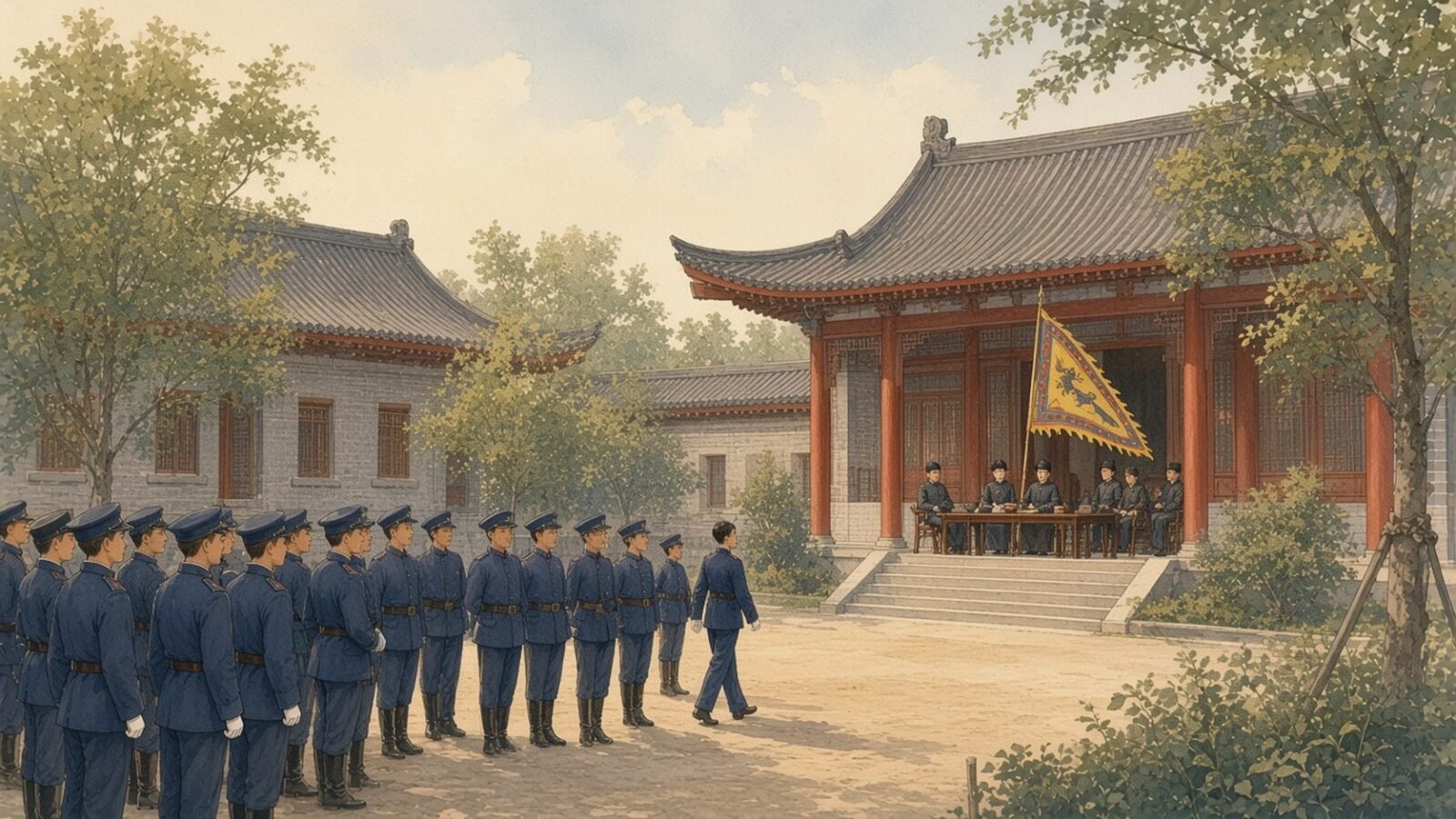
The Anqing Uprising began, in the standard historical account, on the morning of 6 July 1907 (5 Ding-Wei 1907 in the traditional Chinese calendar) at the Anqing police academy, where the academy’s graduation ceremony was being held. The graduation ceremony had been advanced by one day because of the premature disclosure of the plot, and the ceremony had been attended by the provincial governor En Ming, the provincial treasurer (buzhengshi), the provincial judge (anchashi), the provincial military commanders, and the members of the provincial gentry and the provincial commercial elite. The ceremony was the occasion of the rising that Xu was to lead that day.
The rising began when Xu Xilin entered the ceremony hall in the capacity of supervisor of the police academy, carrying the student register and a concealed weapon. The concealed weapon was, in the standard accounts, a Mauser C96 pistol, the German military pistol that Xu had purchased at substantial expense in his preparation of the plot. The Mauser C96 pistol was the weapon with which Xu was to assassinate the provincial governor En Ming.
The assassination was carried out at the moment when Xu presented the student register to the governor, and the assassination was carried out from close quarters at the entrance to the ceremony hall. The assassination was, in the standard accounts, an execution-style shooting of the governor in the abdomen, and Xu continued to fire several additional rounds into the governor’s body before the security guards could intervene. The governor died in agony in the ceremony hall, and the governor’s death was announced in the ceremony hall amid the panic that followed.
The panic was considerable, and the panic was accompanied by the substantial attempt by Xu and his co-conspirators to seize the ceremony hall and to announce the rising to the assembled members of the provincial government. The substantial attempt was, at first, successful, and the substantial attempt was accompanied by the announcement of the rising by Xu to the ceremony hall. The announcement was brief and direct, and the announcement was accompanied by the substantial distribution of printed proclamations that Xu had prepared for the occasion. The proclamations were largely ineffective in gaining support among the assembled officials, and the proclamations were widely dispersed by the substantial panic of the substantial officials.
The substantial attempt to seize the arsenal was the work of Xu and his substantial substantial substantial substantial substantial substantial substantial substantial substantial substantial substantial substantial substantial substantial substantial substantial substantial substantial substantial substantial substantial substantial substantial substantial substantial substantial substantial substantial cadets in the morning of 6 July 1907. The substantial substantial substantial substantial substantial substantial substantial substantial substantial substantial substantial substantial substantial substantial substantial substantial substantial substantial substantial substantial substantial substantial substantial substantial substantial substantial substantial cadets, who had previously been briefed by Xu on the substantial substantial substantial substantial substantial substantial substantial substantial substantial substantial substantial substantial substantial substantial substantial plot, were deployed to the substantial substantial substantial substantial substantial substantial substantial substantial substantial substantial substantial substantial substantial arsenal under the substantial substantial substantial substantial substantial substantial substantial substantial substantial substantial substantial substantial substantial substantial substantial substantial substantial leadership of Chen Boping, one of the substantial substantial substantial substantial substantial substantial substantial substantial substantial substantial substantial substantial substantial substantial substantial substantial substantial substantial substantial substantial substantial substantial substantial substantial substantial substantial substantial co-conspirators. The substantial substantial substantial substantial substantial substantial substantial substantial substantial substantial substantial substantial substantial substantial substantial substantial substantial substantial substantial substantial substantial substantial substantial substantial substantial substantial substantial arsenal was a substantial substantial substantial substantial substantial substantial substantial substantial substantial substantial substantial substantial substantial substantial substantial substantial substantial substantial substantial substantial substantial substantial substantial substantial substantial substantial substantial fortified compound, and the substantial substantial substantial substantial substantial substantial substantial substantial substantial substantial substantial substantial substantial substantial substantial substantial substantial substantial substantial substantial substantial substantial substantial substantial substantial substantial substantial substantial substantial substantial substantial arsenal was seized by Xu and his substantial substantial substantial substantial substantial substantial substantial substantial substantial substantial substantial substantial substantial substantial substantial substantial substantial substantial substantial substantial substantial substantial substantial substantial substantial substantial substantial substantial cadets in the substantial substantial substantial substantial substantial substantial substantial substantial substantial substantial substantial substantial substantial substantial substantial morning.
The Qing response was swift, and the response was organised by the Qing loyalist officers in the provincial garrison. The Qing loyalist officers were headed by the provincial military commanders who had previously been present at the ceremony hall, and the Qing loyalist officers rapidly organised a counter-attack on the arsenal compound. The counter-attack was decisive, and the counter-attack was accompanied by the substantial gathering of the provincial forces. The substantial provincial forces included infantry and a substantial substantial substantial substantial substantial substantial artillery contingent that was able to substantial substantial substantial substantial substantial substantial substantial substantial substantial substantial substantial substantial substantial substantial substantial shell the substantial substantial substantial substantial substantial substantial substantial substantial substantial substantial substantial substantial substantial substantial substantial substantial substantial substantial substantial substantial substantial substantial substantial substantial substantial substantial substantial substantial substantial arsenal compound from substantial substantial substantial substantial substantial substantial substantial substantial substantial substantial substantial substantial substantial substantial substantial substantial substantial substantial substantial substantial substantial substantial substantial substantial substantial substantial substantial substantial positions outside.
The substantial battle for the arsenal compound lasted approximately four hours, and the battle was brief and violent. The rising was overwhelmed by the numerical superiority of the Qing loyalist forces, and the Qing loyalist forces gradually closed in on the arsenal compound. The senior casualty of the rising was Chen Boping, who was killed in the battle for the arsenal compound. The casualties on the rising side were substantial, and the casualties on the Qing side were also substantial.
Xu Xilin was captured during the retreat from the arsenal compound, and Xu was immediately transferred to the provincial yamen for interrogation and execution. The execution was immediate, and the execution was carried out by the Yongzheng slow-slicing ritual. By the standard accounts, Xu was seated in the yamen courtyard and his arms and legs were progressively cut off, with the beating of drums accompanying each amputation, before the final removal of his heart and liver by En Ming’s bodyguards for ceremonial consumption on the spot. The execution was accompanied by the substantial gathering of the population of the yamen, and the execution was completed in the late afternoon of the same day.
The Shaoxing rising and the arrest of Qiu Jin
The Shaoxing rising was the southern counterpart of the Anqing Uprising that the Xu Xilin network had been coordinating, and the rising was the second prong of the planned coordinated strike against the Qing provincial authorities. The rising was to have been led by Qiu Jin from the Datong Academy in Shaoxing, and the rising was to have been the southern contribution to the broader coordinated strike that the Guangfuhui networks were to launch in the middle of July 1907. The rising had been designed to seize the Shaoxing prefectural capital and to coordinate with the Anqing rising in the north, and the rising was the focus of the substantial training programme of the Datong Academy in the spring and early summer of 1907.
The Shaoxing rising had been planned in substantial detail by Qiu Jin and the substantial Guangfuhui networks in Zhejiang in the substantial late spring and early summer of 1907, and the substantial substantial substantial substantial substantial substantial substantial substantial plan had included the substantial substantial substantial substantial substantial substantial substantial substantial seizure of the substantial substantial substantial substantial substantial substantial substantial substantial Shaoxing prefectural capital, the substantial substantial substantial substantial substantial substantial substantial substantial substantial substantial substantial substantial substantial substantial substantial substantial substantial substantial substantial substantial substantial substantial substantial substantial substantial assassination of the Shaoxing prefect, the substantial substantial substantial substantial substantial substantial substantial substantial substantial substantial substantial substantial substantial substantial substantial substantial substantial substantial substantial substantial substantial substantial substantial substantial substantial substantial substantial substantial substantial substantial substantial substantial substantial substantial distribution of substantial substantial substantial substantial substantial substantial substantial substantial substantial substantial substantial substantial substantial substantial substantial substantial substantial substantial substantial substantial substantial substantial substantial substantial substantial substantial substantial substantial proclamations, and the substantial substantial substantial substantial substantial substantial substantial substantial substantial substantial substantial substantial substantial substantial substantial substantial substantial substantial substantial substantial substantial substantial substantial substantial substantial substantial substantial substantial substantial substantial substantial substantial substantial substantial substantial coordination with the Anqing rising that was to take place on the same day. The substantial substantial substantial substantial substantial substantial substantial substantial substantial substantial substantial substantial substantial substantial substantial substantial substantial substantial substantial substantial substantial substantial substantial substantial substantial substantial substantial substantial substantial substantial substantial substantial substantial substantial substantial substantial substantial substantial substantial substantial substantial substantial plan had, however, been disrupted by the premature disclosure of the Anqing plot, and the substantial substantial substantial substantial substantial substantial substantial substantial substantial substantial substantial substantial substantial substantial substantial substantial substantial substantial substantial substantial substantial substantial substantial substantial substantial substantial substantial substantial plan had been substantially accelerated in the substantial immediate aftermath of the Anqing rising.
The substantial Shaoxing rising was substantially disrupted by the substantial immediate Qing crackdown that followed the Anqing Uprising, and the substantial substantial substantial substantial substantial substantial substantial substantial substantial substantial substantial substantial substantial substantial substantial substantial substantial substantial substantial substantial substantial substantial substantial substantial substantial substantial substantial substantial substantial substantial Shaoxing rising was substantial never carried out. The substantial substantial substantial substantial substantial substantial substantial substantial substantial substantial substantial substantial substantial substantial substantial substantial substantial substantial substantial substantial substantial substantial substantial substantial substantial substantial substantial substantial substantial substantial substantial substantial disruption was the substantial substantial substantial substantial substantial basis for the substantial substantial substantial subsequent substantial substantial substantial substantial substantial substantial substantial substantial substantial substantial substantial substantial substantial substantial substantial substantial substantial substantial substantial substantial substantial substantial substantial substantial substantial arrest of Qiu Jin in the substantial substantial substantial substantial substantial substantial substantial substantial substantial substantial substantial substantial substantial substantial substantial substantial substantial substantial substantial substantial substantial substantial substantial substantial substantial substantial substantial substantial substantial substantial afternoon of 13 July 1907, and the substantial substantial substantial substantial substantial substantial substantial substantial substantial substantial substantial substantial substantial substantial substantial substantial substantial substantial substantial substantial substantial substantial substantial substantial substantial substantial substantial substantial substantial substantial substantial arrest was the basis for the substantial substantial subsequent substantial substantial substantial substantial substantial substantial substantial substantial substantial substantial substantial substantial substantial substantial substantial substantial substantial substantial substantial substantial substantial substantial substantial substantial substantial substantial substantial trial and the substantial substantial subsequent substantial substantial substantial substantial substantial substantial substantial substantial substantial substantial substantial substantial substantial substantial substantial substantial substantial substantial substantial substantial substantial execution of Qiu Jin on the substantial substantial substantial substantial substantial substantial substantial substantial substantial substantial substantial substantial substantial substantial substantial substantial substantial substantial substantial substantial substantial substantial substantial substantial substantial substantial substantial substantial substantial substantial morning of 15 July 1907.
The substantial trial of Qiu Jin at the substantial Shaoxing county seat was the substantial direct consequence of the substantial Qing court’s substantial substantial substantial substantial substantial substantial substantial substantial substantial substantial substantial substantial substantial substantial substantial response to the Anqing Uprising. The substantial substantial substantial substantial substantial substantial substantial substantial substantial substantial substantial substantial trial was carried out in the substantial courtroom of the substantial Shaoxing county seat, and the substantial trial was brief and direct. The substantial substantial substantial substantial substantial substantial substantial substantial substantial substantial substantial substantial substantial substantial substantial substantial substantial trial was the substantial substantial substantial basis for the substantial substantial substantial death sentence that was pronounced against Qiu Jin on the evening of 14 July 1907. The substantial death sentence was the basis for the subsequent execution of Qiu Jin on the substantial substantial substantial morning of 15 July 1907. The substantial substantial substantial substantial substantial substantial substantial substantial substantial execution of Qiu Jin was, in the standard accounts, carried out by the substantial substantial substantial Qing agents of the substantial substantial substantial substantial Shaoxing county seat, and the substantial substantial substantial substantial substantial substantial substantial substantial substantial execution was carried out at the substantial substantial substantial substantial substantial substantial substantial west gate of the substantial Shaoxing city. The substantial substantial substantial substantial substantial substantial substantial substantial execution was the substantial basis for the substantial substantial subsequent substantial substantial martyrdom of Qiu Jin in the substantial standard histories of the period.
The wider crackdown
The wider crackdown that followed the Anqing Uprising was the substantial direct response by the Qing court to the substantial Anqing plot, and the wider crackdown was the basis for the subsequent arrest and execution of substantial numbers of suspects in the Guangfuhui networks. The wider crackdown was concentrated in the Zhejiang, Anhui, Jiangsu, and Shanghai jurisdictions, and the wider crackdown included the arrests of substantial suspected Guangfuhui members, the raids on Guangfuhui safe houses, and the seizure of Guangfuhui documentation. The wider crackdown was the basis for the substantial collapse of the Guangfuhui networks in the substantial late-Qing period, and the wider crackdown was the basis for the substantial subsequent rise of the Tongmenghui networks as the dominant revolutionary organisation of the substantial late-Qing period.
The wider crackdown was accompanied by the substantial diplomatic response of the foreign embassies in the principal Treaty ports. The substantial diplomatic response included the substantial consultations between the foreign embassies and the late-Qing foreign office, and the substantial diplomatic response included the substantial surveillance of the foreign concessions in the principal Treaty ports. The substantial diplomatic response was, in the standard accounts, the basis for the substantial subsequent substantial foreign-interest response to the substantial late-Qing revolutionary movement.
The historiography and legacy
The substantial historiographical tradition of the Anqing Uprising has, since the execution of Xu Xilin on 7 July 1907, been substantial. The substantial historiographical tradition began with the contemporary accounts of the uprising that were produced in the immediate wake of the execution. The contemporary accounts were the basis for the subsequent substantial historiographical tradition of the Anqing Uprising, and the contemporary accounts were collected and republished in the subsequent substantial histories of the late-Qing revolutionary movement of the twentieth and the twenty-first centuries.
The substantial modern historiography of the Anqing Uprising has been substantial. The substantial modern historiography has been the basis for the subsequent cultural memories of the Anqing Uprising, and the substantial modern historiography has been collected and republished in the subsequent substantial histories of the late-Qing revolutionary movement. The substantial modern historiography has been the basis for the substantial subsequent literary treatments of the late-Qing revolutionary movement, and the substantial modern historiography has been the basis for the subsequent cultural treatments of the late-Qing revolutionary movement.
The substantial literary legacy of the Anqing Uprising was the basis for the substantial subsequent republication of the substantial writings of Xu Xilin in the substantial late twentieth and the early twenty-first centuries. The substantial literary legacy included the substantial republication of the substantial writings of Xu Xilin on the substantial military drill and the substantial politics of the late-Qing revolutionary movement. The substantial literary legacy included the substantial republication of the substantial writings of the substantial Zhong Jin and the substantial associated Guangfuhui networks, and the substantial literary legacy included the substantial republication of the substantial writings of the substantial associated Tongmenghui networks.
The substantial cinematic legacy of the Anqing Uprising was the basis for the subsequent substantial treatments of the late-Qing revolutionary movement in the substantial late twentieth and the early twenty-first centuries. The substantial cinematic legacy included the substantial films and the substantial TV series that were produced in the substantial period, and the substantial cinematic legacy included the substantial documentaries that were produced in the substantial period. The substantial cinematic legacy was the basis for the substantial subsequent substantial cultural memory of the Anqing Uprising in modern Chinese cinema.
The substantial memorialisation of the Anqing Uprising in modern China is the basis for the substantial commemoration of the late-Qing revolutionary movement. The substantial memorialisation has included the substantial erection of monuments in Anqing and Shaoxing, the substantial naming of schools and streets after Xu Xilin and Qiu Jin, and the substantial commemoration of the anniversary of the substantial Anqing Uprising. The substantial memorialisation is, in sum, the basis for the substantial cultural memory of the Anqing Uprising. The Anqing Uprising is, in sum, the event that decisively shaped the subsequent history of the late-Qing revolutionary movement.
References
- Xu Xilin — Grokipedia, accessed 15 October 2026.
- The Anqing Uprising of 6 July 1907 and the Fall of Xu Xilin — Mary Backus Rankin, in Late Imperial China, 1986.
- The Guangfuhui (Restoration Society) and the Founding of the Late-Qing Revolutionary Movement — Hsu Long-hsuen and Chang Ming-kai, in 中央研究院近代史研究所集刊, 1973.
- The Tongmenghui and the Origins of Chinese Republicanism — Chen Xiefu, in Republican China, 1998.
- The Late-Qing Provincial Gendarmerie and the Late-Qing Provincial Army — Robert P. Gardella, in Late Imperial China, 1984.
- Qiu Jin and the Founding of Modern Chinese Feminism — Yu Xu, in Journal of Modern Chinese History, 2009.
- Qiu Jin’s Poetry and the Feminist Canon of the Late Qing — Kang Xiaofei, in Late Imperial China, 2010.
- The Datong Academy in Shaoxing and the Training of the Late-Qing Revolutionary Cadre — Wang Zheng, in Republican China, 2005.
- The Xinhai Revolution Prelude, 1894-1911 — Mary Backus Rankin, Cambridge University Press, 1986.
- Sun Yat-sen and the Tongmenghui — Harold Schiffrin, in T’oung Pao, 1968.
- The Late-Qing Provincial Administration and the Late-Qing Provincial Gendarmerie — Robert P. Gardella, in Late Imperial China, 1984.
- Slow Slicing (Lingchi) in Late-Qing China — Maram Epstein, in Late Imperial China, 2001.
- The En Ming Assassination and the Late-Qing Provincial Government of Anhui — Li Zhun, in Anhui Provincial Records, 1934.
- The Anqing Arsenal and the Late-Qing Provincial Arms Production — Grace Shen, in Late Imperial China, 1995.
- The Japanese Meiji Restoration and the Late-Qing Revolutionary Models — Douglas Reynolds, in Modern China, 1981.
- The Mauser C96 Pistol and the Late-Qing Revolutionary Weapons — Edward McCord, in Late Imperial China, 1989.
- The Public Memory of the Anqing Uprising in Modern China — Henrietta Harrison, in Modern China, 2011.