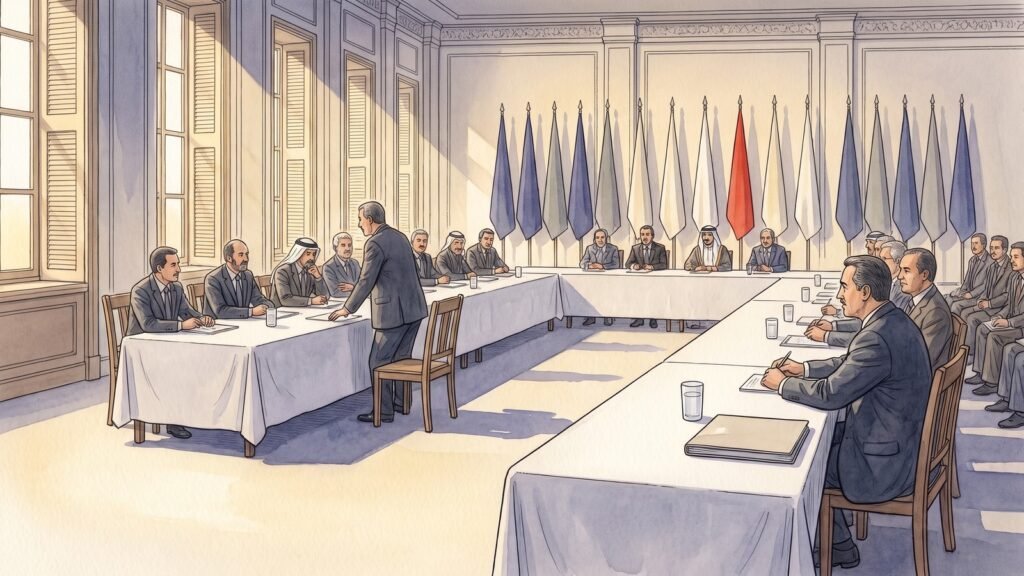
On 10 November 2001, at a ministerial conference held in Doha, the capital of Qatar, the members of the World Trade Organization approved by consensus the terms on which the People’s Republic of China would join them. The decision closed negotiations that had lasted almost fifteen years, longer than those for any other country, and it was accompanied by a body of legal text running to about nine hundred pages. China’s ratification was notified the next day, and under the organisation’s rules it became the 143rd member thirty days later, on 11 December 2001. The accession is now widely regarded as one of the most consequential economic events of the late twentieth and early twenty-first centuries. It bound the world’s most populous country into the rules of the multilateral trading system, it accelerated a transformation of Chinese industry that was already under way, and it changed patterns of production and employment across much of the world. This post describes how the negotiations came about, what China agreed to, and what followed in the decade and a half after membership.
From the GATT to the World Trade Organization
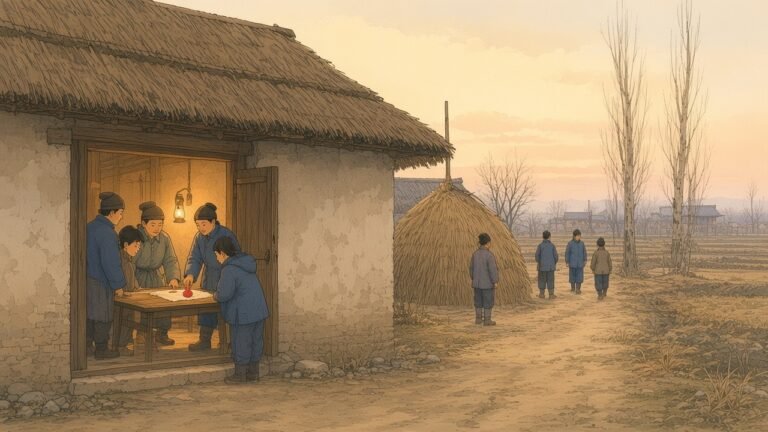
The Republic of China had been one of the twenty-three original signatories of the General Agreement on Tariffs and Trade, the GATT, in 1947. After the Communist victory in the civil war, the government in Taiwan announced in 1950 that it was withdrawing from the agreement, and the government in Beijing, which did not recognise the authority of the Taiwan government to act for China, did not take part in the GATT system for more than three decades. During the 1950s and 1960s the People’s Republic conducted most of its foreign trade with the Soviet Union and the socialist states of Eastern Europe, and after the Sino-Soviet split it pursued a policy of self-reliance in which foreign trade was a small share of national output, managed entirely by a handful of state trading corporations.
The reforms that began at the end of 1978 changed this. Under Deng Xiaoping the government created special economic zones at Shenzhen, Zhuhai, Shantou and Xiamen in 1980, opened fourteen coastal cities to foreign investment in 1984, and began to decentralise the right to conduct foreign trade to provinces and to a growing number of enterprises. The development of export processing in the Pearl River Delta, where factories assembled imported components into finished goods for re-export, is described in the post on how Dongguan became a manufacturing city. By the mid-1980s foreign trade had grown rapidly, and the leadership concluded that participation in the international trading system would bring both practical benefits, such as lower tariffs on Chinese exports, and political recognition of the country’s new direction. China obtained observer status at the GATT in 1982, joined the Multi-Fibre Arrangement governing textile trade in 1984, and in July 1986 formally applied to resume its status as a contracting party.
A working party was established in 1987 to examine the application. Its early work proceeded with some optimism, since many Western governments regarded China’s economic reforms favourably and saw its integration into the trading system as a means of encouraging further change. The events of June 1989 in Beijing interrupted this progress. Western governments imposed sanctions, the negotiations stalled, and when they resumed the terms demanded of China had become more exacting. In the meantime the Uruguay Round of multilateral trade negotiations, which had begun in 1986, was transforming the system China hoped to enter. Its conclusion in 1994 created the World Trade Organization, which came into being on 1 January 1995 with a much broader remit than the GATT: it covered trade in services, intellectual property and investment measures as well as trade in goods, and it had a binding dispute settlement mechanism. China had hoped to join as a founding member, but negotiations were not complete, and in 1995 its application was converted into an application for accession to the new organisation. The working party was reconstituted, and from 1996 it was chaired by the Swiss diplomat Pierre-Louis Girard, who led it until the end.
The structure of the negotiations
Accession to the World Trade Organization involves two parallel sets of negotiations. In the multilateral track the applicant and the working party, made up of all interested members, agree on the rules the applicant will follow: how it will bring its laws into conformity with WTO agreements, what transitional periods it may have, and what special commitments it will make. In the bilateral track the applicant negotiates separately with each interested member on market access, meaning the tariff rates it will bind and the service sectors it will open. The results of all bilateral agreements are then combined and extended to every member under the principle of most-favoured-nation treatment, by which a concession given to one member must be given to all. China eventually concluded bilateral agreements with thirty-seven members, the last of them, with Mexico, in September 2001.
The difficulties of the negotiations reflected the unusual nature of the Chinese economy. The GATT had been designed for market economies, in which prices were set largely by supply and demand and governments influenced trade mainly through tariffs and quotas. China in the 1990s was a hybrid. State-owned enterprises still dominated heavy industry, banking, telecommunications and energy; many prices were still set or guided by the state; the right to import and export was restricted to licensed firms; and provincial governments protected their own industries against competition from other provinces as well as from abroad. Members of the working party, led by the United States, the European Union and Japan, wanted assurances that China’s commitments would be real, that they would be applied uniformly across a vast country, and that existing members would have some protection if a sudden surge of Chinese exports disrupted their markets. China, for its part, sought recognition as a developing country, with the longer transition periods that this status implied, and resisted commitments that it regarded as discriminatory.
On the Chinese side, the negotiations were led for most of the 1990s by Long Yongtu, a career trade official who became vice minister of foreign trade and economic cooperation and was China’s chief negotiator from 1997. Wu Yi, the minister of foreign trade from 1993 to 1998, and her successor Shi Guangsheng also took prominent parts. The decisive political figure, however, was Zhu Rongji, who became premier in March 1998, with the support of the party’s general secretary and state president, Jiang Zemin. Zhu was engaged at the time in a sweeping restructuring of the state sector, which involved closing or merging thousands of loss-making enterprises and laying off tens of millions of workers, and he regarded WTO membership as a means of locking in reform. External commitments, binding under international law, would make it harder for ministries, provinces and protected industries to resist change.
The agreement with the United States
The bilateral agreement with the United States was the most important and the most difficult. In April 1999 Zhu Rongji travelled to Washington, prepared to make extensive concessions in agriculture, industrial tariffs, telecommunications and financial services, in the hope of concluding an agreement during his visit. The administration of President Bill Clinton, concerned about opposition in Congress, declined to sign at that moment. The office of the United States Trade Representative then published a list of the concessions China had offered, which caused considerable political difficulty for Zhu at home, where critics accused him of giving too much away. A month later, on 7 May 1999, aircraft of the North Atlantic Treaty Organization operating over Yugoslavia bombed the Chinese embassy in Belgrade, killing three Chinese journalists. The United States described the bombing as a mistake caused by faulty targeting information, but it provoked large demonstrations in Chinese cities and suspended the negotiations for several months.
Talks resumed in the autumn of 1999, and after a week of negotiations in Beijing, an agreement was signed on 15 November 1999 by the United States Trade Representative, Charlene Barshefsky, and the Chinese minister of foreign trade, Shi Guangsheng. Under its terms China agreed to reduce average tariffs on industrial goods from about 25 per cent to under 9 per cent by 2005, to cut tariffs on American agricultural priorities, to eliminate most import quotas, to open its telecommunications, banking, insurance and distribution sectors to foreign firms over several years, and to grant trading rights to foreign-invested and private enterprises. In return the United States agreed to support China’s accession. The agreement with the European Union, which had its own priorities in sectors such as insurance and telecommunications, followed on 19 May 2000.
The American agreement required a change in United States law. Since 1980 the United States had granted China most-favoured-nation status, renamed normal trade relations, only on an annual basis under the Jackson-Vanik amendment of 1974, which tied such status for non-market economies to freedom of emigration. Each year Congress debated whether to renew it, and those debates became an occasion to raise concerns about human rights, labour standards and security. Under WTO rules China would be entitled to unconditional most-favoured-nation treatment, so Congress was asked to grant permanent normal trade relations. After an intense political campaign, in which business groups argued that the agreement would open the Chinese market to American exports and trade unions argued that it would lead to the loss of American manufacturing jobs, the House of Representatives passed the bill in May 2000 by 237 votes to 197, and the Senate followed in September. President Clinton signed it into law in October 2000.
The terms of accession
The multilateral negotiations continued through 2000 and 2001. The working party concluded its work on 17 September 2001, and its report, together with the Protocol on the Accession of the People’s Republic of China and the schedules of commitments on goods and services, was approved at Doha in November. The WTO’s official record of China’s accession sets out the documents. Their contents were more extensive than those of any previous accession, and several of their provisions had no precedent.
In the area of trade in goods, China committed to bind all its tariffs, with the average tariff to fall to about 10 per cent once all reductions were phased in, and to about 9 per cent on industrial goods. Tariffs on information technology products would be eliminated under the Information Technology Agreement. Import licences and quotas were to be phased out by 2005, and the state’s monopoly of foreign trading rights was to end within three years, so that any enterprise registered in China could import and export most goods. A small number of products, including grain, vegetable oils, sugar, tobacco, crude oil and fertiliser, remained subject to state trading, while agricultural imports of bulk commodities were subject to tariff-rate quotas. China also agreed not to use export subsidies on agricultural products and to limit its domestic support for farmers to a level lower than that permitted for other developing countries.
In services, China undertook to open a wide range of sectors over transition periods of up to five or six years. Foreign banks would be permitted to conduct business in foreign currency immediately and in local currency with Chinese enterprises within two years and with individuals within five, with geographical restrictions gradually removed. Foreign insurers, securities firms, telecommunications operators, distributors, retailers and professional service providers received varying degrees of access, often initially through joint ventures with limits on foreign ownership. China also agreed to implement the Agreement on Trade-Related Aspects of Intellectual Property Rights from the date of accession, and to amend a large body of national laws and regulations, which it did in the years before and after 2001, revising or repealing thousands of laws, regulations and local rules.
Several provisions were specific to China. Section 15 of the protocol allowed other members, in anti-dumping investigations, to use prices and costs from a third country rather than Chinese domestic prices when determining whether Chinese goods were being sold below their normal value, if Chinese producers could not show that market conditions prevailed in their industry. Part of this provision was to expire fifteen years after accession, in December 2016, and its interpretation later became a major source of dispute. Section 16 established a transitional product-specific safeguard, valid for twelve years, which allowed members to restrict imports of a particular Chinese product if they caused or threatened market disruption, under conditions easier to meet than those of the ordinary safeguard agreement. A separate provision in the working party report permitted members to retain quotas on Chinese textiles and clothing until the end of 2008. China also agreed to an annual transitional review mechanism, under which its implementation of commitments would be examined for eight years.
Doha, Taiwan and the ceremony of entry
The Doha conference at which the accession was approved took place only two months after the attacks of 11 September 2001 in the United States, and the atmosphere of the meeting was shaped by the wish of many governments to show that international cooperation could continue in difficult circumstances. The approval of China’s membership on 10 November was followed the next day by the approval of the accession of the separate customs territory of Taiwan, Penghu, Kinmen and Matsu, known in the organisation as Chinese Taipei. The question of Taiwan had been handled with great care throughout the negotiations. The government in Beijing insisted that Taiwan could join only as a customs territory rather than as a sovereign state, and that its accession should not precede that of the People’s Republic. Members had accepted this sequence, and the two decisions were taken on successive days, with Chinese Taipei becoming a member on 1 January 2002. The arrangement meant that both sides of the Taiwan Strait became members of the same international economic organisation, bound by the same rules and able to bring disputes against one another, though in practice they have rarely done so.
The Chinese delegation at Doha was led by the minister of foreign trade, Shi Guangsheng, who signed the protocol after the decision was adopted, and the moment was broadcast extensively in China. Official commentary described the accession as a historic step that would bring both opportunities and challenges. In the months that followed, central and provincial governments organised training courses for officials on WTO rules, universities established centres for the study of international trade law, and bookshops sold large numbers of guides explaining what membership would mean for businesses and consumers. The phrase “connecting with the international track”, which had been used since the 1990s to describe the adoption of international standards and practices, came to be widely applied to the process of legal and administrative change that accession required. The government also undertook to make its trade regulations public before they took effect, to establish enquiry points where foreign governments and firms could obtain information, and to provide for independent judicial review of administrative actions relating to trade, commitments that contributed to broader changes in the transparency of Chinese administration.
Reform at home in preparation for entry
The accession took place in the middle of a period of profound domestic change, and it is difficult to separate its effects from those of the reforms with which it was intertwined. Between 1997 and 2002 the government under Zhu Rongji carried out the restructuring of state-owned enterprises summed up in the phrase “grasp the large, let go of the small”. The largest enterprises in strategic sectors were reorganised into corporate groups under central control, while tens of thousands of small and medium-sized state and collective firms were sold, merged, leased or closed. Employment in state-owned units fell by more than thirty million in the space of a few years. The banking system was recapitalised, bad loans were transferred to newly created asset management companies, and the government abolished the system under which urban workers received housing from their employers, creating in its place a private housing market. These measures made the economy more market-oriented and more competitive, and they also caused great hardship in the old industrial cities of the north-east and the interior, where the laid-off workers were concentrated.
The prospect of WTO membership was used by reformers to justify such changes, and the commitments China made gave them a timetable. Officials and economists in the period frequently described the accession as a means of using external pressure to promote internal reform. Many Chinese observers, however, also feared that the opening of agriculture, automobiles, banking and other sectors would expose domestic firms to competition they could not withstand. Predictions of large job losses among farmers growing grain, soybeans and cotton were common, and there was considerable anxiety in the automobile industry, where tariffs were to fall from 80 to 100 per cent to 25 per cent by 2006. In the event, the agricultural sector adjusted through a shift from grains toward more labour-intensive crops such as vegetables and fruit, and the automobile industry, rather than collapsing, expanded rapidly as rising incomes created a domestic mass market for cars.
Exports, investment and the factory of the world
The most visible consequence of membership was the extraordinary growth of Chinese exports. The value of China’s merchandise exports was about 266 billion United States dollars in 2001. By 2008 it had risen to more than 1.4 trillion dollars, an increase by a factor of more than five in seven years. In 2009, during the global financial crisis, China overtook Germany to become the world’s largest exporter of goods, and in 2013 it overtook the United States to become the largest trading nation when imports and exports are combined. China’s share of world merchandise exports rose from about 4 per cent at the time of accession to more than 13 per cent by the middle of the 2010s.
Economists have identified several mechanisms by which membership contributed to this growth. The first was the reduction of uncertainty. Although the United States had renewed China’s normal trade relations every year since 1980, the annual vote meant that Chinese exporters and the foreign firms investing in China faced a constant possibility that American tariffs would rise to the much higher rates applied to non-market economies. Research by Justin Pierce and Peter Schott, among others, has argued that the removal of this risk with the grant of permanent normal trade relations encouraged firms to invest in new capacity in China and to shift production there, and that this effect was larger than that of any actual reduction in tariffs. The second mechanism was the liberalisation of trading rights, which allowed private Chinese firms to export directly rather than through state trading companies, and which was associated with a rapid increase in the number of exporting firms. The third was the reduction of China’s own tariffs on imported inputs, which lowered the costs of producers who used imported components and machinery.
Foreign direct investment, already large in the 1990s, also increased. Multinational companies built factories in the coastal provinces to serve both export markets and the growing Chinese market, and supply chains for electronics, machinery, furniture, toys, clothing and many other goods were reorganised around assembly in China. The scale of this production, and the network of suppliers, logistics firms and skilled workers that grew up around it, made it increasingly difficult for producers elsewhere to compete. The relationship between this development and the decline of manufacturing in the older industrial countries is examined in the post on why China makes everything and Britain doesn’t. In the first years after accession much of this production involved the assembly of components designed and made elsewhere, with China contributing labour and a relatively small share of the final value. Over time Chinese firms took on more of the design and manufacture of components, a process traced in the post on why China moved up the value chain.
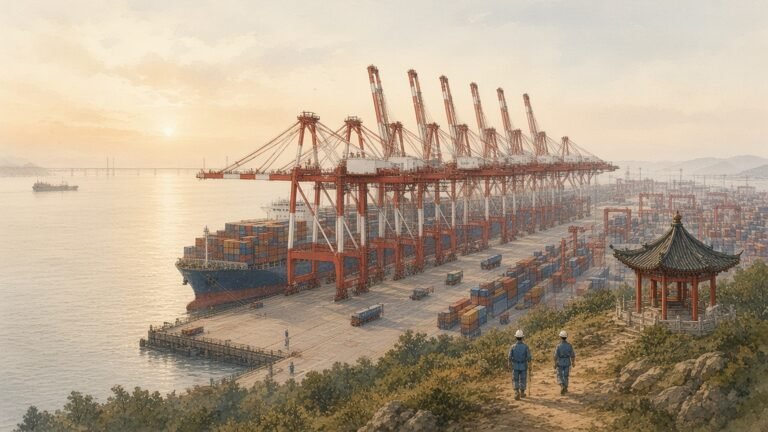
Membership also coincided with a period of very high investment in infrastructure, especially in the coastal cities that served as the main gateways for trade. Container ports at Shanghai, Shenzhen, Ningbo and Guangzhou grew to become among the busiest in the world, and new districts were built to house financial institutions, exhibition centres and the regional headquarters of foreign companies. The development of Shanghai’s Pudong district, which preceded accession but expanded rapidly after it, is described in the post on how Pudong was built on mud, and the city’s ambitions in the same period are reflected in the story of Shanghai’s maglev and the future that stalled, the high-speed magnetic levitation line that opened between Pudong airport and the city at the end of 2002.
Textiles and the end of quotas
The trade in textiles and clothing provides a clear example of how the terms of accession worked in practice. Since 1974 most international trade in these products had been governed by the Multi-Fibre Arrangement, which permitted importing countries to impose quotas on supplies from individual exporting countries. The Uruguay Round agreement on textiles and clothing provided for these quotas to be phased out over ten years, with the last of them to be removed on 1 January 2005. As a WTO member China became entitled to the benefits of this process. When the quotas expired, Chinese exports of clothing to the United States and the European Union rose sharply within a few months, in some categories by several hundred per cent.
Both the United States and the European Union responded by invoking the textile-specific safeguard in China’s accession terms. The European Union and China concluded an agreement in June 2005 limiting the growth of Chinese exports in ten categories of textiles until the end of 2007, and the United States concluded a similar agreement in November 2005 covering the years to 2008. The European agreement was followed in the summer of 2005 by the accumulation in European ports of tens of millions of garments that had been ordered before the new limits took effect but could not be released, an episode that the European press described as the “bra wars” and that was resolved by a further agreement in September. After the restraints expired at the end of 2008, Chinese clothing exports continued to grow, although rising wages in China later led some producers to move labour-intensive production to Vietnam, Bangladesh, Cambodia and other countries.
Disputes and the use of the system
As a member, China became both a participant in and a subject of the WTO’s dispute settlement system. In the first years after accession it brought few cases and was the respondent in few, but from 2006 onward the number increased. Other members challenged Chinese measures on auto parts, intellectual property enforcement, the distribution of films, music and publications, export restrictions on raw materials and rare earths, subsidies, and anti-dumping duties imposed by China on imports. China lost a number of these cases and in most instances changed its measures to comply with the rulings. In 2007 it brought its first case as a complainant, and in later years it challenged measures by the United States and the European Union, including American anti-dumping and countervailing duties and European anti-dumping measures on fasteners.
The product-specific safeguard of Section 16 was used only once in a prominent case. In September 2009 the United States imposed additional duties of up to 35 per cent on imports of Chinese passenger and light truck tyres for three years, following a petition by the United Steelworkers union. China challenged the measure at the WTO, and in 2011 the Appellate Body upheld the American action. The dispute was widely interpreted as a sign that the provisions negotiated in 2001 would continue to shape trade relations for many years after accession.
The most contentious legal question concerned Section 15 of the protocol. China maintained that the expiry in December 2016 of the relevant subparagraph obliged other members to stop treating it as a non-market economy in anti-dumping calculations. The United States and the European Union disagreed, arguing that the remaining provisions of the section, and their own laws, still permitted them to use alternative methodologies where Chinese prices were distorted by state intervention. In December 2016 China requested consultations with both. The case against the European Union, designated DS516, proceeded to a panel, but in 2019 China asked the panel to suspend its work, and its authority lapsed in 2020 without a ruling. The European Union in the meantime adopted new rules allowing it to adjust for “significant distortions” in the exporting country without designating any country as a non-market economy.
The China shock
The effects of Chinese export growth on other economies became the subject of an extensive body of research. The most influential contribution was a series of studies by the economists David Autor, David Dorn and Gordon Hanson, beginning with an article, “The China Syndrome: Local Labor Market Effects of Import Competition in the United States“, published in the American Economic Review in 2013. Comparing American local labour markets according to the degree to which their industries were exposed to Chinese imports, they found that areas more exposed between 1990 and 2007 experienced larger falls in manufacturing employment, lower wages, lower participation in the labour force and higher receipt of disability and unemployment benefits, and that these effects persisted for many years. In later work they estimated that rising Chinese import competition accounted for a substantial part of the decline in American manufacturing employment in the 2000s, perhaps around a million jobs in manufacturing directly and more when supplier industries are included. The phenomenon became known as the China shock.
Similar studies were carried out for Germany, Norway, Spain, the United Kingdom and other countries. The results varied. In Germany the loss of jobs in industries competing with Chinese imports was partly offset by gains in industries exporting machinery and vehicles to China, while in countries with a manufacturing base concentrated in labour-intensive industries such as furniture, footwear and textiles the effects resembled those found in the United States. Economists have also emphasised the benefits that consumers in importing countries received from lower prices, and the gains to firms that used Chinese inputs. The weight given to these different effects has varied, but there is broad agreement that the concentration of losses in particular towns and regions, and the slowness with which affected workers found new employment, made the adjustment more painful than earlier models of trade had predicted.
In the developing world the consequences were also mixed. Exporters of raw materials, including Australia, Brazil, Chile and many African countries, benefited from the surge in Chinese demand for iron ore, copper, oil, soybeans and other commodities that accompanied China’s industrial growth after accession. Producers of labour-intensive manufactures in Mexico, Central America and parts of South and South-East Asia faced intense competition, particularly after the end of textile quotas in 2005.
Membership after the first decade
When China’s transitional review mechanism ended in 2011, the tenth anniversary of accession was marked by assessments that differed sharply in tone. Chinese officials pointed out that the country had cut its average tariff to under 10 per cent, as promised, had opened about one hundred service sectors, and had revised its laws on a scale rarely seen. They also noted that China had become the largest trading partner of more than a hundred countries and had contributed a large share of global growth. Officials in the United States and the European Union acknowledged the extent of the tariff cuts but argued that the Chinese state continued to support domestic firms through subsidies, credit from state banks, government procurement, technical standards and requirements for the transfer of technology, and that some commitments in services had been implemented narrowly. The sources of disagreement were less about whether China had complied with the formal text of its commitments than about whether the WTO rules, designed for market economies, were adequate to address the role of the state in China’s economy.
Membership also gave China an active role in the multilateral negotiations launched at Doha in the same week in which its accession was approved. The Doha Development Round was intended to address the concerns of developing countries, especially in agriculture. China generally aligned itself with other large developing countries such as India and Brazil, arguing that as a recently acceded member it had already made extensive concessions. The round made little progress and was effectively abandoned in the mid-2010s, leaving the rules largely as they had been in 1995.
The years after 2016 brought the most serious challenges to the trading relationship established in 2001. The United States imposed tariffs on a large share of imports from China from 2018 onward, citing practices relating to technology and intellectual property, and China responded with tariffs of its own. In 2019 the WTO’s Appellate Body ceased to function when the United States blocked the appointment of new members, weakening the dispute settlement system that had been one of the main achievements of the Uruguay Round. China continued to describe itself as a defender of the multilateral system and as a developing country entitled to special treatment, a status that the United States and others contested.
These later developments have shaped the way the accession of 2001 is now discussed. In the United States in particular, a view gained ground in the late 2010s that the hope expressed at the time, that membership would lead China toward a more market-oriented and politically open system, had not been fulfilled. Chinese commentators, for their part, have described the accession as a turning point that confirmed the country’s chosen path of reform and opening, and they emphasise that China met its formal obligations on tariffs and laws. Historians of the period tend to describe the accession as the culmination of two decades of reform in China and of a period of optimism about globalisation in the wider world, and as an event whose consequences, for China and for its trading partners, were larger and more lasting than almost any of the negotiators expected when the working party began its work in 1987.
References
- Accessions: China – World Trade Organization
- WTO Ministerial Conference approves China’s accession – World Trade Organization press release 252, November 2001
- China and the WTO – World Trade Organization
- The China Syndrome: Local Labor Market Effects of Import Competition in the United States – David Autor, David Dorn and Gordon Hanson, American Economic Review, 2013
- World Trade Organization, Grokipedia
- Zhu Rongji, Grokipedia
- Permanent normal trade relations, Grokipedia
- Multi-Fibre Arrangement, Grokipedia
- China shock, Grokipedia
- Doha Development Round, Grokipedia