In 1979 the place now called Shenzhen was an agricultural county on the border with British Hong Kong. Its official resident population was about 314,000, mostly farmers and fishing families, and for years many of its young people had been risking their lives to swim or climb across the frontier. By the 2020 census the city had 17.56 million residents, a skyline of towers and some of the most valuable technology companies in the world. No other large city has changed so fast, and Shenzhen is often held up as the purest example of China’s reform era. This article traces how that happened, from the villages of Bao’an county and the escape to Hong Kong, through the 1980 special economic zone, Yuan Geng’s Shekou, ‘Shenzhen speed’, Deng’s Southern Tour, urban villages, Foxconn and Huaqiangbei, to the city’s tech giants, the tech rivalry of today and the challenges it faces now, noting where figures are estimates and where interpretations differ.
Bao’an county before the zone
The land that became Shenzhen has a long history. Administrative counties were established here about 1,700 years ago, and the old walled town of Nantou, near today’s Nanshan district, served as the seat of Bao’an (later Xin’an) county for centuries. The area traded in salt and pearls, and in the nineteenth century lost much of its southern territory when Britain took Kowloon and, in 1898, leased the New Territories. The name Shenzhen, meaning roughly “deep drain” or “deep ditch”, belonged to a small market town beside the railway that opened between Kowloon and Canton in 1911. In 1953 the county government moved there.
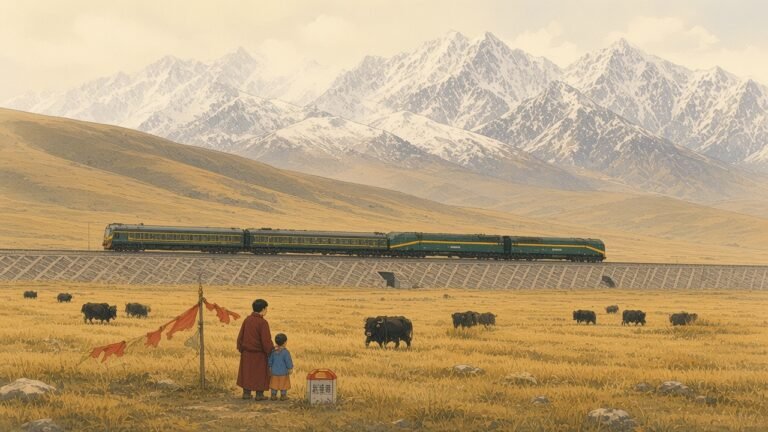
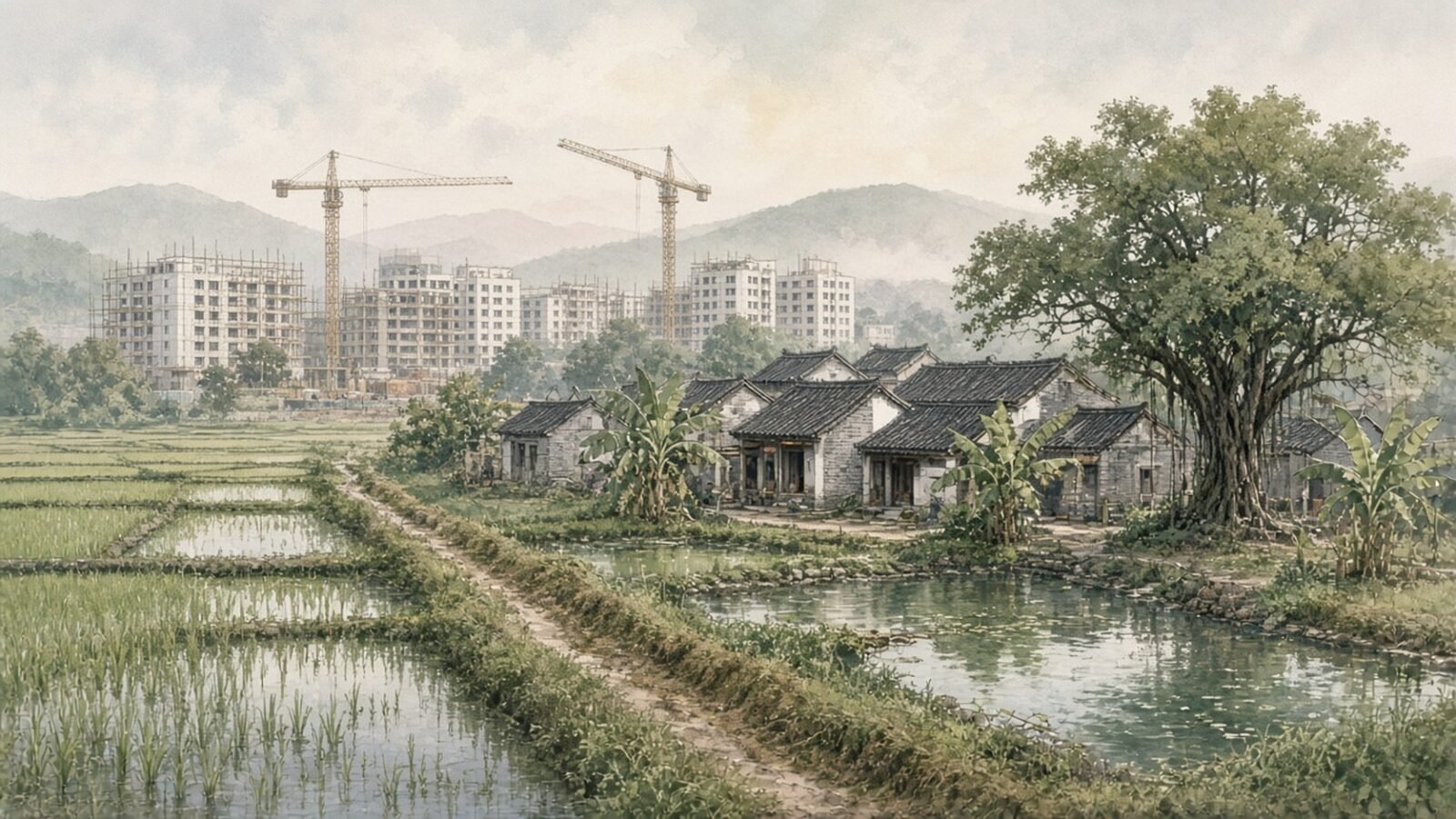
Under the People’s Republic, Bao’an was a frontier county of rice paddies, oyster beds, lychee orchards and fishing villages along Shenzhen Bay and Dapeng Bay. Life was poor, and the border sharpened the contrast. From the hills, villagers could see the lights of Hong Kong, where wages were many times higher. A folk rhyme recorded by historians of the period joked that Bao’an had only three treasures, flies, mosquitoes and Shajing oysters, and that nine homes in ten were empty because people had fled to Hong Kong.
The escape to Hong Kong
The flight to Hong Kong, known in Chinese as da taogang, the “great escape to Hong Kong”, is central to Shenzhen’s origin story. Archives of the Guangdong border authorities, cited by the Shenzhen historian Chen Bing’an and others, record around 565,000 escape attempts through the Shenzhen area between 1954 and 1980, with four great waves in 1957, 1962, 1972 and 1979. The figure counts attempts rather than individuals, and neither the total number of people involved nor the number who died on the way is known with any precision. Escapees came not only from Bao’an but from across Guangdong and other provinces, walking through the hills, swimming across Shenzhen Bay or hiding on freight trains.
The 1962 wave followed the famine after the Great Leap Forward. The 1979 wave was one of the largest; Guangdong records cited in Chinese studies put attempts in the province at hundreds of thousands that year. In 1980 Hong Kong ended its “touch base” policy, which had allowed those who reached the urban area to stay, and began repatriating illegal immigrants immediately. By then Beijing had decided that the answer to the escape problem lay in closing the income gap rather than simply guarding the fence.
Deng Xiaoping and the 1980 decision
After Deng Xiaoping consolidated his position at the Third Plenum in December 1978, reformers in Guangdong, led by the provincial party chief Xi Zhongxun, proposed using the province’s proximity to Hong Kong and Macau to attract investment. In March 1979 Bao’an county was renamed Shenzhen city. In April 1979 central leaders agreed to pilot special zones in Shenzhen, Zhuhai and Shantou in Guangdong, and Xiamen in Fujian. Deng is widely quoted as telling Guangdong officials that the centre had no money to give them and that they must “fight their way out” themselves.
On 26 August 1980 the Standing Committee of the National People’s Congress approved the Regulations on Special Economic Zones in Guangdong Province. That date is treated as Shenzhen’s birthday. The zone, initially a strip of land along the border covering part of today’s Luohu, Futian and Nanshan districts, offered lower taxes, land leases to foreign investors, freer hiring and firing, and permission to experiment with market prices. It was fenced off from the rest of the mainland by a “second line” of checkpoints and barbed wire, so that entering the zone from inland required a permit. Wu Nansheng, who led preparations for the zones, later recalled that the crowds of would-be escapees hiding in the hills seemed to vanish once the regulations were published, a vivid memory though not a measurable fact.
Yuan Geng and the Shekou experiment
Even before the zone existed, an experiment had begun at Shekou, on the tip of the Nanshan peninsula facing Hong Kong across Shenzhen Bay. Its driving force was Yuan Geng, a Bao’an-born veteran of the wartime East River guerrillas who had worked in intelligence and diplomacy and been imprisoned during the Cultural Revolution. In 1978 he was sent to run China Merchants, a Qing-era shipping company that the People’s Republic operated from Hong Kong. He proposed using it to develop an industrial zone on the mainland, and on 31 January 1979 senior leaders in Beijing approved a site at Shekou.
Construction began that summer, and Shekou quickly became a laboratory for practices that were then unusual in the People’s Republic: recruitment and pay by merit, open tendering for contracts, housing that did not depend on a work unit, and competitive bidding for projects. In 1985 residents and workers took part in elections for the zone’s management committee. Around 1981 Yuan’s team put up a billboard with the slogan “Time is money, efficiency is life”, which was controversial in a country where such language still sounded capitalist. Deng saw it during his 1984 visit and it became one of the mottoes of the reform era. China Merchants also founded or backed enterprises that would become national names, including China International Marine Containers (1980), China Merchants Bank (1987) and Ping An Insurance (1988).
Shenzhen speed
The phrase “Shenzhen speed” came from a single building. The International Trade Centre, known as Guomao, was built in Luohu between 1982 and 1985 by a state construction company. After early difficulties, its builders mastered a slip-form technique for pouring concrete, and from around the thirtieth floor they completed one floor every three days. At 160 metres and 53 floors, it was the tallest building in China when it was completed, and its revolving restaurant became a stop for visiting dignitaries.
Speed was not only a construction technique but a political argument. Critics of the zones in Beijing worried that they were reviving capitalism, encouraging smuggling and corruption, and becoming, in the language of the time, “foreign concessions”. In January 1984 Deng visited Shenzhen, including the fishing settlement of Yumin village, whose residents had become unusually prosperous. He left an inscription dated 26 January 1984: “The development and experience of Shenzhen prove that our policy of establishing special economic zones is correct.” Later that year fourteen coastal cities were opened to foreign investment.
Doubts, the stock exchange and the Southern Tour
The late 1980s were turbulent. Inflation, corruption scandals and the political crisis of 1989 strengthened the hand of conservatives, and after the Tiananmen crackdown the future of market reform seemed uncertain. Shenzhen continued to experiment regardless. The Shenzhen Stock Exchange began operating on 1 December 1990 as a local “experimental point”, and Shanghai opened its exchange the same month. Both were politically controversial.
In January 1992 the 87-year-old Deng, holding no formal post except as honorary chairman of the bridge association, set off on what became known as the Southern Tour. He arrived in Shenzhen on 19 January, visited Guomao and several factories, and on 22 January told local officials that reform should be “bolder”, that they should “dare to experiment” and should not act “like women with bound feet”. On stock markets he said that China should try them out and see. Chinese national media initially said little about the trip; it was reported first in Hong Kong, and the local Shenzhen Special Zone Daily published a long account in March. Deng’s intervention revived reform nationally, and the tour is commemorated in Shenzhen by a statue of him striding forward on Lianhua Mountain and by the popular song “The Story of Spring”.
The new markets had growing pains. In August 1992 hundreds of thousands of people queued in Shenzhen for forms entitling them to buy shares in new listings. When the forms ran out amid suspicions that officials had diverted them, protests broke out on 10 August and turned violent. The episode contributed to the creation of the China Securities Regulatory Commission that October, and the Shenzhen exchange later came under direct national supervision.
A city of migrants
Shenzhen grew by migration on a scale few cities have experienced. According to official statistics, the resident population rose from 314,100 in 1979 to about 7.01 million at the 2000 census, 10.36 million at the 2010 census and 17,560,061 at the 2020 census. The city’s statistics bureau later revised the 2010 base to 10.42 million, giving growth of 68.5 per cent in the decade to 2020. These figures count people who had lived in the city for at least six months; for many years a large share of residents did not hold a local hukou, or household registration, and some researchers believe the real number of people living in the city has at times been higher than the official count.
In the 1980s and 1990s most migrants were young people from rural Guangdong, Hunan, Sichuan, Jiangxi and elsewhere who came to work on assembly lines and building sites. Many were women in their late teens and early twenties. Without local registration they had limited access to public housing, schools and social insurance, and wages were low by Hong Kong standards though high by those of their home villages. Shenzhen’s official slogan, “Once you come, you are a Shenzhener”, captures the city’s self-image as open to newcomers; the reality of unequal access to services was harder, although the city has gradually loosened its registration rules.
Urban villages
One of Shenzhen’s most distinctive features is the chengzhongcun, or urban village. As the city expanded, the farmland of villages was requisitioned for development, but villagers usually kept their housing plots. They built upwards, often without permits, packing narrow concrete blocks so tightly together that neighbours could reach across the alleys, the so-called “handshake buildings”. These villages became the main source of cheap housing for migrant workers, as well as a source of income for the original villagers, who became landlords, and their collective shareholding companies.
Places such as Baishizhou in Nanshan, Hubei near the old Luohu centre, and Dafen, known for its painting workshops, became dense, lively neighbourhoods. Planners and officials have long regarded them as unsafe and unplanned; many residents and urbanists see them as the affordable foundation of the city’s growth. Redevelopment has been steady and contested. In 2019 the South China Morning Post reported migrant tenants being forced out as demolition began at Baishizhou, once the city’s largest urban village, and parts of the redevelopment later stalled. The site’s broader story connects to wider questions about how Chinese cities plan for their poorest residents, some of which are discussed in this site’s piece on China’s new kind of city.
Factory of the world
Early Shenzhen industry relied on Hong Kong capital. Manufacturers across the border moved labour-intensive production of textiles, toys and electronics into the zone and later into the wider Pearl River Delta, keeping design, finance and marketing in Hong Kong in what became known as the “front shop, back factory” model. Neighbouring cities such as Dongguan grew in the same way, as described in this site’s article on Dongguan’s manufacturing boom.
The most famous employer became Foxconn, the Taiwanese contract manufacturer, whose Longhua campus in Shenzhen grew into one of the largest factory complexes in the world, assembling devices for Apple and many other brands. In 2010 a series of suicides among young workers there drew global attention; The Guardian reported the tenth apparent suicide at the Shenzhen complex in May that year, and more than a dozen deaths at Foxconn sites in China were reported by the end of 2010. The company raised wages and installed safety nets, and the episode became a symbol of the human costs of the export model. The broader story of Foxconn’s role in global electronics is told in this site’s piece on Foxconn and TSMC.
From shanzhai to Huawei
By the 2000s Shenzhen was also known for shanzhai, a word meaning “mountain stronghold” that came to describe cheap, often imitative consumer electronics. Using turnkey mobile phone chipsets from the Taiwanese designer MediaTek, small firms could design and produce phones in weeks, selling them across China and the developing world. Shanzhai phones were often copies, and intellectual property complaints were frequent, but researchers have also described the system as a fast, collaborative form of innovation that trained engineers and suppliers.
At the other end of the spectrum stood Huawei, founded in Shenzhen in 1987 by Ren Zhengfei, a former army engineer, which began by reselling telephone switches imported via Hong Kong and went on to become the world’s largest telecommunications equipment maker. Its rise, its complicated relationship with the state and its confrontation with the United States, which added it to the Commerce Department’s Entity List in 2019, are covered in this site’s articles on Ren Zhengfei and Jensen Huang and Huawei’s computing strategy. ZTE, another telecommunications giant, was founded in Shenzhen in 1985.
Tencent, DJI, BYD and the new champions
Shenzhen’s private technology companies are its greatest source of pride. Tencent was founded in the city in 1998 by Ma Huateng (Pony Ma) and partners; its QQ messenger and later WeChat, launched in 2011, became central to everyday Chinese life, from messaging to payments, a story touched on in this site’s piece on how China skipped the credit card. BYD began in 1995 as a battery maker and became one of the world’s largest makers of electric vehicles (see BYD’s rise). DJI, founded in 2006 by Frank Wang, turned consumer drones into a Chinese-dominated industry, as described in this site’s DJI article.
These firms share some Shenzhen advantages: dense supplier networks, a young workforce, proximity to Hong Kong’s finance and logistics, and a local government that has generally supported private enterprise. The city also hosts the headquarters of Ping An, China Merchants Bank and many listed firms on the Shenzhen exchange, including its ChiNext board for growth companies, launched in 2009.
Huaqiangbei
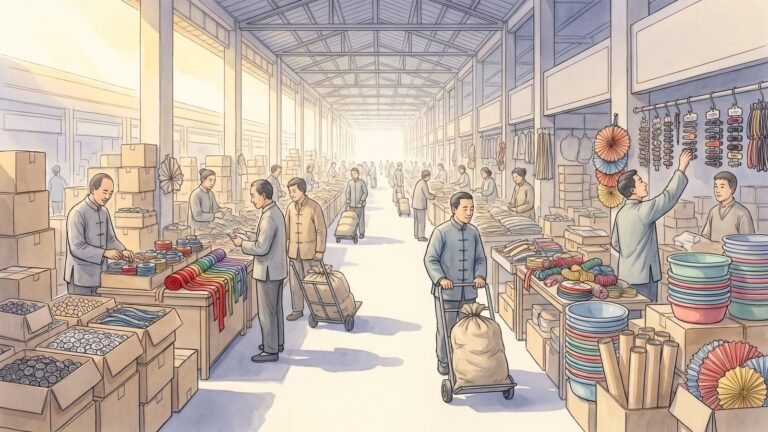
The Huaqiangbei district in Futian embodies the electronics economy. Its multi-storey markets, crowded with stalls selling components, phones, cables and gadgets, became famous among engineers and hardware start-ups worldwide as a place where almost any part could be found and prototypes built quickly. At the height of the shanzhai era it was also a centre of counterfeit and grey-market trade. As phone manufacturing consolidated and online sales grew, the markets shifted towards components, drones and newer consumer electronics, and Huaqiangbei Road was pedestrianised with a metro line beneath it.
Qianhai and the Hong Kong question
Shenzhen’s relationship with Hong Kong has reversed. For decades Hong Kong was the richer partner and source of capital; by 2018, according to official data compared at the average exchange rate, Shenzhen’s economy had become larger than Hong Kong’s, though Hong Kong’s income per head remained far higher. In 2010 the State Council approved the Qianhai Shenzhen-Hong Kong Modern Service Industry Cooperation Zone, on reclaimed land in Nanshan, to pilot closer cooperation in finance, law and professional services. In 2021 it was expanded from about 15 to about 121 square kilometres.
Also in 2010, the “second line” was abolished administratively and the special economic zone was extended to cover the whole city. Shenzhen is now at the heart of the Guangdong-Hong Kong-Macao Greater Bay Area strategy, and the high-speed rail link from Futian station to Hong Kong’s West Kowloon has shortened the journey to minutes. For critics in Hong Kong, particularly after 2019, integration with Shenzhen is part of Beijing’s tightening control; for supporters, it offers Hong Kong a route to growth.
Forty years on
In August 2019 the central government designated Shenzhen a “pilot demonstration area of socialism with Chinese characteristics”, with the aim of making it a global model city by mid-century. On 14 October 2020 Xi Jinping, whose father Xi Zhongxun had championed the zones, spoke at a ceremony marking the 40th anniversary of the special economic zone. He described Shenzhen’s rise from a border town to an international metropolis and called for deeper reform, higher-level opening and closer integration of the Greater Bay Area. Official narratives present Shenzhen as proof that the Communist Party’s reforms worked; many scholars stress the equally important contributions of Hong Kong capital, migrant labour and local experimentation that sometimes ran ahead of national policy.
Today’s challenges
Shenzhen’s success has created problems. Housing is among the least affordable in China, and for young graduates and migrants the dream of buying a flat has receded. The city is home to property developers caught up in China’s real-estate crisis: Evergrande, headquartered in Shenzhen, was ordered into liquidation by a Hong Kong court in January 2024, and China Vanke, whose largest shareholder is the state-owned Shenzhen Metro, has depended on loans from that shareholder, including a 2025 framework for up to 22 billion yuan, to meet its obligations.
The technology rivalry with the United States weighs heavily. Huawei, DJI and other Shenzhen firms have faced export controls and sanctions; DJI was added to the US Entity List in December 2020. Some manufacturing has moved to Vietnam, India and elsewhere in response to rising costs and tariffs. At the same time the city has been pushing into advanced manufacturing, semiconductors, electric vehicles and robotics, and remains one of the most important centres of hardware innovation in the world.
Shenzhen began as a fenced experiment on a frontier people were fleeing. Within two generations it had become a destination for tens of millions. Whether its model can continue in an era of slower growth, geopolitical rivalry and high housing costs is one of the open questions of China’s next decades.
A note on sources
This article draws on the Shenzhen Statistics Bureau’s census bulletins for 2010 and 2020 and statistical yearbook data for 1979; Chinese historical research on the escape to Hong Kong, including work by Chen Bing’an; China Merchants and Shenzhen government accounts of Shekou and the Guomao building; People’s Daily archives on Deng Xiaoping’s 1984 inscription; Xinhua’s text of Xi Jinping’s 2020 speech; reporting by The Guardian, the South China Morning Post, Reuters and other outlets on Foxconn, urban villages, Vanke and sanctions; and academic studies of shanzhai manufacturing. Escape figures are archival counts of attempts, and early population data are official estimates.