On 22 August 2015, at the World Science Fiction Convention held in Spokane, Washington, the Hugo Award for Best Novel was given to The Three-Body Problem, a book by the Chinese writer Liu Cixin, translated into English by Ken Liu. It was the first time the award, one of the oldest and most prominent in the genre, had gone to a translated novel by an Asian author. The author, a computer engineer at a power station in Shanxi province who had written fiction in his spare time for most of his adult life, was not present, and the award was accepted on his behalf. Within a few years the novel and its two sequels had sold many millions of copies in Chinese and in translation, had been read and praised by public figures in many countries, and had been adapted for television in China and in the United States. Their success drew international attention to a tradition of Chinese science fiction that was more than a century old, and that had developed through periods of enthusiasm, suppression and revival closely connected with the history of China itself. This post traces that tradition and the career of the writer whose work brought it to a worldwide audience.
Science fiction in late Qing and Republican China
Science fiction reached China at the end of the nineteenth century as part of a broader movement to absorb Western knowledge after the defeats of the Opium Wars and the war with Japan in 1894 and 1895. Reformers who sought to modernise the country regarded fiction as a means of educating the public and spreading scientific ideas. The most influential of them, the journalist and political thinker Liang Qichao, argued in an essay of 1902 that a nation could be renewed only by renewing its fiction, and in the same year he began to publish an unfinished novel, The Future of New China, set in 1962, in which a prosperous and constitutional China celebrates the sixtieth anniversary of its reform. Liang’s journal published translations of foreign scientific romances, and in the following years the works of Jules Verne, H. G. Wells and other European writers appeared in Chinese, often in free adaptations through Japanese versions.
Among the translators was the young Lu Xun, later regarded as the founder of modern Chinese literature, who as a student in Japan translated two of Verne’s novels, From the Earth to the Moon and Journey to the Centre of the Earth, from Japanese versions in 1903. In his preface he argued that science fiction could carry scientific knowledge to readers who would never read a textbook. In the first decade of the twentieth century Chinese writers produced a substantial body of original fiction of this kind, much of it imagining voyages to the moon, utopian futures and the transformation of China through technology. One of the best known, Xu Nianci’s New Tales of Mr Absurdity of 1905, satirised Chinese society through the adventures of a man whose soul is separated from his body and who travels through the solar system.
The vogue faded in the 1910s, but the genre continued in various forms during the Republican period. The most remarkable work of these decades was Lao She’s Cat Country, serialised in 1932, in which a Chinese pilot crash-lands on Mars and finds a civilisation of cat-people paralysed by corruption, opium addiction, factionalism and the worship of foreign ways, which eventually destroy it. The novel was read as a bleak satire of contemporary China, and its pessimism set it apart from the confident utopias of the late Qing.
Science fiction under socialism
After 1949 science fiction in the People’s Republic was shaped by the Soviet model, in which the genre was valued as a means of popularising science among young readers. Stories and novellas for children described the wonders of future technology, agricultural machinery, space flight and the conquest of nature, in tones of unqualified optimism. Writers such as Zheng Wenguang, whose stories of the 1950s imagined journeys to Mars, and Chi Shuchang were among the most prominent. The genre was regarded as a branch of popular science writing, published by children’s presses and associated with the education system, a classification that would affect its status for decades.
Publication of new fiction largely ceased during the Cultural Revolution, from 1966 to 1976. After its end, science fiction enjoyed a brief and remarkable boom. In 1978, in the spring of the new period of reform, the National Science Conference in Beijing announced that science and technology would be at the centre of the country’s modernisation, and science fiction was promoted as a means of encouraging young people to study science. A short novel by Ye Yonglie, Little Smart Roaming the Future, written in the early 1960s and published in 1978, describing a boy’s visit to a future city of technological marvels, sold an estimated one and a half million copies. Magazines devoted to science fiction appeared in several cities, and translations of Western works were published in large numbers.
The boom was cut short in 1983 by the campaign against “spiritual pollution”, in which party conservatives criticised foreign influences, liberal ideas and literature they considered unhealthy. Science fiction came under attack on two grounds: critics trained in the sciences argued that it spread pseudo-science and misled readers about scientific fact, while political critics argued that some stories presented a gloomy or critical view of society. Publishers cancelled series, magazines closed, and several writers stopped publishing for years. The campaign ended within months, but the genre took most of the following decade to recover.
One magazine survived. Founded in Chengdu in 1979 under the title Science Literature and Art, it continued publication through the difficult years and was renamed Science Fiction World in 1991. Under its editors, notably Yang Xiao, it organised conventions, established the Galaxy Award for Chinese science fiction, and developed a large readership among students. By the late 1990s it claimed a circulation of several hundred thousand copies per issue, making it one of the most widely read science fiction magazines in the world. In 1991 it hosted the annual meeting of World SF, an international association of science fiction professionals, in Chengdu, an event that marked the genre’s return to legitimacy. Almost every Chinese science fiction writer of the next generation, including Liu Cixin, first published in its pages.
An engineer in Shanxi
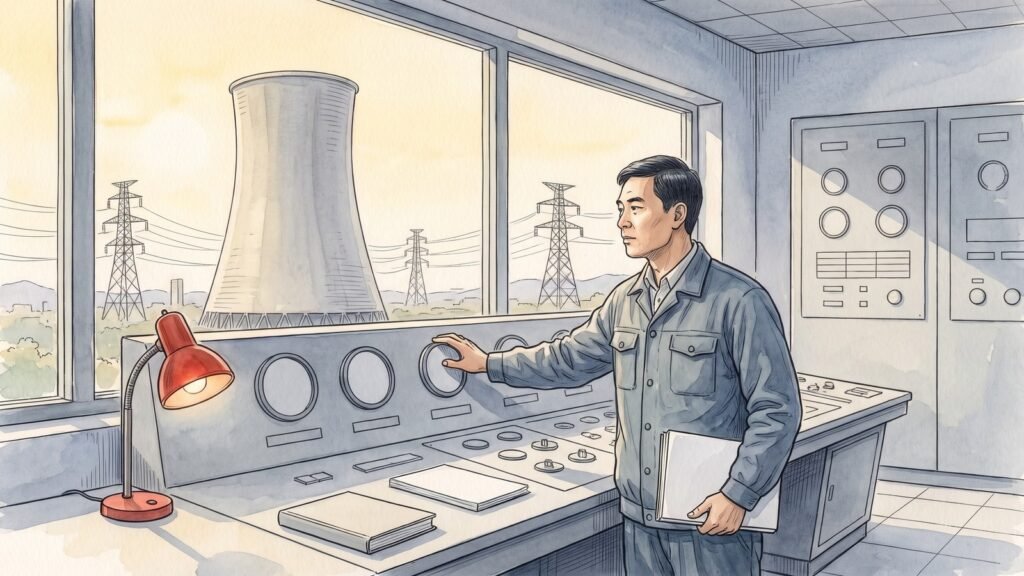
Liu Cixin was born in Beijing on 23 June 1963. His parents’ family came from Luoshan county in Henan, and during the Cultural Revolution his father, who had worked in a publishing house in Beijing, was sent to work in a coal mine in Yangquan, Shanxi, where Liu grew up. He later recalled that as a child in 1970 he watched the passage of Dong Fang Hong 1, China’s first satellite, across the night sky, and that his imagination was shaped by the few books of science and science fiction available to him, including the novels of Verne. He studied water conservancy engineering at the North China University of Water Resources and Electric Power, graduating in 1988, and then took a job as a computer engineer at the Niangziguan power plant, in the mountains near Yangquan, where he worked for more than two decades.
Liu began writing fiction in the 1980s, but his early attempts went unpublished. His first published story, “Whale’s Song”, appeared in Science Fiction World in June 1999. It was followed in quick succession by “With Her Eyes”, “The Wandering Earth”, “Sea of Dreams”, “The Village Teacher”, and many others. In 1999 he won his first Galaxy Award, and he went on to win the award nine times in the following decade, more than any other writer. His stories became known for the enormous scale of their conceptions, often involving the fate of the earth or of humanity across vast spans of time, combined with plain, almost documentary prose and a strong interest in the details of physics and engineering. In “The Wandering Earth“, published in 2000, humanity responds to the impending expansion of the sun by building ten thousand gigantic engines that propel the entire planet out of the solar system on a journey of twenty-five centuries toward another star. In “The Village Teacher” a dying teacher in a poor mountain village, struggling to teach his pupils Newton’s laws, unknowingly saves the earth when an alien fleet tests a random sample of humans for intelligence.
Liu has described himself as a writer in the tradition of “hard” science fiction, influenced above all by Arthur C. Clarke, whose novel 2001: A Space Odyssey he read in the early 1980s and later said had changed his view of what fiction could do. He has spoken of his admiration for the sense of wonder in the classic science fiction of the mid-twentieth century, and in essays and interviews he has distinguished between writing that uses science as a backdrop and writing in which scientific ideas are themselves the protagonists. In an essay published in English as “The Worst of All Possible Universes and the Best of All Possible Earths“, he reflected on the relationship between Chinese reality and science fiction, and on the way the experience of rapid modernisation in China had shaped readers’ expectations of the genre.
The Three-Body Problem
In May 2006 Science Fiction World began serialising Liu’s first long novel, The Three-Body Problem. Its opening chapters are set during the Cultural Revolution, when Ye Wenjie, a young astrophysicist, witnesses the death of her father, a physics professor, at a struggle session organised by Red Guards. Disillusioned with humanity, she is later recruited to a secret military project at a radar base in the mountains of Inner Mongolia, where she discovers that the sun can be used to amplify radio signals and sends a message into space. The message is received by a civilisation on a planet orbiting Alpha Centauri, whose three suns move in the chaotic, unpredictable orbits of the classical three-body problem in physics, causing their world to alternate between stable eras and catastrophic ones. The aliens, the Trisolarans, resolve to leave their system and to conquer the earth, and they dispatch a fleet that will arrive in about four centuries. In the present day of the novel, a nanomaterials researcher, Wang Miao, is drawn into an investigation of a series of scientists’ suicides and of a strange virtual reality game, and gradually uncovers a movement of people on earth who have allied themselves with the coming invaders.
The decision to open the novel during the Cultural Revolution was significant, and the serialised version placed these chapters later in the story, apparently to avoid difficulties with publication; when the book was translated into English, the chapters were restored to the beginning, as Liu had originally intended. The novel was published in book form in China in 2008. It was well received by readers of science fiction but initially reached a limited audience beyond them, and Liu’s reputation grew more slowly than his later fame might suggest.
The Dark Forest and Death’s End
The second volume, The Dark Forest, was published in 2008. It follows humanity’s preparations for the arrival of the Trisolaran fleet, complicated by the fact that the aliens have sent ahead subatomic particles, called sophons, that can monitor every human communication and disrupt particle physics experiments, freezing the progress of fundamental science on earth. Because the aliens can observe everything except the inside of the human mind, the United Nations appoints four “Wallfacers”, individuals given vast resources to devise strategies known only to themselves. One of them, an obscure sociologist named Luo Ji, eventually arrives at a theory of cosmic sociology. Its premises are that every civilisation’s primary need is survival, and that civilisations grow and expand while the total matter in the universe remains constant. Combined with the impossibility of knowing other civilisations’ intentions and the possibility of sudden technological leaps, these premises lead, in Luo Ji’s reasoning, to a universe in which every civilisation is a hunter in a dark forest, compelled to destroy any other whose existence it detects. The “dark forest” theory, as it came to be known, has since been widely discussed by readers, critics and scientists as a possible answer to the Fermi paradox, the question of why no evidence of extraterrestrial civilisations has been found.
The third volume, Death’s End, published in 2010, extends the story across many centuries and eventually to the end of the universe itself. Its central character, Cheng Xin, an aerospace engineer, becomes the holder of the deterrent that keeps the Trisolarans at bay, and her choices, governed by compassion rather than ruthlessness, have consequences of immense scale. The novel introduces weapons that reduce the dimensions of space, the collapse of the solar system into two dimensions, and the possibility of pocket universes outside the main one, and it closes with reflections on the death of the cosmos. It was the most commercially successful of the three volumes on its first publication in China, and it is generally regarded as the most ambitious.
The trilogy as a whole, known in Chinese as Remembrance of Earth’s Past and among readers as the Three-Body trilogy, is distinguished by the scale of its imagination, by the grimness of its view of interstellar relations, and by the seriousness with which it treats the ethical choices of individuals and societies under existential threat. Critics have noted its relative indifference to conventional characterisation, which Liu himself has acknowledged, and its preference for ideas, situations and the long view of history over psychological depth. Its depiction of the Cultural Revolution and of the motivations of its characters has been read in many ways. Some readers have found in it an implicit commentary on Chinese history and politics, while Liu has generally resisted political interpretations, stating in interviews that he writes science fiction to explore the possibilities of the universe and not to comment on contemporary society.
Ball Lightning, Supernova Era and the shorter works
The trilogy is the best known of Liu’s works, but it was preceded and accompanied by other novels and a large body of short fiction. Supernova Era, written in the late 1980s and published in 2003, imagines a world in which radiation from a nearby supernova kills every person over the age of thirteen, leaving children to run the world. Its account of how the children of China and the United States reorganise their societies, and eventually turn to war as a form of play, is among the strangest of his works. Ball Lightning, published in 2004, follows a physicist whose parents were killed by ball lightning when he was a boy, and who devotes his life to understanding the phenomenon, only to find his research absorbed into a military weapons programme. The novel introduces a character, the physicist Ding Yi, who later reappears in the trilogy, and its themes of obsessive scientific curiosity and the uses to which knowledge is put by states anticipate the larger work. English translations of both novels, by Joel Martinsen, were published by Tor in 2018 and 2019.
Liu’s short stories have also been collected in translation, notably in The Wandering Earth, published in 2013, and To Hold Up the Sky, published in 2020. Among the most admired is “Mountain”, in which a former geologist encounters an alien ship whose gravity raises the sea into a mountain of water, and “Sea of Dreams”, in which an alien artist removes the earth’s oceans to make a sculpture of ice in orbit. Several stories, such as “The Village Teacher” and “Taking Care of God”, in which aged aliens who created humanity come to live with ordinary Chinese families as dependants, combine cosmic premises with close attention to life in poor rural communities, an element of his work that reviewers in translation have often singled out. The rural settings reflect Liu’s long residence in the mining and industrial region of Shanxi, far from the literary circles of Beijing and Shanghai.
Themes of survival, scale and time
Critics who have written about Liu’s fiction have identified several recurring themes. The first is the tension between survival and morality. Again and again his characters face situations in which the survival of humanity, or of a civilisation, appears to require the abandonment of ordinary ethical principles, and his stories examine both those who make such choices and those who refuse them. Readers have disagreed about where the sympathies of the author lie: some have read the trilogy as endorsing a hard-headed realism, while others have pointed out that its most morally scrupulous characters are treated with respect even when their choices lead to disaster. Liu himself has described the theme as a thought experiment rather than a statement of belief.
A second theme is scale. Liu’s fiction moves easily between the human and the cosmic, from the life of a single scientist to the fate of galaxies, and from moments to billions of years. This movement produces what readers often describe as a sense of vertigo, and it is closely linked with his admiration for the “sense of wonder” of classic science fiction. A third theme is the relationship between science and the state. In many of his stories scientific discoveries are taken up by governments and militaries, and individual researchers find themselves caught in projects whose ends they cannot control. Commentators have connected this theme to the history of Chinese science in the twentieth century, in which scientists were both celebrated as agents of national strength and subjected to political campaigns, a history that the opening of The Three-Body Problem depicts directly. A fourth theme is the long view of history itself: Liu’s narratives frequently span centuries, and they present human societies as passing through cycles of crisis, adaptation and transformation, often summarised in the chapter headings of the trilogy, which mark the passage of eras rather than years.
Translation and the Hugo Award
In 2012 the China Educational Publications Import and Export Corporation, a state-owned company that promoted Chinese books abroad, commissioned translations of the trilogy into English. The first and third volumes were assigned to Ken Liu, an American writer born in Lanzhou in 1976 who had emigrated to the United States as a child, worked as a software engineer and a lawyer, and become an award-winning author of short fiction. The second volume was translated by Joel Martinsen, an American translator long resident in Beijing. The English edition of The Three-Body Problem was published by Tor Books in New York in November 2014.
Ken Liu’s translation was widely praised for its fluency and for the care with which it handled cultural references, which he explained in footnotes rather than eliminating. The novel received strong reviews and was nominated for the Nebula Award in early 2015. Its route to the Hugo Award was unusual. The Hugo Awards are decided by members of each year’s World Science Fiction Convention, and in 2015 the nominations had been influenced by organised slates promoted by two groups of writers and fans, known as the Sad Puppies and the Rabid Puppies, who objected to what they saw as the dominance of the awards by a particular literary and political sensibility. One of the novels on the final ballot was withdrawn by its author, and The Three-Body Problem, which had been next in the nominations, took its place. In the final vote it won the award, as recorded in the official record of the 2015 Hugo Awards. The victory of a translated Chinese novel in a year dominated by controversy over the awards’ politics gave the result particular prominence.
The following year the Hugo Award for Best Novelette was won by “Folding Beijing”, a story by Hao Jingfang, translated by Ken Liu, as recorded in the record of the 2016 Hugo Awards. Hao, an economist born in 1984, imagined a future Beijing divided into three spaces that fold and unfold in shifts, allotting different amounts of time to classes of different wealth. The story’s treatment of inequality made it one of the most discussed works of Chinese science fiction abroad. In the same period Ken Liu edited two anthologies of contemporary Chinese science fiction in translation, Invisible Planets in 2016 and Broken Stars in 2019, which introduced English-speaking readers to the work of writers such as Chen Qiufan, Xia Jia, Ma Boyong, Tang Fei, Cheng Jingbo and Baoshu, as well as Liu Cixin and Hao Jingfang.
A new generation of writers
The writers who emerged alongside and after Liu Cixin represent a wide range of styles and concerns. Han Song, a journalist at the Xinhua news agency born in 1965, is often named with Liu and Wang Jinkang as one of the three leading Chinese science fiction writers of the 2000s. His fiction, including the novels Subway and the Hospital trilogy, is dark, surreal and allusive, depicting modern institutions and transport systems as labyrinths in which individuals are transformed and lost. Critics have frequently contrasted his work with Liu’s: where Liu writes in a clear, expository style about cosmic events, Han writes in a dense, dreamlike style about the strangeness of everyday modern life.
Chen Qiufan, born in 1981 in Shantou, Guangdong, worked in the technology industry before turning to fiction. His novel The Waste Tide, published in Chinese in 2013 and in English in 2019, is set on an island in southern China where migrant workers process electronic waste from around the world, and it combines cyberpunk elements with an account of environmental damage and social inequality drawn from the real e-waste towns of Guangdong. Chen later collaborated with the technologist Kai-Fu Lee on AI 2041, a book combining stories and essays about the future of artificial intelligence. Xia Jia, born in 1984, wrote one of the first doctoral dissertations on Chinese science fiction and became known for lyrical stories blending science fiction with fantasy and traditional Chinese motifs. Many of these writers have described a “new wave” of Chinese science fiction, in which the genre became a means of exploring the experience of rapid modernisation, urbanisation and technological change.
Wang Jinkang, born in 1948 and trained as an engineer, began publishing in the early 1990s and won the Galaxy Award many times before Liu’s rise. His fiction, often concerned with biology, evolution and the ethics of genetic engineering, helped to establish the serious, idea-driven style that characterised the revival of the genre in Science Fiction World. Younger writers have also responded directly to Liu’s work. Baoshu, the pen name of Li Jun, wrote a sequel to the trilogy, The Redemption of Time, first circulated online as fan fiction and later published with Liu’s approval, in Chinese in 2011 and in English in 2019. Jiang Bo, Zhang Ran, Tang Fei and many others have published novels and stories that range from space opera to near-future satire, and the growth of online literature platforms in China has produced a vast amount of popular science fiction serialised on the internet, reaching readers in numbers that printed magazines could not match. The diversity of this output has led Chinese critics to argue that the genre no longer depends on any single author, even one as prominent as Liu.
Academic interest in the genre grew alongside its popularity. Scholars in China and abroad, including the literary critic Song Mingwei, have written about the “new wave” and its relationship to China’s modernisation, and university courses on science fiction have been established in several Chinese institutions. In 2016 the government’s science and technology association, the China Association for Science and Technology, began organising an annual science fiction conference, and official bodies increasingly promoted science fiction as a means of encouraging innovation and scientific interest among the young, a role that echoed the hopes placed on the genre in 1902 and 1978.
Film, television and an industry
The commercial success of the trilogy and of Chinese science fiction more generally led to efforts to adapt it for the screen. An early attempt to film The Three-Body Problem, begun in 2015, was completed but never released. The breakthrough came instead with The Wandering Earth, a film directed by Frant Gwo, loosely based on Liu’s story, which opened during the Spring Festival holiday in February 2019. Made with a large budget and extensive visual effects, it was a major commercial success, earning about 4.7 billion yuan at the Chinese box office and becoming one of the highest-grossing films in Chinese history. A sequel, The Wandering Earth II, was released in January 2023 and was also a large success. The films were widely described as the beginning of Chinese science fiction cinema on an industrial scale, and the government’s film administration issued guidance in 2020 encouraging the development of science fiction films.
The trilogy itself was adapted as a television series, Three-Body, produced by Tencent Video, which was broadcast in China in early 2023 in thirty episodes and was praised for its fidelity to the novel. In March 2024 the streaming service Netflix released 3 Body Problem, an English-language adaptation created by David Benioff, D. B. Weiss and Alexander Woo, which moved much of the action to the United Kingdom and altered the characters while retaining the novel’s central story and its opening in the Cultural Revolution. The Netflix series drew large audiences internationally and was renewed for further seasons. The two adaptations were compared extensively by viewers and critics in China and abroad.
Liu’s fame also turned him into a public figure. He left the power plant in the 2010s, after it was restructured, and devoted himself to writing and to work as a consultant on adaptations of his books. He has been named in Chinese media as a model of the scientific imagination that the country seeks to encourage, and his works have been read by prominent figures in many countries. The language of his novels, such as “dark forest” and “dimensional strike”, entered Chinese everyday speech and business jargon. The relationship between his fiction and real Chinese ambitions in space is reflected in recent developments described in the post on China’s race to put AI in orbit.
Science fiction museums and the Chengdu Worldcon
Chengdu, the home of Science Fiction World, became the centre of the genre’s institutional life in China. In December 2021 the city’s bid to host the World Science Fiction Convention was selected by members of that year’s convention. The 81st Worldcon took place in Chengdu in October 2023, the first to be held in China, and it was organised around a newly built Chengdu Science Fiction Museum, a large building of curved form on a lake in the city’s Pidu district, designed by the architectural firm of Zaha Hadid. The convention’s organisation and the management of its Hugo Awards attracted criticism and later controversy in the science fiction community abroad over questions of eligibility, but the event marked the degree to which science fiction had become a recognised part of Chinese culture. Details of the convention series are kept by the World Science Fiction Society.
Other cities have also invested in the genre. Beijing’s Shijingshan district established a science fiction industry cluster around the former Shougang steelworks, where film studios, visual effects companies and the annual China Science Fiction Conference were concentrated, and Shenzhen and Chongqing have sponsored festivals and awards. Publishers report that science fiction became one of the fastest-growing genres in the Chinese book market in the late 2010s and early 2020s, and that the readership broadened from students and enthusiasts to a general audience.
Reading Chinese science fiction abroad
The reception of Liu’s work outside China has prompted reflection on what readers in different countries seek in it. In the English-speaking world many reviewers responded to the trilogy’s scale and its revival of the large-scale ambitions of classic mid-century science fiction, which some felt had become less common in Western writing. Others were drawn by its Chinese setting and its depiction of the Cultural Revolution, and read the books as offering an insight into Chinese ways of thinking about history, power and survival. A profile of Liu in The New Yorker, “Liu Cixin’s War of the Worlds“, published in 2019, explored the tension between the universalist ambitions of his fiction and the particular history from which it emerged, and recorded his own reluctance to be read as a political writer.
Liu and his translators have tended to emphasise the universality of science fiction as a genre concerned with humanity as a whole rather than with any one nation. Ken Liu, in particular, has argued in essays and talks that “Chinese science fiction” should not be read primarily as a window onto China, but as literature in its own right, written by individuals with diverse views and styles. The variety of the writers now available in translation, from Liu’s cosmic narratives to Han Song’s nightmares and Xia Jia’s lyrical fantasies, supports that argument.
A tradition renewed
The history of Chinese science fiction from Liang Qichao to Liu Cixin can be read as a series of attempts to imagine China’s place in a modern world defined by science and technology. In the late Qing it expressed hopes for national renewal through Western knowledge; in the 1950s and the late 1970s it served the state’s goal of popularising science; in the reform era it became a means of exploring the dislocations and possibilities of rapid change. Liu Cixin’s achievement was to combine the scientific seriousness and the sense of wonder of the classic genre with a vision of history shaped by China’s experience of the twentieth century, and to do so on a scale that captured readers far beyond the genre’s traditional audience. His success, and that of the writers who followed him into translation, made Chinese science fiction one of the most widely recognised forms of contemporary Chinese culture in the world.
References
- Liu Cixin, Grokipedia
- The Three-Body Problem (novel), Grokipedia
- The Dark Forest, Grokipedia
- Death’s End, Grokipedia
- The Wandering Earth, Grokipedia
- Hao Jingfang, Grokipedia
- 2015 Hugo Awards – The Hugo Awards
- 2016 Hugo Awards – The Hugo Awards
- The Worst of All Possible Universes and the Best of All Possible Earths – Liu Cixin, Reactor
- Liu Cixin’s War of the Worlds – Jiayang Fan, The New Yorker, 2019
- World Science Fiction Society – Worldcon