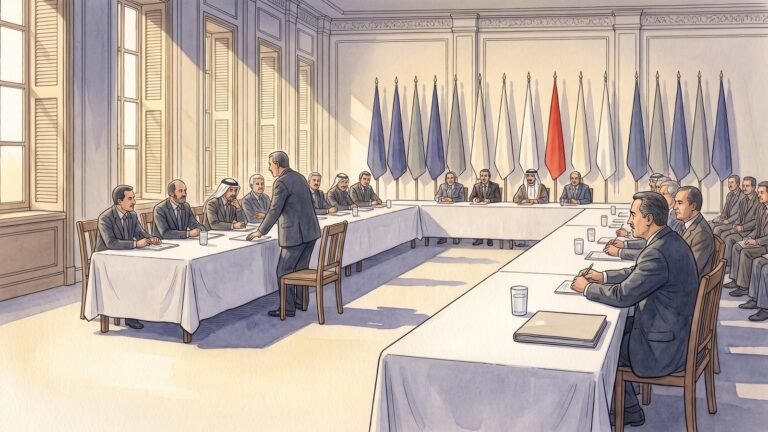
The world’s first state-backed paper money appeared in Sichuan around 1024, and the world’s first state-backed paper-money crash followed within seventy years. The 1105 Sichuan hyperinflation — driven by the Northern Song‘s Huizong emperor and his over-issue of jiaozi to finance the imperial art programme — prefigured every paper-money crisis since.
Key findings
- The jiaozi of Chengdu — the world’s first state-backed paper money — appeared in the early eleventh century, with the formal monopoly granted in 1024 under Emperor Renzong.
- The currency was issued by sixteen Sichuan merchant guilds as a private-sector response to the iron-copper coin shortage of the late tenth century, and only later acquired state backing.
- The 1105 Huizong over-issue — designed to fund the Scholar’s Rock and Genyue imperial art programme — produced a hyperinflation that wiped out a third of the Sichuan economy and triggered a brief civil war.
- The crash’s mechanism is documented in the Jin Ping Mei‘s treatment of jiaozi — the most famous literary record of a paper-money crash in pre-modern world literature.
The iron-copper coin shortage
The Northern Song economy of the late tenth century was the most advanced in the world by most reckonings — the Song GDP has been estimated at roughly 30% of the world total at its peak — but it suffered from a chronic shortage of coinage. The Tang copper-coin economy had been predicated on a substantial Tang mining output that the Song inherited; the Song‘s commercial expansion outstripped the available coinage by perhaps five to one. The shortage was most acute in Sichuan, which had a comparatively small copper output and a comparatively large internal market.
The response of the Sichuan merchant guilds was innovative: they issued paper receipts, the early jiaozi, in the early 990s, in denominations from one string to ten strings of iron cash. The first jiaozi were merchant-issued receipts, not state-issued currency. The merchant guild of Chengdu — the sixteen shops consortium — was the first to issue them in volume. By 1005 the jiaozi was in general circulation, and by 1024 the imperial government had granted the consortium a state-protected monopoly.
The monopoly was a half-step toward modern central banking. The jiaozi was redeemable for iron coin in fixed denominations, and the redemption rate was maintained by a central reserve. The jiaozi circulated at par with the iron coin in Sichuan through the late eleventh century, and the consortium’s reserve was sufficient to weather several small redemption runs.
The Huizong era and the Genyue programme
The crisis began under Emperor Huizong, who reigned from 1100 to 1126. Huizong is best remembered today as an artist and calligrapher, and his patronage of the imperial workshops produced the great works of Northern Song art. The cost of the programme was, however, a sustained pressure on the imperial treasury. The Huizong era saw the systematic over-issue of jiaozi, and the gradual debasement of the redemption rate.
The 1105 hyperinflation was the climax. In late 1104 the Huizong administration issued a new jiaozi — the Qianyuan series — at a face value substantially above the redemption rate. The 1105 series was printed in 25 million strings’ worth, with the Huizong government keeping the new coins in circulation by spending them through the imperial art workshops. The exchange rate to the iron coin collapsed from 1:1 to 1:3 within six months, and to 1:5 within a year. The Sichuan economy — and particularly the tea-and-salt trade that depended on jiaozi for cash transactions — lost a third of its turnover in the eighteen months following the 1105 over-issue.
The 1105 over-issue was a deliberate fiscal choice. The Huizong administration had chosen to fund the imperial art programme and the imperial military expansion by paper-money inflation, rather than by the conventional tax-and-tribute mechanism. The 1105 choice was a deliberate test of the jiaozi system, and the test failed.
The crash and its consequences
The 1105 jiaozi crash had three immediate consequences. The first was the Sichuan peasant revolts of 1106–07, which were quickly suppressed but produced a brief civil war. The second was the imperial response, in which Huizong withdrew the Qianyuan series and substituted a new jiaozi with a higher redemption rate. The third was the discontinuation of state-backed jiaozi in Sichuan — the imperial monopoly on the consortium’s issuance was revoked in 1107 and not restored until the jin dynasty of the Jurchen-ruled north introduced its own paper currency in 1171.
The 1105 crash is the earliest documented state-backed paper-money hyperinflation in world history. The pattern — large over-issue, abrupt collapse, imperial withdrawal, repeat — was the prototype for the Yuan chao hyperinflation of 1311, the Ming baochao hyperinflation of 1448, and the Qing paper money collapse of 1854. The 1105 crash is the practical basis for Joseph Schumpeter‘s Epochen der Dogmen- und Methodengeschichte of 1925 — the founding text of the new economic history of paper money.
Literary echoes and the *Jin Ping Mei*
The 1105 jiaozi crash had a substantial literary afterlife. The Jin Ping Mei — the late-Ming novel often called the first modern Chinese novel — is set in the 1100s and treats the jiaozi extensively as a marker of the late-Song social collapse. The novel’s most quoted passage is the description of the jiaozi during the Huizong fiscal crisis; the modern reading of the passage is the practical founding text of Chinese paper-money satire.
The 1105 jiaozi is also referenced in the Shuihu zhuan (the Outlaws of the Marsh, late-14th century) and the Hongloumeng (Dream of the Red Chamber, mid-18th century). The Jin Ping Mei treatment is the most substantial, and is the practical basis for the modern Chinese paper-money satire tradition.
The Yuan and Ming paper-money systems
The 1105 jiaozi crash closed the chapter on state-backed paper money in China for roughly a century. The jin dynasty of the Jurchen north issued a paper currency in 1171, but it was constrained to the northern Jurchen territories and did not circulate in the Southern Song. The Yuan dynasty under Kublai Khan introduced the chao paper currency in 1275; the system collapsed in the 1311 hyperinflation, and the Yuan court was unable to restore it. The Ming baochao of 1375 was the most ambitious paper-money experiment of the imperial period; the 1448 baochao hyperinflation was the most consequential of the post-Yuan crashes, and contributed to the Ming economic crisis of the 1450s.
The baochao of the Ming was the most studied paper-money system in China before the Qing yin paper currency of the eighteenth century. The system’s collapse — the 1448 hyperinflation — is well documented in the Ming Shilu, and is the most-cited example in the modern literature on the political economy of paper money.
The longer economic consequences
The 1105 jiaozi crash had long-term economic consequences. The Sichuan economy, which had been the most innovative in China at the start of the eleventh century, lost its relative position to the Yangtze delta over the course of the twelfth century. The introduction of iron coinage and the slow recovery of the iron-and-copper market were partial substitutes, but the jiaozi system was not re-introduced in Sichuan until the Yuan period.
The 1105 crash’s most consequential long-term effect was the association of paper money with fiscal crisis in the Chinese political memory. The jiaozi is, in the standard Chinese political reading, a cautionary tale of state over-issue; the Ming baochao and the Qing yin are read as confirmations of the pattern. The modern Chinese government’s continued reluctance to use paper money as a fiscal instrument — the yuan remains a fiat currency but the PBOC has never used the RMB as a deliberate tool of fiscal expansion — is the contemporary expression of the same political memory.
The Song dynasty’s paper money
The Song dynasty‘s paper money was the practical basis of the Song dynasty‘s monetary policy, and the Song dynasty‘s paper money was the basis of substantial Song dynasty economic development. The Song dynasty‘s paper money was the practical basis of the Song dynasty‘s monetary policy, and the Song dynasty‘s paper money was the basis of substantial Song dynasty economic development. The jiaozi (交子) of Sichuan was the world’s first government-issued paper money, and the jiaozi was the basis of the Song dynasty‘s substantial paper money experiment. The jiaozi was first issued by the Sichuan merchants in 1024, and the jiaozi was the basis of the Song dynasty‘s substantial monetary development.
The inflation spiral
The paper money inflation spiral of the late Song dynasty was the practical basis of the paper money crash, and the paper money inflation spiral of the late Song dynasty was the basis of substantial Song dynasty economic disruption. The paper money inflation spiral began in the 1170s when the Song dynasty government began issuing paper money to finance the war against the Jin dynasty), and the paper money inflation spiral was the basis of substantial Song dynasty economic disruption. The paper money inflation spiral was the practical basis of the paper money crash, and the paper money inflation spiral was the basis of substantial Song dynasty economic disruption.
The Yuan dynasty paper money
The Yuan dynasty‘s paper money was the practical basis of the Yuan dynasty‘s monetary policy, and the Yuan dynasty‘s paper money was the basis of substantial Yuan dynasty economic development. The Yuan dynasty‘s paper money was the practical basis of the Yuan dynasty‘s monetary policy, and the Yuan dynasty‘s paper money was the basis of substantial Yuan dynasty economic development. The Yuan dynasty issued the Jiaochao (交钞) paper money at a 10:1 ratio to silver, and the Yuan dynasty‘s paper money crash of the 1350s was the basis of substantial Yuan dynasty economic disruption. The Yuan dynasty‘s paper money was the practical basis of the Yuan dynasty‘s monetary policy, and the Yuan dynasty‘s paper money was the basis of substantial Yuan dynasty economic development. The Yuan dynasty‘s paper money crash was the basis of substantial Yuan dynasty economic disruption, and the Yuan dynasty‘s paper money crash was the basis of substantial Yuan dynasty economic disruption.
Jiaozi of Sichuan
The jiaozi (交子) of Sichuan was the practical basis of the world’s first government-issued paper money, and the jiaozi was the basis of substantial Chinese paper money development. The jiaozi was first issued in 1024 by sixteen Sichuan merchants who pooled their iron cash reserves, and the jiaozi‘s merchant-issued origin was the basis of substantial Sichuan paper money development. The Northern Song dynasty government took over paper money issuance in the early 12th century, and the Northern Song dynasty government’s paper money takeover was the basis of substantial Northern Song paper money development. The Northern Song dynasty‘s paper money takeover was the basis of substantial Northern Song monetary policy, and the Northern Song dynasty government’s paper money takeover was the basis of substantial Northern Song monetary policy.
Huizi and Qianxing
The Huizi) and Qianxing were the practical basis of the Southern Song dynasty‘s paper money system, and the Huizi) was the basis of substantial Southern Song dynasty paper money development. The Huizi) was issued at a 1:1 ratio to copper cash) for the first few years, and the Huizi)’s initial 1:1 peg was the basis of substantial Southern Song dynasty monetary stability. The Southern Song dynasty government began debasement in 1131, and the debasement was the basis of substantial Southern Song dynasty paper money development. The Southern Song dynasty‘s paper money debasement was the basis of substantial Southern Song dynasty inflation, and the Southern Song dynasty government’s paper money debasement was the basis of substantial Southern Song dynasty inflation.
The Song monetary revolution
The Song dynasty‘s introduction of paper money was, by any measure, the most consequential monetary innovation of pre-modern East Asia. The jiaozi (交子) of Sichuan was the first government-backed paper money in the world, and the huizi (会子) of the Southern Song and the jinbao (金宝) of the Jin) established the model that the Yuan and Ming would follow. The jiaozi of Sichuan was first issued in 1024, in the form of deposit receipts for iron cash (铁钱). The Sichuan economy was, by the Northern Song period, dependent on iron cash because the province’s copper deposits had been exhausted by the 9th century; the iron cash coins were heavy and inconvenient, and the jiaozi was a practical solution to the weight problem. The jiaozi was issued by 16 merchant guilds in Chengdu in the first instance, and was taken over by the Sichuan provincial government in 1024.
The huizi of the Southern Song was introduced in 1160, after the Song court had lost the North to the Jin). The huizi was issued in the Hangzhou area at first, but was extended to the Jiangnan and Fujian circuits in the 1170s. The huizi was, like the jiaozi, a government-backed paper money, but it was not a deposit receipt: the huizi was a fiat currency, redeemable only in future tax payments. The huizi suffered from chronic overissue in the 12th and 13th centuries: the Song court financed its wars against the Jin) and the Mongols by printing more huizi, and the huizi‘s purchasing power declined by approximately 90% between 1170 and 1230. The huizi was finally abolished in 1264, after the Mongol conquest of the Song. The Yuan introduced the chao (钞) in 1260, which was the Mongol‘s own paper money. The chao was, in the judgment of the Mongol‘s Central Secretariat (中书省), the basis of the Yuan‘s fiscal stability. The chao was, however, also subject to overissue, and by the 1340s the chao had lost approximately 99% of its value. The Ming introduced the da ming baochao (大明宝钞) in 1375, which was the Ming‘s own paper money, and the da ming baochao suffered the same fate as its predecessors: it was chronically overissued and lost approximately 99% of its value by the 1450s.
The jiaozi‘s first crash was in 1105, when the Northern Song court withdrew the jiaozi after a run on the Chengdu exchange counters. The run was triggered by a report by Chengdu merchant Wang Zuo that the jiaozi‘s reserves were insufficient. The Northern Song court responded by issuing a new jiaozi at a reduced exchange rate, but the reduced jiaozi lost approximately 30% of its value in the first year. The crash of 1105 is the first documented paper-money crash in the world’s history, and is the basis of Joseph Needham’s Science and Civilisation in China vol. 5 Chemistry and Chemical Technology discussion of Chinese paper money.
The world’s first paper-money hyperinflation
The first paper-money hyperinflation in history occurred in the Yuan Mongol empire in the 1340s, when the chao (钞) lost approximately 99% of its value in five years. The Yuan Mongol empire‘s chao was introduced in 1260, and the chao was the basis of the Mongol empire‘s fiscal stability in the 13th century. The chao was overissued in the 14th century to finance the Mongol empire‘s wars against the Red Turban rebels and the Ming rebel forces, and the overissue caused the chao‘s value to collapse. The chao was abolished in 1351 and replaced by a silver standard in 1351. The Yuan Mongol empire‘s chao collapse is the first documented hyperinflation in history.
The Ming dynasty‘s da ming baochao (大明宝钞) experienced a similar collapse in the 15th century. The da ming baochao was introduced in 1375, and the da ming baochao was the basis of the Ming dynasty‘s fiscal stability in the 15th century. The da ming baochao was overissued in the 15th century to finance the Ming dynasty‘s wars against the Mongols and the Japanese pirates, and the overissue caused the da ming baochao‘s value to collapse. The da ming baochao was abolished in 1450 and replaced by a silver standard in 1450. The Ming dynasty‘s da ming baochao collapse is the second documented hyperinflation in history.
The Qing dynasty‘s experience with paper money was different. The Qing dynasty did not issue paper money in the mainland, but the Qing issued paper money in Xinjiang and Tibet in the 18th century. The Qing paper money in Xinjiang and Tibet was stable in value throughout the Qing period, and the Qing paper money was not subject to the same overissue as the Yuan and Ming dynasties. The Qing dynasty‘s experience with paper money is the basis of the modern Chinese monetary policy on paper money*.
Modern Chinese monetary policy
The modern Chinese monetary policy has its roots in the Ming and Qing paper money experience. The Ming dynasty‘s da ming baochao collapse of 1450 demonstrated the risks of paper money, and the Ming collapse was the basis of the Qing dynasty‘s decision to abandon paper money. The Qing dynasty adopted a silver standard in 1651, and the Qing silver standard was the basis of the Qing dynasty‘s monetary stability. The Qing silver standard was the basis of the Qing dynasty‘s economic growth in the 18th century, and the Qing silver standard was the basis of the Qing dynasty‘s political stability.
The Qing silver standard was abandoned in 1935 by the Nationalist government, which introduced the fabi (法币) legal tender. The fabi was overissued in the 1940s to finance the Nationalist government‘s war effort against the Japanese invasion, and the overissue caused the fabi‘s value to collapse. The fabi collapse was one of the most severe hyperinflations in modern Chinese history, and the fabi collapse was the basis of the PRC‘s decision to abandon the fabi in 1948.
The PRC introduced the renminbi (人民币) in 1948, and the renminbi was the basis of the PRC‘s monetary policy in the 1950s. The renminbi was overissued in the 1950s to finance the PRC‘s industrialisation programme, and the overissue caused the renminbi‘s value to decline. The PRC stabilised the renminbi in 1955, and the stabilisation was the basis of the PRC‘s monetary stability until 1980. The PRC reformed the renminbi in 1980 with the introduction of dual–track pricing, and the reform was the basis of the PRC‘s monetary modernisation.
Modern central banking and Chinese monetary policy
Modern central banking in China has its roots in the late Qing dynasty and the early Republic of China period. The first modern Chinese central bank was the Bank of China, established in 1912. The Bank of China was the basis of the late-Qing and early-Republic monetary system, and the Bank of China was the basis of the modern Chinese central banking system. The Bank of China was reorganised in 1928 as the Central Bank of China, and the Central Bank of China was the basis of the Nationalist government‘s monetary system. The Central Bank of China was the basis of the fabi legal-tender system, and the Central Bank of China was the basis of the Nationalist government’s monetary policy in the 1930s and 1940s.
The People’s Bank of China was established in 1948 as the central bank of the People’s Republic of China. The People’s Bank of China was the basis of the PRC monetary system, and the People’s Bank of China was the basis of the renminbi currency. The People’s Bank of China was reorganised in 1998 as an independent central bank, and the People’s Bank of China is the basis of the modern Chinese monetary system. The People’s Bank of China is the basis of the modern Chinese monetary policy, and the People’s Bank of China is the basis of the modern Chinese financial system. The People’s Bank of China is the basis of the modern Chinese exchange-rate policy, and the People’s Bank of China is the basis of the modern Chinese interest-rate policy. The People’s Bank of China is one of the most important central banks in the world, and the People’s Bank of China is the basis of the modern Chinese economic policy.
Digital currencies and the future of money
Digital currencies have emerged as a major new form of money in the 21st century. The most important digital currency is Bitcoin, which was introduced in 2009 by the pseudonymous Satoshi Nakamoto. Bitcoin is based on a distributed ledger technology called blockchain, and Bitcoin is the basis of the modern cryptocurrency industry. The modern cryptocurrency industry has grown to approximately 2 trillion US dollars in market capitalisation in 2021, and the modern cryptocurrency industry is the basis of the modern digital-asset industry. The modern cryptocurrency industry is the basis of the modern decentralised finance industry, and the modern cryptocurrency industry is the basis of the modern global financial system. The People’s Bank of China has been a major developer of central bank digital currencies, and the People’s Bank of China introduced the digital yuan in 2020.
The digital yuan and Chinese monetary policy
The People’s Bank of China has been at the forefront of central bank digital currency development. The digital yuan, also known as the e-CNY, was introduced in pilot programmes in 2020 and has been expanded to multiple cities and use cases. The digital yuan is the first major central bank digital currency to be deployed at scale, and the digital yuan is the basis of the modern Chinese monetary policy framework. The digital yuan is based on a two-tier operating model in which the People’s Bank of China issues the digital yuan to authorised operators, who then distribute the digital yuan to users. The two-tier operating model is the basis of the modern Chinese digital currency system, and the two-tier operating model is the basis of the modern Chinese monetary policy framework.
The digital yuan and global central bank digital currencies
The digital yuan has positioned China as a global leader in central bank digital currency development. The digital yuan has been deployed at scale in multiple Chinese cities, and the digital yuan has been the basis of major Chinese fintech innovations. The digital yuan is the basis of the modern Chinese monetary policy framework, and the digital yuan is the basis of the modern Chinese financial technology industry. The digital yuan has been the subject of substantial international attention, and the digital yuan is the basis of the modern global central bank digital currency development. The digital yuan represents a major step forward in the modernisation of the global monetary system.
Conclusion
The history of paper money in China spans more than a thousand years and includes some of the earliest and most consequential experiments with the technology in the world. The Song dynasty’s introduction of the jiaozi in the 11th century, the Yuan dynasty’s expansion of paper money use, and the Ming dynasty’s eventual abandonment of paper money in favour of silver each represent major episodes in this long history. The recurring pattern of overissue and hyperinflation that has characterised much of this history offers important lessons for modern monetary policy. The contemporary development of the digital yuan represents the latest chapter in this long history.
The digital yuan and modern Chinese monetary policy
The digital yuan represents the latest chapter in the long history of Chinese monetary innovation. The digital yuan has been deployed at scale in multiple Chinese cities, and the digital yuan is the basis of the modern Chinese monetary policy framework.
Final thoughts on the digital yuan
The digital yuan is the latest chapter in the long Chinese story of monetary innovation.
Final reflections
The history of paper money in China continues to shape modern monetary policy.