In the autumn of 1895, Kaiser Wilhelm II sent Tsar Nicholas II an unusual present. It was a picture drawn by the history painter Hermann Knackfuss from the Kaiser’s own sketch. The Archangel Michael, sword in hand, gathers Valkyrie-like female figures representing the nations of Europe, among them Germania, Britannia and Marianne, and points them east. Over a European landscape a storm is rolling in, and in its clouds sits a Buddha, accompanied by a fire-breathing dragon. Beneath the image, in the Kaiser’s handwriting, ran the caption Völker Europas, wahrt eure heiligsten Güter: “Peoples of Europe, guard your most sacred goods.”
Reproduced in the Leipzig Illustrirte Zeitung and printed with French and English captions, the picture became the best-known image of an idea spreading fast in the 1890s: that the peoples of East Asia, as migrant workers, rising military powers or sheer numbers, threatened the West. The idea had a name that would last for more than a century: the “Yellow Peril“. From the Kaiser’s allegory to exclusion laws, the Rock Springs massacre, Limehouse panics, pulp invasion novels, wartime internment and the COVID-19 pandemic, it has changed its target many times.
This site has already looked at the stereotype’s most famous product, Sax Rohmer’s Dr Fu Manchu. This article takes the wider view, as a critical history of the stereotype and the policies it justified. It covers how the idea was built, written into law around the Pacific, played out in Britain’s ports, sold in fiction and answered by the Chinese and Asian-diaspora voices it targeted, and why it keeps returning.
A painting for the tsar, and a phrase for the age
Knackfuss’s picture came at a precise moment. In April 1895 Japan had defeated China, and Europe suddenly had to reckon with a modernised Asian military power. The Illustrirte Zeitung of 16 November 1895, quoted in the catalogue of the Schloss Wernigerode museum, explained the allegory for readers: Germany stood ready to defend, the dark figure was Russia, the figure in the Phrygian cap was France, and Austria was drawing a “hesitant England” towards the group. When the tsar was pleased with the gift, Wilhelm is said to have remarked, “Also es wirkt, das ist sehr erfreulich“: so it works, which is very pleasing.
Where the phrase came from
Sources disagree about exactly when the phrase entered English. The German gelbe Gefahr is closely tied to Wilhelm’s propaganda of the mid-1890s, and the French péril jaune was in circulation by 1897, when the sociologist Jacques Novicow wrote about it. Philip French’s review of Christopher Frayling’s 2014 study The Yellow Peril: Dr Fu Manchu and the Rise of Chinaphobia credits Frayling with finding the first reference in the London Daily News of 21 July 1900, which wrote of “the yellow peril in its most serious form” at the height of the Boxer crisis. Other researchers cite earlier English uses in the 1890s. Either way, by 1900 the phrase was common and elastic, covering Chinese migration, Japanese power, an imagined alliance of the two or simply Asia’s population.
The fear was older than the words. The publisher’s description of John Kuo Wei Tchen and Dylan Yeats’s 2014 anthology Yellow Peril! An Archive of Anti-Asian Fear calls it “one of the oldest and most pervasive racist ideas in Western culture”, rooted in the era of European colonialism. Frayling traces the British turn from 18th-century admiration of China to 19th-century contempt. As French summarised him, the Opium Wars came first, then a literary fascination with opium dreams, and then a view in which Britain, the aggressor, “managed to cast the oppressed victims as a threatening, expansionist foe”.
Gold Mountain and the first exclusion laws
The stereotype did its most direct damage in the United States, where Chinese migrants had arrived in large numbers from the 1850s to work in gold mines, on the transcontinental railway and in agriculture. As the economy slowed in the 1870s, white labour organisers blamed them for low wages. The National Park Service notes that the Californian labour leader Denis Kearney ended his speeches with “and whatever happens, the Chinese must go.”
The first federal response was the Page Act of 3 March 1875. It was named after the Californian congressman Horace F. Page, and on paper it targeted forced labour, prostitution and convicts from “China, Japan, or any Oriental country”. In practice, as the historian George Anthony Peffer showed in a 1986 study, it was used to keep out Chinese women. Officials treated almost any Chinese woman as a suspected prostitute. The result was a largely male community, with families kept apart for decades.
Seven years later came the Chinese Exclusion Act, signed by President Chester Arthur on 6 May 1882. Its preamble stated that “in the opinion of the Government of the United States the coming of Chinese laborers to this country endangers the good order of certain localities within the territory thereof”. It suspended the immigration of Chinese labourers for ten years. The US National Archives calls it the first time federal law had barred an ethnic working group on those grounds. The ban was renewed, extended indefinitely in 1902, and not repealed until 1943, when China was a wartime ally. In 2011 the US Senate passed a resolution expressing regret for the exclusion laws.
Laws were accompanied by mobs. In Los Angeles in 1871, 17 Chinese men and boys were killed by a crowd, according to the National Park Service. The historian Erika Lee has called it “the largest mass lynching in U.S. history”. In 1885 armed white residents drove the entire Chinese population of Tacoma, Washington, out of the town.
The worst single episode came at Rock Springs, in Wyoming Territory, on 2 September 1885. In this Union Pacific coal town, where Chinese miners had been hired partly to break strikes, white miners, many in the Knights of Labor, attacked the Chinese quarter, shot people as they fled and burned all 79 homes. A memorial drawn up by the Chinese survivors and a formal protest from the Chinese legation both gave the toll as 28 dead and 15 wounded. Twenty-two white men were arrested, but a grand jury returned no indictments. Congress later paid China an indemnity for property the legation valued at $147,748.74. Contemporary figures varied: writing in 1887, apparently about Rock Springs, the Chinese American journalist Wong Chin Foo mentioned a payment of “$137,000 to the Chinese Government” for the killing of 23 people.
Closing the Pacific: Canada, Australia and the Japanese “problem”
Every white settler society around the Pacific built legal barriers against Asian migration, often copying one another.
Canada’s head tax
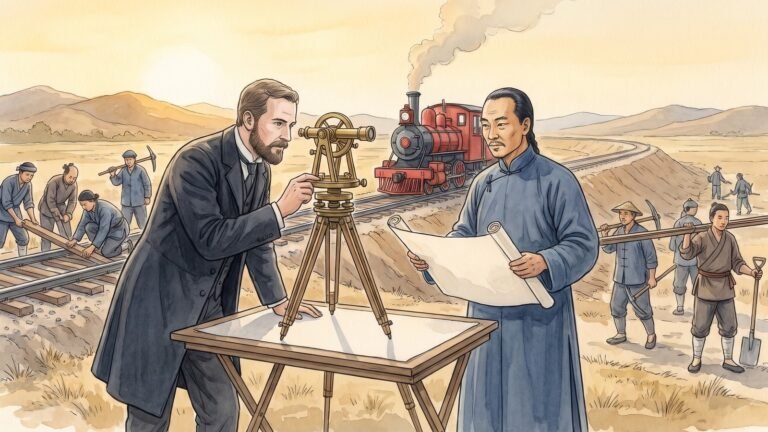
Canada relied on Chinese labour to finish the Canadian Pacific Railway. As Prime Minister Stephen Harper recalled in Parliament on 22 June 2006, some 15,000 Chinese workers took part, and about 1,000 died. Once the line was done, Harper said, “Canada turned its back on these men.” The Chinese Immigration Act of 1885 charged every Chinese arrival a head tax of $50. It was raised to $100 in 1900 and to $500, the equivalent of two years’ wages, in 1903. In 1923 a new act banned almost all Chinese immigration until 1947. Harper’s apology called these “race-based financial measures, aimed solely at the Chinese” and offered symbolic payments to survivors.
White Australia
One of the first laws passed by the new Commonwealth of Australia was the Immigration Restriction Act 1901. It did not name any race. Instead it gave officials a dictation test, which could be set in any European language and was designed so that unwanted applicants would fail. The test was abolished by the Migration Act 1958, the remaining racial restrictions were removed step by step, and the Whitlam government declared the White Australia policy over in 1973.
Japan’s rise
Japan’s victory over Russia in 1905 moved the fear from Chinese labour to Japanese power. Under the “Gentlemen’s Agreement” of 1907, Japan agreed to stop issuing passports to labourers bound for the United States. At the Paris Peace Conference in 1919, Japan proposed a clause affirming racial equality in the League of Nations Covenant. It won a majority of votes on the relevant commission but was blocked when President Woodrow Wilson insisted on unanimity, with Australia and Britain among the opponents. Five years later the US Immigration Act of 1924 excluded Japanese immigrants altogether by barring “aliens ineligible to citizenship”. It provoked protests in Japan.
Invasion stories: the Yellow Peril in fiction
If laws gave the fear force, fiction gave it drama. The years around 1900 produced a flood of invasion stories, with Asia a favourite villain.
M. P. Shiel’s The Yellow Danger
The Montserrat-born writer M. P. Shiel serialised The Empress of the Earth in the weekly Short Stories from February to June 1898. The same year it appeared in book form as The Yellow Danger. Its scheming villain, Dr Yen How, leads an Asian onslaught on Europe and is often seen as a forerunner of Fu Manchu. It appeared just after Germany seized Jiaozhou Bay, as the European powers were carving up China: once again the aggressor and the supposed threat had swapped places.
Jack London’s plague war
The most chilling example came from an American. Jack London’s short story “The Unparalleled Invasion”, published in 1910 and collected in The Strength of the Strong (1914), is framed as a future history. It opens: “It was in the year 1976 that the trouble between the world and China reached its culmination.” A modernised, ever more populous China spills into its neighbours, and the Western powers respond by dropping glass tubes of laboratory-bred plagues on its cities, shooting refugees at the borders and resettling the emptied land. Critics still disagree: some read it as a straightforward racist and eugenic fantasy, others as satire of Western genocidal logic, pointing to the ending, in which the powers promise never to use such weapons on each other. Either way, it shows how easily the idea could slide from immigration policy to imagined extermination.
Limehouse: a small Chinatown and a large panic
By 1890, according to the historian Anne Witchard of the University of Westminster, there were two small Chinese communities in Limehouse, mostly seamen from Shanghai and from Guangdong serving on ships between China and the Port of London. There were similar communities around Pitt Street in Liverpool and Tiger Bay in Cardiff. Hostility was often open. Witchard records that the first Chinese laundry in Pennyfields was stoned by a crowd when it opened in 1901, and that in 1908 British seamen stopped Chinese sailors from signing on as crew. During the Cardiff seamen’s strike of 1911, when shipowners used Chinese crews to break the strike, mobs attacked every one of the city’s roughly 30 Chinese laundries.
The myth of Chinatown
In the 1910s and 1920s, newspapers and novelists turned Limehouse into a place of opium dens, gambling and the supposed seduction of white women. Rohmer’s first Fu Manchu stories (1913), Thomas Burke’s Limehouse Nights in 1916, and the drug-related deaths of the actress Billie Carleton in 1918 and the dancer Freda Kempton in 1922 all fed the panic. Witchard notes that by the mid-1920s Thomas Cook ran coach tours to Chinatown, and that when tourists found it disappointingly quiet, the company hired people to stage fights.
The reality was very different. Even at its peak in the 1930s, Witchard writes, London’s Chinatown had only about 300 residents. The Chief Constable of Liverpool described that city’s Chinese as “quiet, inoffensive and industrious people”. But wartime opium laws and constant press suspicion gave the authorities grounds to deport people.
The Liverpool deportations
The most serious British case came after the Second World War. About 2,000 Chinese seamen who had served in the merchant navy during the Battle of the Atlantic were still in Liverpool in 1945. Many had married local women. In 1945–46 the Home Office secretly rounded them up and shipped them back to Asia, and for decades officials denied that married men had been forced out. A 2022 Home Office report, obtained by The Guardian, admitted that the language used to justify the operation was “clearly racially inflected and prejudicial”. It said the seamen had been portrayed as “members of a criminal underclass”. The immigration minister said he “very much regret[ted]” their treatment but stopped short of a full apology.
From Fu Manchu to Ming: the villain on screen
Fu Manchu, explored in earlier articles on this site, took the stereotype worldwide. When MGM released The Mask of Fu Manchu in 1932, with Boris Karloff as a villain bent on destroying the white race, the Chinese consul in Los Angeles protested.
Two years after the Karloff film, Alex Raymond’s comic strip Flash Gordon (1934) introduced Ming the Merciless, tyrant of the planet Mongo. Critics note how Ming borrowed the Fu Manchu template, from the name and robes to the cruel scientific mind, set against a white American hero. Moving the stereotype to outer space made it seem harmless, which helped it spread.
Scholars disagree about how to judge these figures. Frayling, who admits he loved the Fu Manchu books as a schoolboy, says that “at one level, this book is a kind of exorcism”. The New Statesman‘s reviewer questioned whether Fu Manchu was primarily a racial caricature or a fantastical super-villain. Tchen and Yeats, by contrast, treat such characters as doing political work that helped make exclusion seem natural.
War, internment and Cold War echoes
The Second World War turned fear of Japan into state action against American citizens. Executive Order 9066, signed by President Franklin Roosevelt on 19 February 1942, led to the forced removal and incarceration of about 120,000 people of Japanese ancestry from the West Coast. As Erika Lee points out, about two-thirds were American-born citizens. There was no comparable mass removal of German or Italian Americans. The Civil Liberties Act of 1988 formally apologised and paid $20,000 to each surviving eligible person.
The same war led the United States to repeal Chinese exclusion in 1943, for reasons of alliance rather than principle. The stereotype simply shifted. In the Korean War and the Cold War, images of faceless Asian masses and brainwashing enemies recycled the old repertoire as a “red” threat, and in the 1980s Japanese economic competition revived it again. In Detroit in June 1982, Vincent Chin, a Chinese American, was beaten to death with a baseball bat by two white car workers. The attack came amid resentment over Japanese car imports. The killers pleaded guilty to manslaughter and were sentenced to probation and $3,000 fines, with no jail time. The outrage over the sentence helped launch a national pan-Asian civil rights movement.
Answering back
Early voices
In August 1887 Wong Chin Foo, a naturalised American citizen, published “Why Am I a Heathen?” in the North American Review. He turned the missionary gaze back on the West, attacking Christian hypocrisy and the opium trade. “Call us heathen, if you will,” he wrote, “the Chinese are still superior in social administration and social order.” In Japan, the army doctor and novelist Mori Ōgai lectured on the Yellow Peril in 1903 and published a summary in 1904. According to Japanese scholars of his work, he treated it as an expression of Western anxiety rather than a real danger, though he did not reject racial hierarchy altogether.
In London, the novelist Lao She, who taught Chinese at the School of Oriental Studies from 1924 to 1929, wrote Mr Ma and Son, about a Chinese father and son met with suspicion in the capital. Witchard describes it as the first Chinese novel to confront British racism towards China directly.
Reclaiming the phrase
In 1968 two graduate students at Berkeley, Yuji Ichioka and Emma Gee, founded the Asian American Political Alliance and are widely credited with popularising the term “Asian American”, a self-chosen political identity. A year later, at a rally in Oakland for the Black Panther leader Huey Newton, the activist Richard Aoki was photographed with a placard reading “Yellow Peril Supports Black Power”. The slogan turned the insult into solidarity, but it remains contested: when it reappeared at protests in 2020, some Asian American activists argued that it wrongly equated different struggles and excluded Asian Americans who are not East Asian. Aoki’s legacy was further complicated by 2012 reports that he had been an FBI informant.
Scholarship has become its own form of reply. Tchen and Yeats argue, in the words of Publishers Weekly‘s review, that change requires “historical recognition”, leading to “reckoning and action”. Erika Lee’s histories place the Yellow Peril within a wider pattern of American xenophobia; she has described 1920s attitudes as labelling Asian immigrants “an unending threat and danger coming from the East with the intention of dominating and destroying the West”.
The pandemic and after
The COVID-19 pandemic showed how quickly the old associations of Asia with disease and invasion could return. In Britain, police data obtained by Sky News through freedom of information requests showed at least 267 hate crimes against Chinese people recorded between January and March 2020. That was almost three times the level for the same period in 2018 and 2019. Police forces record ethnicity differently, so the figures are approximate. In February 2020 Jonathan Mok, a Singaporean student at UCL, was beaten on Oxford Street by men who told him they did not want “your coronavirus” in their country. He responded on Facebook: “Racism is not stupidity – racism is hate.”
In the United States, the reporting centre Stop AAPI Hate recorded 11,467 self-reported incidents between 19 March 2020 and 31 March 2022. These are self-reports rather than verified crimes. In March 2021 a gunman killed eight people at spas in the Atlanta area, six of them women of Asian descent. In May that year Congress passed the COVID-19 Hate Crimes Act. Speaking at Tufts University in April 2021, Erika Lee argued that such attacks “are not random acts perpetrated by deranged individuals”. She linked them to “the long history of treating Asian Americans as outsiders and as foreigners, as enemies, rather than as citizens”, and criticised politicians who used terms such as “Chinese virus”.
Criticism and caricature
The hardest question today is where legitimate criticism of a government ends and racial fear begins. China’s government is open to serious scrutiny, but the Yellow Peril tradition is not criticism of a state: it treats people of Asian descent, including citizens of Western countries, as extensions of a foreign threat. Commenting on Tchen and Yeats’s book, the historian Vijay Prashad warned that as the American economy struggled, “‘China,’ like ‘Japan’ before it, will provide a dishonest salve”. Recognising the history of the stereotype makes it easier to tell when a debate about policy has become a story about race.
Conclusion: an idea that keeps changing its target
What stands out about the Yellow Peril is how flexible it has been. In the 1870s it meant cheap Chinese labour. In 1895 it meant Japanese armies directing Chinese masses. In 1910 it meant population, in the 1920s drugs and sexual danger in Limehouse, in 1942 Japanese Americans as supposed saboteurs, in 1982 Japanese cars and in 2020 a virus. The target changed, but the story stayed the same: a vast, undifferentiated East threatening a vulnerable West. As the Knackfuss picture showed from the start, that story often reversed the real balance of power.
The apologies, from the Civil Liberties Act of 1988 to Harper’s in 2006, the Senate’s in 2011 and the Home Office’s admission in 2022, all came decades late, and all depended on descendants and historians recovering what official records left out. The Yellow Peril was never just pulp novels and old films. It decided who could cross a border, marry, own property or stay, which is why understanding it still matters.