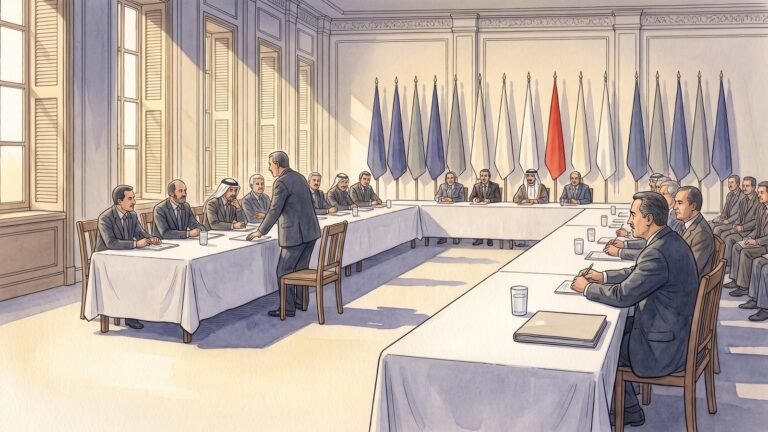
China’s Belt and Road Initiative (BRI) is one of the most ambitious international economic projects of the twenty-first century. Announced by Chinese President Xi Jinping in 2013, the initiative seeks to improve economic connectivity between China and countries across Asia, Africa, Europe, the Middle East and Latin America through investment in infrastructure, trade, energy, finance and digital networks. Originally presented as two interconnected programmes—the land-based Silk Road Economic Belt and the maritime Twenty-First Century Maritime Silk Road—the BRI has developed into a broad framework encompassing railways, highways, ports, power stations, pipelines, industrial parks, telecommunications networks and other forms of economic cooperation. China officially presents the initiative as a mechanism for promoting shared development and deeper international connectivity.
The scale of the initiative has generated considerable controversy. Supporters argue that Chinese financing helps developing countries overcome severe infrastructure shortages that have restricted economic growth. Critics, however, have raised concerns about debt sustainability, corruption, environmental damage, political dependence and the possibility that infrastructure investments may strengthen Chinese geopolitical influence. The debate has consequently become closely connected to broader questions about China’s growing position within the international system.
Neither interpretation by itself adequately explains the BRI. It represents a mixture of economic development, Chinese commercial interests, domestic economic priorities and international strategy, while recipient governments also exercise considerable influence over which projects are constructed. Its effects therefore differ significantly between countries. Moreover, the BRI itself has evolved. After the rapid expansion of large infrastructure lending during its first decade, China has increasingly emphasised financial sustainability, smaller projects, digital infrastructure and selected investments in green energy, although major investments in fossil fuels and extractive industries continue. In 2025, Chinese investment and construction activity associated with BRI countries reached record levels according to researchers tracking the programme, demonstrating that the initiative remains economically significant more than a decade after its launch.
Origins and objectives of the Belt and Road Initiative
Xi Jinping introduced the concept of a Silk Road Economic Belt during a visit to Kazakhstan in September 2013. The following month, during a visit to Indonesia, he proposed a Twenty-First Century Maritime Silk Road. Together these became known initially as “One Belt, One Road” and subsequently as the Belt and Road Initiative. The terminology deliberately invokes the historical Silk Roads that connected China with Central Asia, the Middle East and Europe, although the contemporary BRI is much broader than the historical trade routes.
The land component originally focused primarily on corridors crossing Central Asia towards Europe and on connections through South and Southeast Asia. The maritime component sought to develop commercial links through ports extending from China through Southeast Asia and the Indian Ocean towards Africa, the Middle East and Europe. Over time the initiative expanded beyond these geographical areas. Chinese companies and financial institutions have participated in projects throughout Africa and Latin America, while the concept has expanded to include a “Digital Silk Road”, health cooperation, satellite technology and other forms of economic integration.
China describes the BRI through several forms of “connectivity”: policy coordination, physical infrastructure, trade, financial integration and people-to-people exchanges. Its 2023 BRI white paper argued that infrastructure should be accompanied by what Beijing describes as “soft connectivity”, including common standards, commercial rules and institutional cooperation.
There are several economic motivations behind the initiative. China accumulated considerable expertise in infrastructure construction during its own rapid economic development. Chinese state-owned enterprises became major international contractors in railway construction, ports, electricity generation and telecommunications. Expanding overseas provided these companies with additional markets and contracts.
Improved infrastructure also benefits Chinese trade. Faster railways, ports, roads and border crossings can reduce the costs associated with transporting Chinese manufactured products while helping China obtain energy, minerals and agricultural products from overseas. Connections through Central and South Asia also provide alternative transportation routes between China and international markets.
The initiative also has domestic geographical implications. Improved economic connections with Central Asia and Pakistan potentially increase the economic importance of China’s western regions, which are considerably farther from the major ports of the eastern Chinese coast.
These objectives overlap with foreign policy. The BRI creates long-term economic relationships between China and participating states and places Beijing at the centre of an extensive network of infrastructure, investment and trade. The Council on Foreign Relations describes the initiative as simultaneously advancing Chinese economic and geopolitical interests. However, treating every BRI project as the implementation of a single geopolitical master plan would be misleading. Individual projects often emerge from negotiations involving Chinese ministries, policy banks, state-owned enterprises, private firms and recipient governments whose objectives do not necessarily coincide.
The economic case for the BRI
The strongest argument for the Belt and Road Initiative concerns the infrastructure needs of developing economies. Poor roads, unreliable electricity, inefficient ports and inadequate rail connections can significantly increase business costs. Countries may possess valuable natural resources or manufacturing potential while remaining unable to participate effectively in regional and international markets because transporting products is too expensive or unreliable.
Chinese financing has therefore been attractive to governments seeking rapid infrastructure development. BRI-associated projects include the China-Pakistan Economic Corridor, railway projects in Southeast Asia, ports around the Indian Ocean, energy infrastructure across Africa and transportation networks throughout Central Asia.
World Bank research suggests that improved BRI transport corridors could produce substantial economic benefits if projects are combined with appropriate policy reforms. Its modelling estimated that completed BRI transport infrastructure could reduce travel times along economic corridors by as much as 12 per cent. The resulting reduction in transport costs could increase trade in BRI corridor economies by between 2.8 and 9.7 per cent and increase global trade by between 1.7 and 6.2 per cent. The Bank also estimated potential real-income gains of up to 3.4 per cent for corridor economies and suggested that improved connectivity could lift millions of people from poverty. These figures represent economic modelling rather than guaranteed outcomes, however, and the World Bank emphasised that benefits depended on reforms improving transparency, trade policy, debt sustainability and environmental and social protection.
Laos illustrates both the opportunity and the challenge. The China-Laos Railway connects the Lao capital Vientiane with the Chinese border and potentially with wider Southeast Asian transport networks. Before the railway opened, World Bank modelling suggested that, if accompanied by substantial domestic economic reforms and improved connections with neighbouring countries, it could raise aggregate income in Laos by as much as 21 per cent over the long term. The crucial qualification was that infrastructure alone would not produce these gains: businesses also required efficient customs procedures, predictable regulations and access to the railway network.
This demonstrates a fundamental characteristic of infrastructure investment. A railway or port is economically valuable only when sufficient productive economic activity develops around it. Building infrastructure can reduce an existing constraint on growth, but infrastructure does not automatically create productive industries. When complementary reforms and investment occur, transport networks can dramatically increase economic opportunities. When they do not, governments can be left servicing expensive infrastructure that generates insufficient revenue.
Debt, governance and the “debt-trap” debate
The most controversial criticism of the BRI concerns debt. Many infrastructure projects have been financed through loans rather than grants. If the expected economic benefits fail to materialise, borrowing governments can face significant repayment difficulties.
Research by AidData has demonstrated the scale and complexity of Chinese development finance. Its 2021 study examined more than 13,000 Chinese-funded projects worth approximately $843 billion across 165 countries over an eighteen-year period. AidData found that large amounts of Chinese lending were directed not directly to national governments but to state-owned companies, banks, joint ventures and special-purpose entities whose debts could nevertheless eventually become government liabilities. It estimated that many developing countries had significantly greater exposure to Chinese debt than conventional sovereign-debt statistics indicated.
Concerns over transparency therefore have considerable substance. Large infrastructure projects are especially vulnerable to cost overruns and corruption when procurement systems are weak or contracts are not publicly disclosed. The World Bank has similarly warned that the potential economic benefits of BRI infrastructure depend upon transparent procurement, sustainable financing and stronger governance.
However, these problems do not prove that China deliberately attempts to make countries insolvent in order to seize strategic assets. The term “debt-trap diplomacy” is frequently associated with Sri Lanka’s Hambantota Port. A common account claims that China knowingly encouraged Sri Lanka to borrow for an economically unsuccessful port and subsequently obtained control of it when Sri Lanka was unable to repay its debts.
Detailed research has challenged important elements of this interpretation. A Chatham House study concluded that the Hambantota project had originally been promoted by Sri Lankan political leaders rather than imposed by Beijing. Sri Lanka’s wider debt crisis was also strongly affected by borrowing from international capital markets and by weaknesses in domestic economic management. In 2017 a Chinese state-owned company obtained a 99-year lease relating to the port, but this was not simply a case of China cancelling the relevant debt in exchange for ownership of the asset. According to the study, the Sri Lankan government sought the lease partly to obtain foreign currency while its debts remained.
This does not mean Chinese lending is free from serious problems. Rather, it suggests that BRI outcomes usually result from interaction between Chinese financiers and recipient governments. Local governments sometimes seek prestigious infrastructure projects despite questionable economic returns. Political leaders may prioritise short-term construction or regional development over long-term debt sustainability. Chinese banks and contractors may simultaneously have incentives to approve projects because doing so creates commercial activity. Poor outcomes can therefore emerge without requiring a deliberate Chinese strategy to produce default.
China itself appears to have recognised these risks. AidData’s later research describes a significant effort by Beijing to “de-risk” its overseas development portfolio through stronger repayment protections, changes in project selection and greater attention to environmental, social and reputational risks.
Geopolitics and international influence
Although economics is central to the BRI, its geopolitical consequences are unavoidable. Infrastructure shapes international relationships because roads, railways, ports, energy systems and communications networks can create dependencies lasting for decades.
China’s overseas infrastructure programme increases its economic presence in regions where Western governments, Japan, India and other powers also have strategic interests. The China-Pakistan Economic Corridor, for example, links western China with infrastructure running through Pakistan towards the Arabian Sea. Port projects elsewhere connect China commercially with the Indian Ocean, Africa, the Middle East and Europe. Meanwhile, digital infrastructure can strengthen relationships between Chinese technology companies and foreign telecommunications systems.
Critics in the United States, India and elsewhere consequently argue that BRI infrastructure could increase Beijing’s political leverage or eventually provide strategic advantages. Chinese officials reject the portrayal of the initiative as an instrument of domination and describe it instead as an open framework based on consultation and mutual benefit. These two interpretations reflect fundamentally different assessments of China’s international intentions.
The reality is more complicated because economic influence does not translate automatically into political control. Governments receiving Chinese investment continue to pursue their own interests and may renegotiate, cancel or modify projects. Malaysia, for example, renegotiated major Chinese-backed projects after domestic political change. Italy, which became the first G7 state to sign a BRI memorandum in 2019, formally decided in 2023 not to renew that agreement. Panama announced in 2025 that it would not renew its BRI participation, while Colombia formally joined the initiative later that year. These developments illustrate that participation is politically flexible rather than an irreversible alignment with Beijing.
Nevertheless, the BRI has changed global development politics. For many developing states, Chinese finance has provided an alternative to traditional Western governments and multilateral development institutions. This can increase recipient governments’ bargaining power because they have more potential partners. At the same time, Western governments increasingly regard infrastructure finance as an important element of geopolitical competition.
The significance of the BRI therefore extends beyond individual construction projects. It contributes to a world in which China plays a larger role in development finance and in determining the infrastructure connecting emerging economies.
Environmental consequences and the changing BRI
Environmental criticism has also influenced the initiative. Early BRI investment included substantial financing for coal-fired electricity generation and other carbon-intensive infrastructure. Roads, dams, mines and industrial zones can additionally produce deforestation, habitat destruction, pollution and displacement when environmental safeguards are inadequate.
China announced in 2021 that it would stop building new coal-fired power plants abroad, and Beijing has increasingly presented “green development” as a central element of what it calls high-quality BRI cooperation. At the Third Belt and Road Forum in October 2023, Xi Jinping announced a new phase emphasising green infrastructure, renewable energy, technology cooperation and both large projects and what the Chinese government calls “small yet smart” livelihood projects. Beijing also announced new financing windows through the China Development Bank and Export-Import Bank of China.
However, the environmental picture remains mixed. Research by the Green Finance & Development Center found that Chinese BRI engagement in renewable energy reached record levels in 2025, including approximately $18.3 billion in solar, wind and waste-to-energy projects. Yet the same year also brought a much larger increase in oil and gas projects. Energy-related BRI engagement reached about $93.9 billion, with approximately $71.5 billion associated with oil and gas. The initiative can therefore simultaneously contribute to the expansion of renewable energy and continued fossil-fuel development.
More broadly, BRI financing has changed significantly from its earliest period. China initially became associated with enormous state-backed infrastructure loans. Difficulties involving project performance, debt repayment, the COVID-19 pandemic and weakening economic conditions encouraged a more cautious approach. AidData’s research suggests that Beijing has increasingly emphasised managing financial risk while continuing to operate as one of the largest sources of official development finance for lower- and middle-income economies.
This shift should not be mistaken for the disappearance of the BRI. In fact, data compiled by the Green Finance & Development Center estimated Chinese BRI-associated construction contracts at approximately $128.4 billion and investments at $85.2 billion in 2025, producing total engagement of roughly $213.5 billion—the highest annual level recorded in its dataset. Cumulative Chinese construction and investment engagement since 2013 was estimated at approximately $1.4 trillion. The methodology differs from datasets measuring Chinese lending, so these numbers should not be treated as equivalent to the value of Chinese government loans. Nevertheless, they demonstrate that the BRI remains a major component of China’s external economic activity.
Assessing the Belt and Road Initiative
The central difficulty in judging the Belt and Road Initiative is its diversity. There is no single BRI experience. A commercially successful railway connecting productive economic regions differs fundamentally from an underused port financed through expensive borrowing. A renewable-energy project has different consequences from an oil pipeline. A country with transparent procurement and effective public institutions is better able to evaluate projects than a government in which investment decisions are dominated by political interests.
The BRI should therefore be understood less as one gigantic construction programme controlled from Beijing than as a framework under which thousands of different transactions and projects take place. China possesses substantial influence because its banks, companies and political institutions provide financing and expertise, but recipient governments also negotiate the terms, choose projects and determine domestic regulation.
The strongest economic argument for the BRI remains the genuine infrastructure deficit confronting many developing states. World Bank analysis indicates that improved transport connectivity can increase trade, investment and incomes substantially. The strongest criticism is that infrastructure can generate these benefits only when projects are economically justified and accompanied by sustainable financing, transparency and complementary reforms.
Similarly, the geopolitical interpretation requires balance. China clearly benefits strategically when its companies construct critical infrastructure, its financial institutions become major creditors and countries develop deeper economic relationships with Beijing. Yet it does not follow that every railway, bridge or port represents a centrally designed attempt to establish Chinese political control. Research on individual projects shows that domestic politics within participating countries can be at least as important as Chinese strategy in determining outcomes.
Conclusion
China’s Belt and Road Initiative has transformed the landscape of international infrastructure and development finance since its launch in 2013. It has financed or constructed transportation networks, energy facilities, ports, industrial developments and digital infrastructure across much of the developing world. By addressing genuine infrastructure shortages, these projects have the potential to reduce transport costs, encourage trade and investment and improve economic opportunities.
The initiative also carries substantial risks. Poorly selected projects can produce unsustainable debt, corruption, environmental damage and infrastructure that fails to generate sufficient economic returns. Moreover, because infrastructure and finance create long-term international relationships, the BRI inevitably strengthens China’s global economic and diplomatic presence.
Yet describing the initiative either as purely altruistic development assistance or purely as a Chinese strategy for global domination oversimplifies its character. China pursues commercial, domestic and strategic interests through the BRI, while participating countries pursue their own objectives and retain substantial agency. The outcomes depend heavily upon project selection, financing conditions, local governance and the wider economic environment.
More than a decade after its introduction, the BRI has also demonstrated considerable capacity to change. Chinese policymakers have responded to financial and political problems by placing greater emphasis on risk management, smaller projects, green development and commercial viability, even while large-scale energy and resource investments continue. Record levels of measured Chinese BRI investment and construction activity in 2025 indicate that the initiative has not disappeared; rather, it is evolving.
The Belt and Road Initiative is therefore best understood as an evolving system of international economic relationships rather than a single project. Its long-term historical significance will depend not simply on how much infrastructure China builds, but on whether that infrastructure generates sustainable development for participating countries, how successfully financial and environmental risks are managed, and how the economic relationships created by the BRI reshape the distribution of influence within the international system.