Few relationships in modern global business are as complicated, consequential, and closely watched as Elon Musk’s relationship with China. Musk is usually associated with the technological culture of the United States, with Silicon Valley entrepreneurship, private space exploration, artificial intelligence, electric cars, and the idea that ambitious engineering can overturn established industries. Yet one of the most important chapters in his career has unfolded not in California or Texas but in Shanghai, Beijing, and the enormous Chinese industrial system that surrounds them. China became essential to the transformation of Tesla from a relatively small American electric car manufacturer into a global automotive company, while Tesla in turn became an influential participant in China’s extraordinary transition toward electric transportation. The relationship has never been purely commercial. It sits at the intersection of manufacturing, technology, diplomacy, national security, data regulation, supply chains, energy policy, and the increasingly difficult relationship between the United States and China. Musk has therefore occupied an unusual position. He is an American industrialist whose companies include SpaceX, a major participant in American space and national security infrastructure, while at the same time leading Tesla, a company whose manufacturing network, customers, suppliers, and future prospects remain deeply connected to China. By 2026, Tesla’s Chinese operations had become so important that discussions about the company’s future could scarcely be separated from questions about the wider relationship between the two largest economies in the world.
Tesla first entered the Chinese market by importing cars, but the limitations of that strategy quickly became obvious. Imported vehicles faced transportation expenses, tariffs, and other costs that made them substantially more expensive than vehicles manufactured locally. China was also developing into the largest electric vehicle market in the world, supported by government policy, rapidly expanding charging infrastructure, increasingly capable domestic manufacturers, and a vast industrial network producing batteries, electronics, motors, raw materials, and automotive components. Musk understood that Tesla could not treat China merely as another destination for cars built in the United States. If the company wanted to compete seriously there, it needed to manufacture there. The decisive moment came when Tesla reached an agreement with the Shanghai authorities to construct a major factory in the Lingang area. Construction formally began in January 2019. The project was historically significant because Tesla became the first foreign automaker permitted to establish a wholly foreign owned vehicle manufacturing operation in China following changes to ownership restrictions in the new energy vehicle industry. Musk attended the groundbreaking ceremony with senior Shanghai officials, and the speed with which the project progressed immediately became part of Tesla mythology. The Shanghai factory was Tesla’s first vehicle manufacturing plant outside the United States and represented a commitment not simply to selling cars in China but to embedding Tesla within the Chinese industrial economy.
The speed of construction astonished much of the automotive industry. Tesla went from breaking ground to producing vehicles in Shanghai in roughly a year, an extraordinary timetable for a large automotive manufacturing complex. Chinese built Model 3 deliveries began at the end of 2019, and within a short period Shanghai developed into one of the most productive assets in Tesla’s entire manufacturing system. The importance of the plant went far beyond Chinese domestic sales. Shanghai became a major export base supplying cars to markets throughout Asia and other regions, and Tesla later described it as its principal export hub. By the middle of the decade, the Shanghai operation had installed annual capacity for more than 950,000 Model 3 and Model Y vehicles according to Tesla’s own disclosures. That scale illustrates why China became so important to Musk’s strategy. A factory originally discussed primarily as a way of reaching Chinese customers eventually became one of the central engines of Tesla’s worldwide production system. Its location also gave Tesla access to an extraordinary concentration of automotive suppliers, battery companies, electronics producers, engineering talent, ports, transportation infrastructure, and manufacturing expertise. Shanghai was not simply another factory. It became evidence that the company could build at enormous scale outside the United States and that Tesla’s future would depend on a genuinely international production network.
The arrangement also demonstrated how unusually supportive Chinese authorities could be when a foreign company aligned with important national industrial objectives. China had spent years promoting what it called new energy vehicles as part of a broader effort to reduce dependence on petroleum, improve urban air quality, establish leadership in emerging technologies, and strengthen Chinese manufacturing. Tesla entered the country at a moment when officials wanted both investment and competitive pressure. A sophisticated foreign electric car company could contribute technology, employment, supply chain development, and prestige while simultaneously forcing Chinese manufacturers to improve. During Musk’s 2019 visit to Beijing, then Premier Li Keqiang welcomed Tesla’s investment and described the Shanghai project as an example of China’s economic opening. Chinese officials also emphasized the potential for Tesla to contribute to economic relations between China and the United States. For Musk, the benefits were obvious. Tesla received access to a massive market and a manufacturing environment capable of moving with remarkable speed. For Chinese policymakers, Tesla represented both foreign investment and an external competitor that could accelerate the development of the domestic electric vehicle sector. The partnership therefore worked because both sides believed they could gain from it, even though their ultimate commercial interests were never identical.
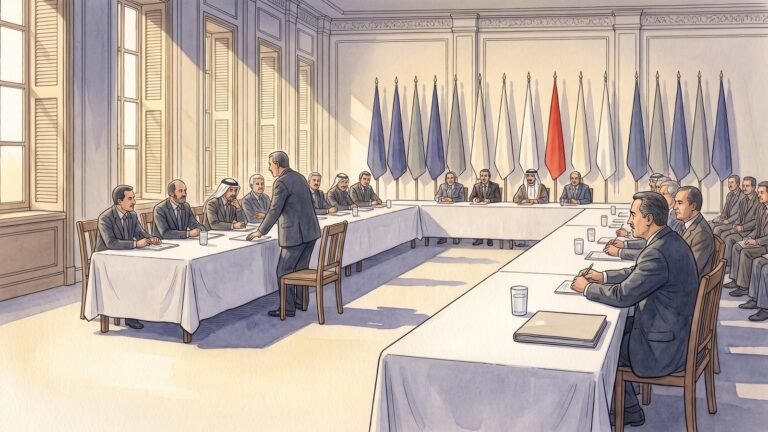
Musk’s personal treatment in China has often reflected the importance of Tesla. He has met senior officials on repeated visits, including government ministers and premiers, and his trips have frequently attracted intense attention from Chinese media and social media users. During a visit in 2023 he met senior figures in foreign affairs, commerce, and industry as well as executives including the leadership of CATL, the enormous Chinese battery manufacturer that has been an important Tesla supplier. Reuters reported that Musk was praised by some Chinese social media users with descriptions such as a technological pioneer and global idol, illustrating the unusual degree of fascination he inspired. In November 2023, according to a Tesla statement reported by Reuters, President Xi Jinping told Musk during a meeting in San Francisco that he supported Tesla’s development in China. Musk responded by praising the rapid development of China’s electric vehicle industry. The exchanges reflected more than personal courtesy. Tesla was one of the most visible American investments in advanced Chinese manufacturing, and Musk was one of the few globally famous American business leaders whose commercial interests gave him a powerful reason to maintain communication with Beijing even during periods of worsening political relations between Washington and China.
Yet Tesla’s success also helped create the competitors that would eventually challenge it. When the Shanghai factory was being built, Tesla stood far ahead of many Chinese electric car manufacturers in areas such as brand recognition, software integration, vehicle efficiency, manufacturing methods, and perceptions of technological sophistication. That advantage narrowed dramatically. Chinese companies improved with exceptional speed. BYD expanded into a global electric vehicle giant, while companies including Xiaomi, XPeng, Li Auto, Nio, Geely related brands, and numerous others introduced vehicles with sophisticated digital interiors, advanced driver assistance systems, rapid charging technology, competitive battery systems, and aggressive pricing. China consequently changed from being a market where Tesla could arrive as a technological leader into perhaps the most intense electric vehicle battlefield in the world. By the second quarter of 2026 Tesla’s share of China’s battery electric vehicle market had fallen to about 6.6 percent, according to figures reported by Reuters, compared with more than 15 percent in 2020. Tesla’s China built vehicle sales were still growing in August 2026, reaching 86,166 Model 3 and Model Y vehicles including exports, but the company was operating in an environment where domestic competitors were becoming stronger rather than weaker.
This competitive transformation is one of the great ironies of Musk’s Chinese venture. Tesla helped demonstrate that electric vehicles could be desirable, technologically advanced mass market products, but China absorbed that lesson and industrialized it on a scale that few outside observers anticipated. Chinese manufacturers now compete not merely on low prices but on software, batteries, charging, autonomous driving features, design, manufacturing speed, and consumer electronics integration. In some areas Tesla has become the company responding to Chinese innovation rather than the company setting the pace. This is especially visible in driver assistance technology. Tesla has spent years trying to bring more of its Full Self Driving system to Chinese customers, but the regulatory and technical challenge is considerable. China has strict rules covering vehicle data, mapping, cybersecurity, and the movement of information outside the country. Since 2021 Tesla has stored data generated by Chinese vehicles locally. During Musk’s surprise visit to Beijing in April 2024, Tesla made significant regulatory progress when Chinese authorities indicated that the Model 3 and Model Y met relevant data security requirements and Tesla reached an agreement involving Baidu’s mapping capabilities. The trip included a meeting with Premier Li Qiang and demonstrated that Musk’s access to senior Chinese leadership could have direct implications for Tesla’s ability to deploy new technology.
Full Self Driving also reveals the tension between Tesla’s global technology model and China’s insistence on national control over strategically important data. Musk’s vision depends on collecting enormous quantities of driving information and using that information to improve artificial intelligence systems. China, however, treats geographic, transportation, and personal data as matters with potential national security implications. Tesla therefore cannot simply operate its Chinese fleet exactly as it operates vehicles elsewhere. The company must satisfy Chinese regulators regarding where information is stored, how it is processed, what mapping technologies it uses, and whether information can leave the country. Musk said in late 2025 that he expected fuller Chinese approval for Tesla’s Full Self Driving software in early 2026, though Reuters noted that the Chinese version had faced limitations and growing competition from domestic systems. By 2025 Chinese regulators were also tightening oversight of terminology and software updates involving automated driving following safety concerns across the industry. The significance of this goes beyond one Tesla feature. The future automobile is increasingly a computer, sensor platform, artificial intelligence system, communications device, and data generator. Operating such a product across the political boundary between the United States and China is therefore much more complicated than exporting conventional cars.
Tesla’s Chinese interests have also expanded beyond automobiles. The company constructed a Megafactory in Shanghai dedicated to Megapack energy storage products, extending its Chinese manufacturing presence into the increasingly important market for large scale battery storage. Tesla reported that construction of the facility was completed in December 2024, and the first Megapack came off the production line in February 2025. Energy storage has become a major component of Tesla’s broader strategy as electrical grids around the world incorporate larger quantities of renewable generation and require systems capable of balancing supply and demand. China is especially important in this field because it dominates many parts of the global battery manufacturing supply chain and has built an enormous domestic renewable energy industry. The Shanghai Megafactory therefore represents a second major pillar of Tesla’s relationship with China. The first was electric vehicles. The second is stationary energy storage. Together they show that Musk’s commercial involvement in China is not simply about selling Model 3 and Model Y cars to Chinese consumers. It is increasingly connected to the architecture of the global battery and electricity storage industries.
Tesla’s reliance on Chinese manufacturing and suppliers has inevitably become entangled with wider American concerns about economic security. Relations between Washington and Beijing have become increasingly shaped by disputes over trade, semiconductors, artificial intelligence, electric vehicles, batteries, rare earth materials, telecommunications, Taiwan, and national security. Musk occupies an especially unusual position within this environment because his companies sit on both sides of the strategic divide. Tesla is deeply embedded in China, while SpaceX is a critical American aerospace company whose rockets carry government payloads and whose Starlink communications network has demonstrated strategic significance during international conflicts. Chinese military researchers and officials have consequently paid close attention to Starlink and the possibility that similar satellite systems could play a role in a future conflict. Reuters reported in 2026 that while Musk continued to receive admiration in China, SpaceX and Starlink generated concern within sections of China’s security establishment. His X social media service is also blocked in mainland China. This means there is no single Chinese relationship that applies equally to all of Musk’s companies. Tesla can be welcomed as an investor while another Musk enterprise can simultaneously be viewed as a strategic challenge.
Musk’s public statements about China and Taiwan have added another layer to this relationship. Taiwan is one of the most sensitive political issues in relations between China and the United States. Beijing regards Taiwan as part of China and has not renounced the use of force to achieve unification, while Taiwan operates as a democratic, self governing political entity whose government rejects Beijing’s authority. Musk has made comments broadly sympathetic to Beijing’s position on Taiwan, prompting strong criticism from Taiwanese officials. In 2023 Taiwan’s foreign minister publicly rebuked Musk after he described Taiwan as an integral part of China. These comments are politically significant because Musk is not simply a private commentator. He controls companies with enormous economic and technological importance, and Tesla has major commercial exposure to China. That combination has encouraged debate in the United States, Taiwan, China, and elsewhere about whether Musk’s business interests influence his public positions. There is no simple way to establish private motivation from public evidence, so claims about why Musk adopts particular political views should be treated cautiously. What can be said is that his commercial dependence on the Chinese market makes his political comments unusually consequential and ensures that statements about China are interpreted through the lens of Tesla’s economic interests.
At the same time, it would be misleading to portray Tesla as merely dependent on Chinese goodwill. China has benefited substantially from Tesla’s presence. The company brought investment, employment, manufacturing techniques, supply chain orders, and intense competitive pressure. Chinese suppliers gained business from Tesla, while Chinese engineers and manufacturing specialists participated in one of the world’s most closely watched industrial operations. Tesla also helped validate China as a location where a globally prominent foreign technology manufacturer could build advanced products for domestic consumption and export. Perhaps more importantly, competition with Tesla encouraged Chinese manufacturers to accelerate. The result has been a Chinese electric vehicle industry that now presents Tesla with formidable competition not only inside China but across international markets. In that sense the relationship has always contained a paradox. Tesla went to China because China could help Tesla become more competitive. China welcomed Tesla partly because Tesla could help make China’s own automotive industry more competitive. Both things happened. The Shanghai factory became an extraordinarily important asset for Tesla, but Chinese electric vehicle manufacturers simultaneously became some of the strongest challengers Musk has ever faced.
The balance has continued evolving during 2026. Tesla remains a major manufacturer in Shanghai, but its position is no longer defined by uncontested growth. Reuters reported in September 2026 that China built Tesla vehicle sales had risen for ten consecutive months on an annual basis through August, although the pace of growth slowed sharply from July. More than half of Shanghai production was exported during the second quarter, an important indication of the plant’s changing role as Chinese domestic competition intensified. Tesla itself reported strong worldwide figures for the second quarter of 2026, producing 451,758 vehicles and delivering 480,126, while deploying 13.5 gigawatt hours of energy storage products globally. Yet strong global delivery numbers do not remove the strategic challenge in China. Tesla has to compete against manufacturers that operate within the world’s most developed electric vehicle supply chain, often launch models more rapidly, and increasingly provide advanced driver assistance features at prices that place pressure on Tesla’s traditional software revenue model. China is therefore simultaneously one of Tesla’s greatest industrial assets and one of the sources of its toughest competition.
Musk himself has continued participating in the highest levels of economic diplomacy surrounding China. In May 2026 he travelled to Beijing as part of a group of American business leaders accompanying President Donald Trump during a visit involving President Xi Jinping. Reuters described Musk as one of several major American technology executives present during the trip. In September 2026, Musk was also among the prominent technology leaders expected at the state dinner connected to Xi’s visit to Washington. These appearances demonstrate how far his role has developed since Tesla first entered China. Musk is no longer simply an automobile executive seeking permission to build a factory. He has become one of the business figures present around major discussions between the governments of the United States and China, even as he controls companies that touch some of the most sensitive technological issues between the countries. This position provides access and visibility, but it also creates vulnerabilities. A serious deterioration in political relations could affect tariffs, technology transfers, data rules, investment restrictions, supply chains, or public attitudes toward foreign brands. Tesla therefore operates in China under conditions where diplomatic events far beyond the automotive industry can have commercial consequences.
There are signs of how difficult any future separation from China could become. An August 2026 Reuters analysis examining hypothetical corporate restructuring around Tesla and SpaceX noted that Tesla’s Chinese operation would create complicated questions involving intellectual property, regulation, data governance, manufacturing, and Chinese government approval. The article reported that Shanghai accounted for more than half of Tesla’s global deliveries, illustrating just how deeply the factory had become integrated into Tesla’s worldwide operations. Even if Musk someday wanted to reduce that dependence, doing so would not resemble switching suppliers for a single component. Tesla has accumulated factories, employees, supplier relationships, distribution operations, customer data systems, charging infrastructure, regulatory approvals, and brand presence across China. Replicating the complete ecosystem elsewhere would require enormous investment and time. Conversely, China also has incentives to retain a globally recognized manufacturer whose presence supports employment, exports, supply chains, and the credibility of its industrial system. The result is a form of mutual exposure. Tesla needs China, although the extent of that need may change. China benefits from Tesla, although it increasingly has domestic companies capable of challenging or surpassing it in particular areas.
That mutual exposure may explain why Musk’s relationship with China has survived moments of tension. Tesla has faced criticism from Chinese consumers, regulatory scrutiny, data security restrictions, recalls, and increasingly powerful competitors. China launched a broad automotive quality campaign in August 2026 that included stronger requirements relating to defects, driver assistance systems, cybersecurity, and safety, following a huge recall affecting Tesla as well as Chinese manufacturers. Musk therefore operates in a market where political access cannot remove the requirement to satisfy regulators and customers. At the same time, China’s treatment of Tesla demonstrates that foreign companies can retain major positions when their investment contributes to domestic industrial objectives. The relationship is pragmatic rather than sentimental. Chinese officials can praise Tesla while regulating it. Chinese consumers can admire Musk while purchasing a BYD, Xiaomi, or XPeng instead. Chinese industrial planners can welcome Tesla’s factory while supporting companies that compete directly against it. Musk can praise Chinese engineering while Tesla tries to defend market share from those same engineers. This combination of cooperation and competition is one of the defining characteristics of modern global capitalism.
Ultimately, Elon Musk’s relationship with China tells a much larger story than the biography of one billionaire. It illustrates how deeply intertwined the American and Chinese technology economies became even as their governments moved toward greater strategic rivalry. Tesla’s Shanghai factory proved that an American company could use China’s manufacturing ecosystem to transform its global scale. Chinese companies then demonstrated that they could learn, innovate, expand, and compete with extraordinary speed. Musk gained access to the largest electric vehicle market in the world, but he also entered an arena that would produce some of Tesla’s most dangerous competitors. China gained investment from one of the world’s most famous technology companies, but it also allowed a powerful foreign manufacturer to compete directly within a strategically important domestic industry. Neither side obtained complete control over the consequences.
The relationship is therefore best understood as a continuing exchange of opportunity, dependence, competition, and risk. China gave Tesla manufacturing scale at a moment when scale was essential to the company’s survival and ambitions. Tesla contributed to the acceleration of China’s electric vehicle revolution at a moment when Beijing wanted its automotive industry to move beyond the internal combustion engine. Shanghai became one of the foundations of Musk’s industrial empire, while Chinese manufacturers evolved into rivals capable of challenging that empire. Energy storage has now added another dimension, while artificial intelligence, autonomous driving, data control, satellites, and geopolitical rivalry make the future considerably more complicated than the early story of simply building cars. As of September 2026, Musk remains deeply connected to China through Tesla and its manufacturing system even while his other businesses place him near the centre of strategic competition between China and the United States. That contradiction is precisely what makes the relationship so important. Elon Musk’s China story is not simply a story about a businessman expanding overseas. It is a story about how technology, industrial power, national ambition, and global commerce have become inseparable in the twenty first century.