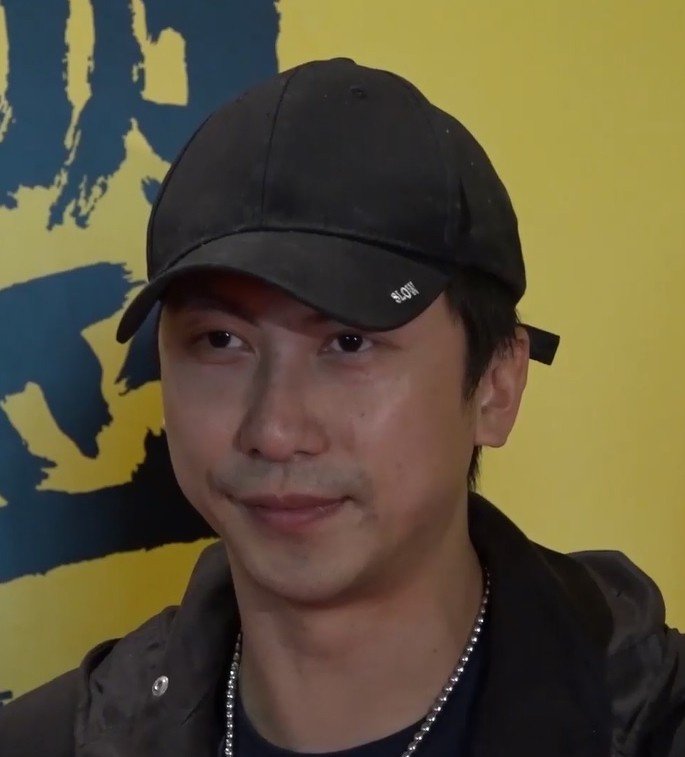
Few actors have been as closely tied to one role as Dennis To Yu-hang (杜宇航). He won a world wushu title for Hong Kong at 18 and got into films with small parts in Donnie Yen’s Ip Man and Ip Man 2. He then played the Wing Chun master himself as a young man in The Legend Is Born: Ip Man (2010), and has returned to the character several times since. His career is much less documented than those of the stars around him, so this profile sets out what the record shows about his medals, his films, his reviews and his return to the role, keeping to what contemporary newspapers, official award records and published reviews support, and says so where sources disagree.
A home-grown Hong Kong wushu athlete
To was born in Hong Kong on 1 January 1981. Chinese-language sources give his ancestral home as Xiqiao in Foshan’s Nanhai district, the same Pearl River Delta city later associated on screen with Ip Man. He is usually described as having begun martial arts training at six. By his late teens he was a full-time member of Hong Kong’s wushu squad.
The sport he competed in is modern competitive wushu, specifically taolu, the judged performance of set routines. It is not a combat sport. Athletes are scored on the speed, power, precision and difficulty of forms, either bare-handed or with weapons. To’s main event was changquan, or “long fist”, a northern style known for long extensions, high kicks and jumps. He also competed with the broadsword (daoshu) and staff (gunshu), and in duilian, a choreographed fight between two or more athletes that has to look convincing while being perfectly timed. All of this would matter later on a film set.
In a March 2000 profile, the South China Morning Post described the 19-year-old as a “home-grown wushu performer” who trained four hours a day at the Hong Kong Sports Institute and had been sent to mainland China to learn from coaches there. He told the paper that his inspiration was Jet Li, whose wushu skills in the 1982 film Shaolin Temple had astonished him. He added that Li had won many championships before becoming a film star. He spoke about wushu as more than a sport. It helped him understand Chinese culture, he said, and Hong Kong should do more to promote the sport beyond southern styles such as nanquan.
World champion at 18
The SCMP reported that To won gold in men’s changquan at the fifth World Wushu Championships in 1999, held in Hong Kong, and finished sixth and fourth in daoshu and gunshu. He had also won the boys’ sword category at the Asian Youth Wushu Championship. Hong Kong media have since often described him as the youngest wushu world champion Hong Kong has produced. That phrase is widely repeated, but we could not find an official record that confirms it.
His results over the next few years were strong but not always gold. At the 2001 East Asian Games in Osaka he finished ninth in the changquan all-round. The following year, at the 2002 Asian Games in Busan, he took silver in the men’s changquan three-event combined, one of the medals that, the SCMP noted, took Hong Kong past its total from the previous Asian Games. Encyclopaedic sources also list silver and bronze medals at the 2001 and 2003 World Championships and silvers at the 2004 Asian Championships. These results are consistent across English and Chinese reference works, but we could not check them against original federation results.
In early 2004 he was part of a 30-member Hong Kong wushu delegation sent to Calgary and Edmonton as goodwill ambassadors. According to People’s Daily, the trip was part of a government “Relaunch Hong Kong” campaign after the 2003 SARS outbreak, and the paper listed “Changquan silver medal winner To Yu Hang” among the champion athletes.
His best-documented team success came at the 2005 East Asian Games in Macau. The SCMP reported that To, then 24 and nursing an injured knee, skipped his individual weapons events to save himself for the men’s duilian final. With teammates Chan Siu-kit and Chow Ting-yu he performed a routine full of 540-degree and 360-degree aerial turns, scoring 9.57 to beat Taiwan and Macau. China did not enter the event. “When the three of us first started co-operating, we used to argue a lot. That’s probably why the fight looked quite real,” To joked afterwards. The same trio had earlier won silver in duilian at world and Asian level, losing to China both times. One widely used online reference lists this 2005 gold as a changquan medal. Contemporary reporting makes clear that it was the team duilian.
From the competition mat to the film set
To entered the entertainment industry in 2007. Chinese-language reports say his first job after signing was co-hosting a Lunar New Year programme for ATV, Hong Kong’s second free-to-air broadcaster. He also appeared in a Shanghai-produced television series. Beyond this, we found no reliable record of a sustained television acting career, including at TVB. His screen work has overwhelmingly been in cinema.
His film debut was a small role in Wilson Yip’s Ip Man (2008), starring Donnie Yen. He played Hu Wei, a henchman of Fan Siu-wong’s northern bully Jin Shanzhao. Reference sources state that To also served as a technical consultant on the film alongside Ip Man’s son Ip Chun. That claim traces back to promotional-era reporting, so treat it as likely but not firmly documented. In interviews quoted in Chinese-language profiles, To recalled how different a film set felt from the small crews of television, with more than a hundred people watching while he performed a single shove.
He then played Nie Zhongqing, one of the Qing government’s assassins, in Teddy Chan’s Bodyguards and Assassins (2009), an ensemble drama about a plot against Sun Yat-sen in 1905 Hong Kong that won Best Film at the Hong Kong Film Awards. In Ip Man 2 (2010) he played Cheng Wai-kei, the arrogant senior student of Sammo Hung’s Hung Ga master. LoveHKFilm’s review of his next film remembered him as “Sammo Hung’s haughty tabbed-sleeve shirt-wearing student”, the role for which he was then best known.
Reviewers repeatedly noted his resemblance to Donnie Yen. The Hollywood Reporter‘s Maggie Lee called him “the spitting image of young Donnie Yen”, and the British site easternkicks wrote that he was “originally picked for a glancing likeness” to Yen. The likeness helped him get noticed, and it also shaped the parts he was offered.
The Legend Is Born
In 2010 To took the lead in The Legend Is Born: Ip Man (葉問前傳), directed by the prolific Herman Yau from a screenplay by Erica Li. It was produced by National Arts, the company that managed To, whose head Checkley Sin served as producer. It was not connected to Wilson Yip’s films. It was an unofficial prequel, released in Hong Kong on 24 June 2010, less than two months after Ip Man 2.
The story covers Ip’s youth in three periods: in Foshan in 1905, when he joins the Wing Chun school of Chan Wah-shun as a boy; in colonial Hong Kong in 1915, as a student; and in Foshan in 1919, where he falls in love and runs into a fictional Japanese conspiracy. Sammo Hung played Chan Wah-shun, and Yuen Biao played the senior disciple Ng Chung-so. Fan Siu-wong played Ip’s adopted brother, Huang Yi played his future wife Cheung Wing-sing, and Rose Chan played his childhood friend Lee Mei-wai. The film’s biggest talking point was a special appearance by the octogenarian Ip Chun, Ip Man’s eldest son, as the herbalist and Wing Chun teacher Leung Bik. For the real history, and how much of it any Ip Man film invents, see our separate article on the real Ip Man behind the legend.
Critics were divided on To, but they broadly agreed about where his strengths lay. Maggie Lee, reviewing for The Hollywood Reporter, praised “rigorous, authentic fighting by physically formidable newcomer Dennis To and a stellar supporting cast”. She called his acting wooden, though, and added that “To gives off his own aura when fighting”. LoveHKFilm called the film a cash-in but a “passable” one, and judged To “a decent martial artist” with “convincing physicality” but only average acting ability. In the United States, G. Allen Johnson of the San Francisco Chronicle thought the series could survive without Donnie Yen, “absolutely”, while the Los Angeles Times was cooler. Sources disagree on the action credit. The Hollywood Reporter attributed the choreography to producer Checkley Sin, and LoveHKFilm credited veteran action director Tony Leung Siu-hung. Lee also noted that Hong Kong ticket sales were higher than expected, though that was not repeated in mainland China.
The role brought him his most significant industry recognition. The official results of the 30th Hong Kong Film Awards in 2011 show To nominated twice for Best New Performer, once for Ip Man 2 and once for The Legend Is Born. The award went to Hanjin Tan for Bruce Lee, My Brother. Chinese-language sources also record a new performer award from the Hong Kong Film Directors’ Guild the same year. Yau later made a follow-up, Ip Man: The Final Fight (2013), about the master’s old age, with Anthony Wong in the lead. To did not appear in it.
Revolutionaries, Taoists and supporting roles
For a few years after The Legend Is Born, To worked steadily in supporting parts, several of them in historical films timed for the centenary of the 1911 Revolution. In Herman Yau’s The Woman Knight of Mirror Lake (2011), a biopic of the feminist revolutionary Qiu Jin, starring Huang Yi, he played Xu Xilin. The real Xu Xilin was the revolutionary who assassinated the Qing governor of Anhui in 1907 and was executed shortly before Qiu Jin herself. In 1911 (2011), Jackie Chan‘s hundredth film as an actor, co-directed by Chan and Zhang Li, To played Xiong Bingkun, the soldier traditionally credited with firing the first shot of the Wuchang Uprising. That film received largely negative reviews from Western critics, who found it an unengaging history lesson.
He also played Bailong, one of the guardians of the mountain’s treasures, in Patrick Leung’s fantasy adventure Wu Dang (2012), which starred Vincent Zhao and Yang Mi, with action by Corey Yuen. In the same period he made smaller or guest appearances in films including Choy Lee Fut (2011), The Harbor and the horror film Zombie 108 (2012). None of these parts matched the visibility of his Ip Man lead. Reviewers of this period tend to repeat the same view: a gifted screen fighter still looking for the dramatic range to carry a film.
A public split with his management
In July 2014 To’s relationship with National Arts and its founder Checkley Sin, whom Hong Kong papers described as his martial arts sifu as well as his boss, ended in a brief legal dispute. The Oriental Daily News and on.cc reported that To had filed a High Court claim for about HK$2.16 million, alleging unpaid fees and that work had been turned down on his behalf without his agreement, and asking to be released from his contract. Sin denied owing him money and said To was paid every month.
Within days, the same outlets reported, To withdrew the claim, published an apology thanking Sin for his support, and agreed a settlement. To told reporters he had ended the contract and paid compensation, without giving an amount. Pro-Beijing newspaper Wen Wei Po reported a seven-figure sum payable in instalments, a figure we could not independently confirm. After this To worked without a long-term agency, as reference sources describe it. The episode matters mainly because it marked the end of the partnership that had produced his starring breakthrough.
Back in Ip Man’s jacket
When To returned to the role that made his name, it was in a changed industry, increasingly shaped by mainland Chinese online premieres. In Jeff Lau’s comedy Kung Fu League (2018), a struggling comic-book artist summons four legendary masters to help him, played by Vincent Zhao as Wong Fei-hung, Andy On as Huo Yuanjia, Danny Chan as Chen Zhen and To as Ip Man. Reviews were mostly negative. The film is still interesting as a playful comment on To’s typecasting, since his “Ip Man” turns out to be a pretender. The critic LP Hugo of Asian Film Strike later called that sham Ip Man “his most interesting contribution to the role”.
He played the master straight again in Ip Man: Kung Fu Master (叶问宗师, 2019), directed by Li Liming. It premiered on the streaming platform Youku in December 2019 and had a limited US release a year later. The film builds on a real detail of Ip Man’s life, his time as a police officer before 1949, though reviewers noted that it quickly leaves the history behind. The Hong Kong actor Michael Wong appeared as a gang boss. Leslie Felperin gave it two stars in The Guardian, calling it a stylish martial arts potboiler that took itself too seriously. Other reviewers split along the same lines as in 2010. The Northwest Asian Weekly praised Sun Fei’s fight choreography and noted that To, as a former champion, looked every bit a real fighter. Asian Film Strike found the action “unexpectedly ambitious” but To “a blank, weightless presence”. Critics also placed the film in what Asian Movie Pulse called the “Ipsploitation” boom of unofficial Ip Man films that followed Donnie Yen’s success.
The same year, To played another famous martial artist, Huo Yuanjia, in The Grandmaster of Kung Fu (2019). Set in Tianjin, it pits Huo against a Japanese colonel who claims his art is superior. Released on Blu-ray in the West by Well Go USA in 2023, it was judged competent in its fights but derivative. One reviewer called it a “xerox copy” of better-known films such as Fist of Fury and Ip Man 2. The patriotic, anti-invader plot is part of a wider trend in which classic kung fu heroes are recast as defenders of the nation, a pattern visible from the Ip Man films to the Wolf Warrior franchise.
Chinese-language listings credit To with further mainland film and online projects since 2020. Few have received international release or independent reviews, so they are not covered in detail here.
Where Dennis To fits
To’s path follows a well-trodden route in Chinese cinema, from competitive wushu to action film. Jet Li, the actor he cited as his inspiration at 19, came from the Beijing wushu team. So did Wu Jing, who would become one of mainland China’s biggest box-office stars. Competitive taolu trains exactly what a fight choreographer needs: precise, repeatable, camera-friendly movement and, in duilian, the ability to make a planned fight look spontaneous. Reviewers have consistently recognised that in To’s work, even when they have been unconvinced by his acting.
His career also shows how a hit film creates its own economy. The success of Wilson Yip’s Ip Man produced a wave of prequels, spin-offs, parodies and streaming titles, and a young athlete who looked a little like its star became one of that wave’s most familiar faces. Donnie Yen’s Ip Man made its star a household name across the Chinese-speaking world. To’s version made him a footnote. But he is a footnote who became a world champion, earned two Hong Kong Film Award nominations in a single year, and still stands, in reviewers’ eyes, among the more authentic screen fighters of his generation.