For most British and American readers, the Second World War in Asia used to be a story about Pearl Harbor, Burma and the atomic bombs, with China as a backdrop where a corrupt government waited for the Americans to win its war. Rana Mitter, the Oxford and Harvard historian, has spent his career taking that picture apart, more than any other historian writing in English, and restoring China to the story of the Second World War as a forgotten Allied partner. China, he insists, fought Japan alone for four and a half years before Pearl Harbor and was one of the four principal Allies. And the way China now remembers that war goes a long way towards explaining the confident nationalism of Xi Jinping’s China.
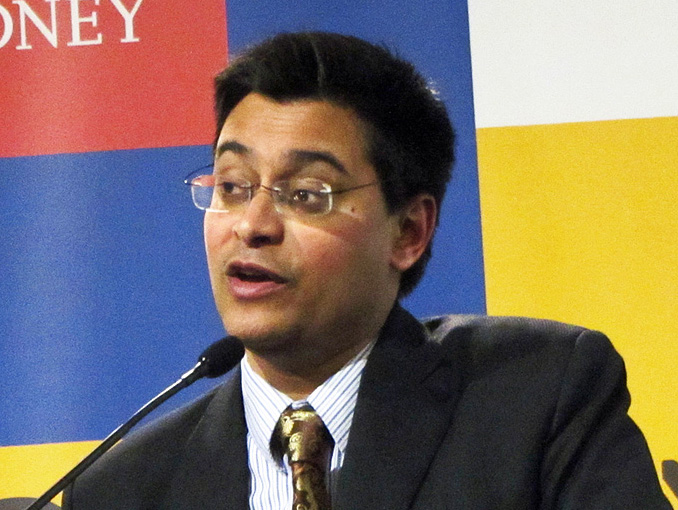
Our survey of British writers who explain China called Mitter the most public face of the academic historians, and gave a paragraph to his best-known books. This profile goes much deeper, following the pattern of our profile of Frank Dikötter and the history of China.
From Brighton to Cambridge
Rana Shantashil Rajyeswar Mitter was born in Cambridge on 11 August 1969 into a family of Indian Bengali descent, and grew up mostly near Brighton. Both his parents were academics. His father, Partha Mitter, is an art historian at the University of Sussex. His mother, Swasti Mitter, became a professor of gender and technology at the University of Brighton. He was educated at Lancing College and then at King’s College, Cambridge, where he read Oriental Studies (Chinese with Japanese) from 1988 to 1992 and took a first. The Cambridge Independent records that he was President of the Cambridge Union in 1991.
He has been candid that he did not choose China because he saw a superpower coming. In a 2022 interview with Quartz he recalled that, for a British Indian teenager on the south coast in the late 1980s, China was “tremendously remote”, and studying it was “a leap in the dark”. The killings around Tiananmen Square in June 1989 happened during his first year as an undergraduate. He spent that summer in Taiwan, wondering “whether this was the end of a story”.
He stayed at Cambridge for an MPhil in Chinese Studies and a doctorate, completed in 1996, on the Japanese occupation of Manchuria between 1931 and 1933. In 1993–94 he was a Kennedy Scholar at Harvard. The American historian Joseph Esherick has described Mitter as a student of Hans van de Ven, the Cambridge historian whose revisionist work on the Nationalist war effort would shape Mitter’s own.
Oxford, St Cross and the China Centre
In 1996 Mitter went to Oxford as Chiang Ching-kuo Junior Lecturer at the Institute for Chinese Studies. After two years teaching history at the University of Warwick (1999–2001), he returned in 2001 as a university lecturer and Fellow of St Cross, a graduate college whose governing body he would sit on for more than two decades. In 2008 he became Professor of the History and Politics of Modern China. He taught both politics and history, a dual role his work has kept ever since.
Administrative posts followed. He was Director of the University of Oxford China Centre from 2013 to 2020 and Vice-Master of St Cross from 2014 to 2017. In October 2022 he became the college’s interim Master for up to a year, while also serving as the British Academy’s Vice-President for Public Engagement.
In 2023 he left Oxford for the Harvard Kennedy School, where he holds the S.T. Lee Chair in US–Asia Relations. The move of a historian of the 1940s to a school of government says much about how history now shapes arguments over China.
The Manchurian Myth
His first book, The Manchurian Myth: Nationalism, Resistance and Collaboration in Modern China (University of California Press, 2000), grew out of the doctorate. It examines the three years after September 1931, when Japan’s Kwantung Army seized the north-east and set up the puppet state of Manchukuo. For the setting, see how Harbin became China’s ice city and our history of the Aisin Gioro clan, which explains how Puyi became Manchukuo’s figurehead.
The “myth” is the story that later became orthodox: savage Japanese imperialism met by heroic, unbroken Chinese resistance. Mitter did not deny it; he had written about Ma Zhanshan’s stand in Heilongjiang. But he asked why some Chinese resisted while most did not, and how scattered fighting became a national legend. His answer pointed to exile groups such as the Northeast National Salvation Society, which campaigned from Beiping and turned the deeds of a few guerrillas into the property of the whole nation. One reviewer noted that he borrowed the term “resistancialism” from Henry Rousso’s study of how France remembered Vichy. Lucian Pye, in Foreign Affairs, called it a “carefully researched and densely written study of a delicate subject”. He concluded that “the myths of resistance masked the long-suppressed reality of widespread Chinese collaboration”.
It received an Honourable Mention for the Royal Historical Society’s Gladstone Prize in 2001, and it set out the questions Mitter has asked ever since: how resistance and collaboration work under occupation, and who tells the story afterwards.
A Bitter Revolution and the long May Fourth
A Bitter Revolution: China’s Struggle with the Modern World (Oxford University Press, 2004) took a far wider view. It opens on 4 May 1919, when students protested in Beijing against the Versailles settlement that handed Germany’s former rights in Shandong to Japan. The day itself is covered in our article on the May Fourth Movement and modern China, and the warlord politics behind it in the broken republic. Mitter’s interest was in what came after.
His argument is about continuity. Most histories treat 1949 as the great dividing line. Mitter argued instead that the May Fourth generation’s questions, about science, democracy, Confucian tradition and openness to the world, kept returning under Nationalists and Communists alike. As Bradley Winterton summarised it in the Taipei Times, the Cultural Revolution appears as a retrograde, anti-modernising episode, and Deng Xiaoping’s reforms as a return to the long project of modernisation. The ferment of the 1980s, including the 1988 television series Heshang (River Elegy), appears as a revival of May Fourth questioning.
Winterton called Mitter “anti-theoretical, non-confrontational, and generally empirical”. He suggested that some readers might miss “the contentious bite” of a more partisan history. Prize juries were warmer. The book won the Times Higher Education Supplement Young Academic Author of the Year award in 2005. It was also a finalist for the British Academy Book Prize. Mitter later compressed the same long view into Modern China: A Very Short Introduction (2008). Its third edition (2025) covers the Xi era.
Recovering the forgotten ally
The book that made his name beyond universities appeared in 2013. In Britain it was published as China’s War with Japan, 1937–1945: The Struggle for Survival, and in the United States as Forgotten Ally: China’s World War II. A Leverhulme Research Leadership Award of about £800,000 (2007–12) funded much of the research. The war’s main events are told in our history of the war that remade China.
The inherited story, as Esherick describes it, came from Theodore White and Annalee Jacoby’s Thunder Out of China (1946) and above all Barbara Tuchman’s Stilwell and the American Experience in China (1971). In those accounts Chiang’s regime was corrupt and passive, hoarding American aid for the coming fight with the Communists. Van de Ven had already attacked this “Stilwell–White paradigm” in academic work. Mitter took the attack to a general readership, opening with a call for a “comprehensive and complete reinterpretation” of the war.
His case has three parts. The first is endurance. From July 1937 until December 1941 China fought largely alone, losing its coastal cities, its capital and much of its best farmland, but it did not surrender. The second is cost: upwards of fourteen million Chinese dead and as many as eighty million refugees. The third is the unfairness of the alliance. Esherick cites Mitter’s figures: China tied down more than 600,000 Japanese troops while receiving about 1.5 per cent of Lend-Lease aid in 1941–42 and 0.5 per cent in 1943–44. Mitter turned American complaints back on their authors. In his phrase, they assumed “that China should act as if it were a first-rank ally while being treated as a third-rank one”.
At the book’s centre is the wartime capital, Chongqing. Its later story is told in how Chongqing became a province-sized city, and the capital of 1938 in how three towns became Wuhan. Ronald Spector, reviewing the book in MHQ, called Chongqing “probably the most bombed Allied city in Asia”. Mitter’s portrait of Chiang is sympathetic without being flattering; our profile of Chiang Kai-shek follows his life before and after the war. Stilwell comes off far worse. As World War II magazine reported, Mitter’s verdict is that Chiang “played an appallingly bad hand much better than might have been expected”. When the book won the Royal United Services Institute’s Duke of Westminster’s Medal for Military Literature for 2014, the chair of the judges said Chiang “takes centre-stage in this history, the man with all his vision and faults”.
Collaboration, famine and terror
The book is not a simple defence of Chiang. Some of its strongest chapters cut the other way. Mitter covers the breaching of the Yellow River dikes in 1938, the Henan famine of 1942–43 and brutal conscription. A chapter titled “States of Terror” argues that the Nationalist, Communist and collaborationist governments all relied on state terror. That meant Dai Li’s secret police, the collaborationist killers at 76 Jessfield Road in Shanghai, and Kang Sheng’s purges in Yan’an.
Esherick judged the most original element to be Mitter’s use of the diary of Zhou Fohai, a senior figure in Wang Jingwei’s collaborationist regime in Nanjing. Mitter presents Wang and Zhou not as simply “pro-Japanese”. He shows them as believers in a pan-Asian future who “saw themselves as the truest patriots”. Speaking to the Los Angeles Review of Books, he said Wang would never be rehabilitated in China, but that his motives could be understood. The human side of the same war appears in our articles on the university that walked and on the Soong sisters.
China’s Good War and the politics of memory
Memory had been Mitter’s other subject since a 2000 China Quarterly article on the war museum near Beijing’s Marco Polo Bridge. That work came together in China’s Good War: How World War II Is Shaping a New Nationalism (Belknap Press of Harvard University Press, 2020).
The argument starts with a puzzle. For three decades after 1949 the People’s Republic said little about the war beyond celebrating Communist guerrillas. The Nationalists had done most of the conventional fighting, and Chiang, not Mao, had sat with Roosevelt and Churchill at Cairo in 1943. From the 1980s scholars, filmmakers, curators and eventually party leaders found a more inclusive story useful. Mitter borrows the political scientist Rogers Smith’s idea of “ethically constitutive stories”. In his words, China “has recently constructed such a story of its own modern genealogy, which presents the country not only as powerful, but as just and moral” with the war “at the point of origin”.
The new story recasts China as a victor rather than only a victim. That sits uneasily beside the older narrative of national humiliation discussed in our article arguing that the century of humiliation is a political chronology, not a mood. It presents China as a co-founder of the post-1945 order, from the United Nations to Bretton Woods, and so as that order’s natural defender today. Mitter regards this revisionism as relatively benign. But it requires what he calls a “Schrödinger-like” view of Chiang. Beijing must treat the Nationalists’ wartime and post-war claims, including those in the South China Sea, as legitimate, while insisting that the Communist defeat of the Nationalists in 1949 was also justified.
The book is most vivid where memory escapes official control. In Chongqing, where the war story is mainly a Nationalist one, Sichuan’s sacrifices can now be celebrated after years of being played down. Then there is The Eight Hundred, a blockbuster about Nationalist soldiers defending a Shanghai warehouse in 1937. As Jonathan Chatwin recounted in the China Channel, it was pulled from the opening of the Shanghai International Film Festival in June 2019 after criticism from a “red culture” group, and released only in August 2020. “The uneasy balance between allowing a more inclusive history and trying not to damage the mythos of the CCP’s history,” Mitter wrote, “continues.”
Much public discussion of the war, Mitter writes, “is not really about Japan at all; it is about China and what it thinks about its own identity today”. Compare our argument that China’s fear of chaos makes sense when you know its history.
A voice on Radio 3
Many British listeners first met Mitter on the radio. For years he was a regular presenter of BBC Radio 3’s evening ideas programme, Night Waves, later renamed Free Thinking. The BBC’s profile still calls him a “regular Free Thinking presenter”. He presented the Radio 4 series Chinese Characters and Radio 3 Sunday Features including Japan’s Never-Ending War and Goodbye Confucius. A later documentary, Meanwhile in Beijing, is on BBC Sounds. The same plain explaining shows in his books; Spector praised the “clear and compelling prose” of the war history.
Prizes and honours
Mitter’s main honours, in order:
- 2004 Philip Leverhulme Prize
- 2014 RUSI Duke of Westminster’s Medal for Military Literature
- 2015 Fellow of the British Academy
- 2019 OBE for services to education
- 2019 Leverhulme Major Research Fellowship (2019–22)
- 2020 Historical Association’s Medlicott Medal
The RUSI medal was for China’s War with Japan, which was also shortlisted for the Asia Society’s Bernard Schwartz Book Award, named a book of the year by the Financial Times and The Economist, and later translated into Chinese in both mainland China and Taiwan. He is also a Fellow of the Royal Historical Society. Because of the pandemic, the Medlicott Medal was presented in September 2021, when he lectured on how new Asia’s “new era” really is.
Explaining China to the West
Mitter’s commentary on present-day China has grown alongside his history. He writes for the Guardian, the Spectator, The Critic and Foreign Affairs, where recent essays have examined the intellectual roots of Xi Jinping Thought (2024) and how political change might one day come to Beijing (2025).
His position is consistent, and deliberately in the middle. In 2020 he and Sophia Gaston wrote After the Golden Age: Resetting UK-China Engagement for the British Foreign Policy Group. The report rejected both the uncritical commercial enthusiasm of the Cameron–Osborne “golden era” and disengagement, and called for relations that were “confident, friendly and frank”. In 2021 he and Elsbeth Johnson wrote “What the West Gets Wrong About China” for the Harvard Business Review. It identified three Western misconceptions: that economic growth brings democracy, that authoritarian systems cannot be legitimate, and that Chinese people live, work and invest the way Westerners do.
In the Quartz interview he put it plainly. Britain, he said, tends to treat China either as “a massive market” or as “the new Soviet Union”. He argued that the greatest obstacle to China’s rise is China itself, “because China is a strong country, which is acting as if it were a weak country”. He called it “absolutely imperative” to keep Chinese students in British universities, where the Mao era can be taught more freely than in China. Describing himself as “just a guy who writes books about the 1940s”, he said cutting off engagement would be “entirely counterproductive”.
Reception and criticism
Esherick’s 2016 review essay in the Journal of Chinese History called Forgotten Ally “the best available general history of the conflict”, and then made three objections. Mitter followed van de Ven’s revisionism closely. He said little about why the Communists grew from perhaps 40,000 soldiers to around a million during the war, treating them mainly through the Yan’an terror. And the book contained factual slips, such as describing the Normandy landings as still to come when Stilwell was recalled in autumn 1944. Esherick called these “minor flaws in an otherwise exemplary study”.
Spector, a military historian, came at it from the other side. The book’s one shortcoming, he wrote, was “the author’s lack of familiarity with the larger picture concerning World War II strategy and military operations”. Mitter had used few primary sources on Allied strategy and had underplayed the role of the US Joint Chiefs of Staff. He had also put Stilwell’s conduct down to animus towards Chiang, overlooking Stilwell’s genuine concern with reopening China’s supply line.
On China’s Good War, Jessica Chen Weiss of Cornell, writing in Foreign Affairs, praised a “deft, textured work of intellectual history”. She noted, though, that it only hinted at why the party polices wartime history strictly at some moments and loosely at others. A. E. Clark, in the American journal Law & Liberty, admired its “clarity informed by thorough research” but disputed two points. He argued that Mitter reported as fact a Communist claim that American advisers had tortured prisoners at an interrogation centre outside Chongqing, a claim Clark said the writer Xujun Eberlein had disproved. He also thought Mitter’s criticism of Donald Trump for weakening the post-war liberal order overrated how liberal that order had become. Taken together, the critics suggest where his limits lie. He is strongest on politics, ideas and memory, and weaker on military operations and on the rural revolution that brought the Communists to power.
Mitter and Dikötter compared
Frank Dikötter works from the archive upwards, using party files to show what Communist rule did to those who lived under it, with the dead at the centre. Mitter works mostly before 1949, on the Nationalist state as much as the Communist one, asking how states were built, how wars were fought and how they were remembered. Dikötter is unflinching about suffering; Mitter is more acute on legitimacy and the stories that hold a state together. For the civil war that lies between their main subjects, see our discussion of what Red Dawn over China argues about the Communist victory and the road to Tiananmen.
How to read Mitter
Start with China’s War with Japan (Forgotten Ally in the United States). It is his fullest and most readable book. China’s Good War follows naturally. For the whole century, take A Bitter Revolution, or the 2025 edition of the Very Short Introduction if time is short. The Manchurian Myth is for specialists.
More is on the way. His Harvard CV lists a book under contract on China between 1945 and 1949, provisionally titled The War That Changed Asia and expected in 2027. In 2022 he described a project drawing on the diaries of Chinese statesmen of the late 1940s and early 1950s. Titles and dates may change, but the thread will not. His argument all along has been that China’s twentieth century cannot be understood without the war, and China’s present cannot be understood without the way it remembers that war.