In 2014 Huawei became the first Chinese company to appear in Interbrand’s annual list of the world’s 100 best global brands, at 94th place. Twelve years later the picture looks very different. Kantar’s 2026 ranking of the most valuable global brands puts Tencent eighth, with a brand value of US$251.6 billion, and Brand Finance’s Global 500 for 2026 includes 68 Chinese brands worth a combined US$1.56 trillion, second only to the United States. This did not happen all at once. It grew out of shop names that go back to the Ming and Qing dynasties, the bicycles and watches of the planned economy, two decades of making goods for other people’s labels, and a long effort by companies and the state to turn manufacturing strength into names that consumers recognise and will pay for. This article traces that development and then describes twenty-two of the most important Chinese brands today.
Several of these companies have their own articles on huaxia.click, including Build Your Dreams on BYD, Xiaomi Is More Than China’s Samsung and DJI and the Machine in the Sky, while Why China Moved Up the Value Chain looks at the economics of moving beyond assembly. This piece takes a wider view.
The Time-Honoured Names
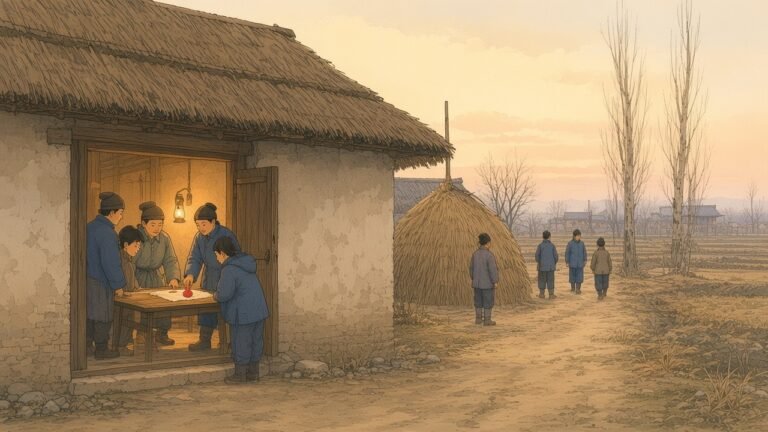
China had brands long before it had modern companies. Merchants hung signboards bearing a shop name, or zihao, and the reputation of that name passed from one generation to the next. The oldest that still trade are known as laozihao, “old names”. The pharmacy Tongrentang was founded in Beijing in 1669 by Yue Xianyang, opened its shop at Dashilan, just outside Qianmen, in 1702, and from 1723 supplied medicine to the Qing court for 188 years. Quanjude, the roast duck restaurant, dates from 1864.
The state now keeps an official register. The Ministry of Commerce certified “China Time-honoured Brands” in two batches, in 2006 and 2011. In 2023 it reviewed those lists, removed 55 brands and ordered 73 to make improvements within six months. In February 2024 it added a third batch of 382, which brought the total to 1,455. The third batch included Qingfeng, the steamed bun chain, and Hero, the Shanghai pen maker. Many laozihao are small and local, but the list shows how much official value is placed on continuity of name.
Brands of the Planned Economy
After 1949 private enterprise was gradually absorbed by the state, but brand names did not disappear. State factories kept, revived or invented trademarks, and a few became nationally famous because they were among the few consumer goods worth wanting. In the 1960s and 1970s households aspired to the “three big items”: a bicycle, a sewing machine and a wristwatch.
Bicycles were the most important. Forever (Yongjiu) of Shanghai grew from the Changhe Works, set up in 1940 by a Japanese owner as the city’s first bicycle factory. Accounts differ on exactly when the Yongjiu name was adopted, at the end of 1949 or in 1951, but by 1952 the factory was making a third of China’s bicycles. Between 1949 and 1992 it built some 60 million. Watches came later. In 1955 a small workshop in Tianjin produced China’s first domestically made wristwatch, under the Wuxing (“Five Star”) name. The factory went on to make the D304 aviation chronograph for the air force in 1963, and from 1974 sold its watches as Seagull, a name it still uses for mechanical watches.
Footwear produced the most enduring example. Warrior (Huili) began in Shanghai in 1927 as a rubber shoe factory, and its bilingual trademark was registered in the mid-1930s; sources give both 1934 and 1935. From the 1960s to the early 1980s its canvas trainers were worn across the country. From the mid-1980s such brands looked old-fashioned beside imports, but several later revived as retro fashion, and Warrior trainers are now sold abroad as a design item.
Reform and the Workshop of the World
Reform after 1978 brought foreign investment, joint ventures and, above all, export manufacturing. In the 1980s and 1990s much of the coast became a vast workshop working to foreign orders. Factories in the Pearl River Delta and the Yangtze Delta made goods to other companies’ designs and sold them under other companies’ names, a model known as original equipment manufacturing (OEM). Membership of the World Trade Organization in 2001 accelerated it. On World Bank figures China overtook the United States as the world’s largest manufacturer in 2010, and by 2024 it accounted for 28 per cent of global manufacturing value added.
The weakness of the OEM model was that most of the profit went to whoever owned the design and the brand. A Chinese factory might assemble a phone or a trainer, but the margin went to the company whose name was on it. “Made in China” came to mean cheap and dependable in volume, but it seldom meant a brand customers would choose. The cities that grew up around this trade, especially Shenzhen, nevertheless built up the suppliers, engineers and managers that later Chinese brands would rely on.
Haier and the Quality Turn
The best-known story of the shift towards quality comes from Qingdao. In 1984 the city government appointed Zhang Ruimin to run a loss-making collective refrigerator factory. In 1985, after a complaint from a customer, he inspected the warehouse and found that 76 of its refrigerators were defective. Instead of selling them at a discount, as was normal, he had them lined up and smashed with sledgehammers, swinging the first blow himself and making the workers responsible destroy the rest. The factory later became Haier. In 2009 the National Museum of China accepted one of the sledgehammers into its collection, as item number 092.
The story is told so often because it captured a real problem: in the 1980s Chinese consumer goods had a reputation for poor quality, even at home. Companies that built strong brands in the 1990s, such as Haier in appliances, Hisense in televisions and Lenovo in computers, did so first in the domestic market, by offering reliability and after-sales service that state factories and early imports often did not.
Qingdao produced a second national brand in the same years. Hisense grew out of the Qingdao No. 2 Radio Factory, a state-owned plant set up in September 1969 that made radios and, from the early 1970s, small runs of black-and-white televisions. Zhou Houjian took charge in 1992, and the business adopted the Hisense name and was reorganised as a group in 1994. It then expanded into air conditioners and refrigerators, learning much of its trade by licensing technology from foreign firms such as Matsushita, Hitachi and Toshiba.
Buying Brands Abroad
The next step was to buy names that foreign consumers already knew. The landmark deal was Lenovo’s purchase of IBM’s personal computer division, completed on 1 May 2005. Lenovo paid IBM US$1.25 billion in cash and shares, took on about US$500 million of liabilities, and gained the ThinkPad brand along with a large international business; IBM received an 18.9 per cent stake in Lenovo. Many observers doubted that a Chinese firm could manage a famous American brand. It did, and in 2014 it also bought Motorola Mobility from Google for about US$2.91 billion.
Others followed. Zhejiang Geely bought Volvo Cars from Ford in 2010 for an agreed US$1.8 billion. Midea bought 80.1 per cent of Toshiba’s home appliance business in 2016 and took control of the German robot maker KUKA in January 2017. Haier bought GE Appliances in June 2016 for US$5.6 billion. Hisense agreed in November 2017 to buy 95 per cent of Toshiba’s television business, with a licence to keep using the Toshiba name, and in June 2018 a takeover bid raised its holding in the Slovenian appliance maker Gorenje to 95.42 per cent. In each case the buyer kept the foreign brand and its management, and used the purchase to gain technology, distribution and credibility abroad.
The Internet Giants
A separate group of brands grew up online, often in the gap left by restrictions on foreign internet companies. Tencent was founded in Shenzhen in November 1998 and launched its QQ messaging service in 1999. Alibaba was founded in Hangzhou in 1999 and went on to create the Taobao and Tmall marketplaces. Baidu became the leading search engine. When Alibaba listed in New York in September 2014 it raised about US$25 billion, at the time the largest flotation in history. Tencent launched Weixin, known abroad as WeChat, in January 2011, and it became the country’s everyday tool for messaging, payment and much else.
These companies built some of the most valuable brands in the world almost entirely at home, by serving a market of more than a billion people. Their main international presence came later, through ByteDance’s TikTok, Alibaba’s AliExpress and cloud business, and Tencent’s investments in foreign games companies. They also attracted the attention of regulators. Ant Group’s planned US$37 billion listing was suspended in November 2020, and in April 2021 Alibaba was fined a record 18.2 billion yuan for anti-competitive practices.
The State Takes an Interest
From the mid-2010s branding became an explicit policy aim. On 10 May 2014, visiting a tunnel-boring machine factory in Zhengzhou, Xi Jinping called for “three shifts”: from made in China to created in China, from Chinese speed to Chinese quality, and from Chinese products to Chinese brands. In April 2017 the State Council approved a proposal from the National Development and Reform Commission to make 10 May “China Brand Day” each year, and it has since been marked with exhibitions and promotions. The laozihao review of 2023 to 2024 belongs to the same effort, as does official support for brands seen as national champions in technology and manufacturing.
Guochao, the National Trend
The state push coincided with a change in consumer taste. Young Chinese, who had grown up with foreign brands, began to favour domestic ones, particularly products that used Chinese design, history and imagery. This became known as guochao, the “national trend”. A frequently cited moment came in February 2018, when the sportswear company Li-Ning showed a collection at New York Fashion Week, with Chinese characters and red, black and gold streetwear, under the label “China Li-Ning”. The response at home was enthusiastic.
The trend spread to cosmetics, food, toys and tea drinks. A report published by Baidu and People’s Daily Online on China Brand Day in 2021 found that searches related to guochao had risen 528 per cent over ten years. Older names benefited as well, among them Warrior trainers, Feiyue plimsolls and soft drinks such as Beibingyang, which joined the laozihao list in 2024. Price, design and national pride all played a part.
Going Global Online
The newest wave of Chinese brands went abroad through e-commerce and social media rather than through shops and distributors. Shein sold fast fashion directly to consumers in the West through its own app and website, backed by thousands of small suppliers in Guangzhou. PDD launched Temu in the United States in September 2022 and grew it with heavy advertising. TikTok, the international version of ByteDance’s Douyin, became one of the most downloaded apps in the world, and its shop function became a sales channel in its own right. Smaller online-first brands, such as Anker in chargers and EcoFlow in portable power, followed the same route. The story of the parcels themselves is told in The Parcel at the Door.
Behind these well-known names is a long tail of smaller Shenzhen device makers that few Western shoppers have heard of. Two of the more established are Oukitel and Doogee, both launched as brands in 2013. Oukitel, the trading name of Shenzhen Yunji Intelligent Technology, comes from a group that made phones for other companies’ labels in India, Pakistan and Spain before pushing its own name abroad in 2015; it says its products have been sold on Amazon, AliExpress and more than 50 other online platforms since then. Doogee, owned by Shenzhen Kavid (KVD) Communication, tested Europe through Spain, where in 2014 it became the official smartphone supplier of Villarreal CF. Both later settled on rugged phones: thick, waterproof handsets with very large batteries, lamps or thermal cameras, aimed at builders, farmers and campers. Oukitel has added portable power stations and solar panels. TechRadar’s reviewer called Oukitel’s WP56, priced at about £219 in 2025, “one of the best rugged phones I’ve ever tested”. Doogee’s S200 Max, with a 22,000mAh battery, is sold through Amazon in Britain and the United States. Neither company publishes audited figures, and claims such as Doogee’s 50 million overseas users cannot be checked independently. What matters is the method: Shenzhen’s supply chain, a narrow niche and online marketplaces let a small firm build a brand abroad without shops or distributors of its own.
At the same time older industrial companies began to sell under their own names. China exported 7.1 million vehicles in 2025, according to the China Association of Automobile Manufacturers, and was the world’s largest car exporter for the third year running. Many of those cars carried Chinese brands, such as Chery, BYD, Geely and MG, a British name now owned by SAIC.
Where Chinese Brands Rank Now
The two main brand valuation firms measure different things and produce different lists. Kantar BrandZ combines financial data with consumer surveys. Its 2026 global top 100, published in May, put Tencent eighth, back in the top ten for the first time since 2023. Shein (70th) and the bottled water company Nongfu Spring (81st) joined the list, and Kantar said Chinese brands grew by an average of 32 per cent in value during the year. Its separate ranking of the 100 most valuable Chinese brands, published in September, put Tencent first for the sixth year running at US$209.9 billion, followed by Alibaba (US$112.5 billion), Douyin (US$98.4 billion), Moutai, Huawei, Haier, ICBC, China Mobile, Ping An and the Agricultural Bank of China.
Brand Finance uses a royalty-based method and reaches different results. Its Global 500 for 2026, published in January, ranks TikTok/Douyin as China’s most valuable brand, at US$153.5 billion and sixth in the world, followed by State Grid (US$102 billion, tenth) and ICBC (US$90 billion, twelfth). It puts Tencent at only 27th, with US$52 billion, partly because it values WeChat separately at US$48 billion and rates it the second strongest brand in the world. Kantar also publishes a ranking of Chinese brands by their strength abroad. Its 2026 edition puts TikTok first, followed by Xiaomi, Shein, Lenovo, Huawei, Haier, AliExpress, Hisense, TCL and OPPO, with Chery the leading carmaker. The rankings disagree in detail, but both firms show Chinese brand values rising strongly.
The Main Brands
The following twenty-two are among the most important Chinese brands, chosen for their value, their reach abroad or their influence on how Chinese brands are seen. They are only the top of a much larger field that runs down to small online sellers such as Oukitel and Doogee. Figures are the latest available at the time of writing.
1. Tencent and WeChat
Founded in Shenzhen in 1998 by Ma Huateng (Pony Ma) and four partners, Tencent began with QQ and now runs WeChat, many of China’s most popular games, a payments business and a cloud division. Weixin and WeChat had 1.439 billion monthly active users in the second quarter of 2026, when Tencent’s revenue was 204.8 billion yuan for the quarter. Kantar ranks it China’s most valuable brand.
2. Alibaba
Founded by Jack Ma and a group of partners in Hangzhou in 1999, Alibaba runs Taobao and Tmall in China, AliExpress abroad, a logistics network and Alibaba Cloud, which also develops the Qwen family of AI models. Revenue for the year to March 2026 was 1,023.7 billion yuan (about US$148 billion). It is second in Kantar’s Chinese ranking.
3. ByteDance (TikTok and Douyin)
Zhang Yiming and Liang Rubo founded ByteDance in Beijing in 2012. It launched Douyin in 2016 and TikTok abroad in 2017, and in 2018 merged TikTok with Musical.ly, which it had bought. Brand Finance values TikTok/Douyin at US$153.5 billion. After years of dispute in Washington, a new TikTok USDS Joint Venture took over the American business in January 2026; Oracle, Silver Lake and MGX each hold 15 per cent and ByteDance retains 19.9 per cent. ByteDance is private, but Reuters reported in 2025 that its quarterly revenue had overtaken Meta’s.
4. Huawei
Ren Zhengfei founded Huawei in Shenzhen in 1987 with 21,000 yuan. It became the world’s largest maker of telecoms network equipment and then a major phone brand. It was placed on the US Entity List in May 2019, which cut it off from American chips and Google’s services, yet in 2023 it returned with the Mate 60 Pro, built around a 7nm chip made by SMIC. Revenue in 2025 was 880.9 billion yuan, with 192.3 billion yuan, or 21.8 per cent, spent on research and development.
5. Xiaomi
Lei Jun founded Xiaomi in Beijing on 6 April 2010. It made its name with good-value Android phones sold online and built a range of connected home devices around them. In 2024 it began selling cars. In 2025 it shipped 165.2 million smartphones and delivered 411,082 electric cars, and its revenue rose by a quarter to 457.3 billion yuan. Kantar ranks it the second strongest Chinese brand abroad.
6. Lenovo
Lenovo began in November 1984 when Liu Chuanzhi and ten colleagues from the Chinese Academy of Sciences set up a company with 200,000 yuan. It traded as Legend until 2003, when it adopted the name Lenovo for use abroad. After buying IBM’s PC business it became the world’s largest PC maker. IDC counted 70.8 million Lenovo PCs shipped in 2025, a 24.9 per cent share; Gartner, which counts differently, put its share at 27.2 per cent.
7. Haier
From the fridge factory where Zhang Ruimin took his sledgehammer to 76 refrigerators, Haier has grown into a multinational that owns GE Appliances in the United States, Fisher & Paykel in New Zealand and Candy in Italy. Euromonitor has ranked it the world’s top major appliance brand by volume for 17 consecutive years, from 2009 to 2025. Kantar values the brand at US$52.6 billion.
8. Hisense
Founded in Qingdao in 1969 as a state radio factory, Hisense is best known abroad for televisions, sold under its own name and under the Toshiba brand, and it also owns the European appliance maker Gorenje. It has made a speciality of very large screens and of laser televisions, which project the picture from a unit just in front of the wall. Omdia figures published by the company give it 57.1 per cent of world shipments of televisions of 100 inches and above in 2025, and 70.3 per cent of laser televisions. Counterpoint Research ranked it third in total television shipments in 2025, behind Samsung and TCL; Hisense, counting its brands together, reported 14 per cent of world shipments and second place in 2024. Group revenue in 2025 was 224.4 billion yuan. Much of its brand-building abroad has come through football: it sponsored the UEFA European Championship in 2016, which it describes as a first for a Chinese company, and every Euro since, as well as the World Cups of 2018, 2022 and 2026, and in September 2026 it signed up for Euro 2028. Announcing an earlier renewal, the group’s president, Fisher Yu, called sports sponsorship “a great way to build trust in our brand”. The group remains owned by the Qingdao government, although a 2020 reform brought private investors into its core electronics holding company.
9. Midea
Midea began in May 1968, when He Xiangjian and 23 residents of Beijiao in Shunde, Guangdong, raised 5,000 yuan to set up a small plastics workshop. It is now one of the world’s largest makers of air conditioners and household appliances and owns KUKA and the Toshiba appliance business. Revenue in 2025 was 458.5 billion yuan, of which 42.7 per cent came from abroad. It was the fastest-rising brand in Kantar’s 2026 Chinese ranking, with brand value up 54 per cent.
10. BYD
Wang Chuanfu founded BYD in Shenzhen in 1995 as a maker of rechargeable batteries. It bought a small carmaker in 2003, stopped making petrol-only cars in 2022, and in 2025 sold 4.6 million new energy vehicles, more than one million of them abroad. It is building factories abroad and is aiming for 1.3 million overseas sales in 2026. In the European Union its cars from China carry an extra countervailing duty of 17 per cent.
11. CATL
Contemporary Amperex Technology was founded by Robin Zeng in Ningde, Fujian, in 2011. It is not a consumer brand in the usual sense, but its batteries power cars sold under dozens of other names. SNE Research estimates that it supplied 39.2 per cent of the world’s electric vehicle batteries by capacity in 2025, well ahead of BYD in second place. Its Hong Kong listing in May 2025 raised about US$4.6 billion, the largest flotation of that year, and Brand Finance values its brand at US$30 billion.
12. Geely
Li Shufu founded Geely in 1986 to make refrigerator parts, and its first car left the line in 1998. Since buying Volvo Cars in 2010 the group has added Lotus, Polestar, Zeekr, Lynk & Co and a half share in Smart, and in 2018 Li bought 9.69 per cent of Daimler. Geely Holding’s brands sold 4.12 million vehicles in 2025, up 26 per cent.
13. Chery
Chery was set up by the city of Wuhu in Anhui in 1997, and its first car left the line in December 1999. It has been China’s largest car exporter for 23 consecutive years. In 2025 it sold a record 2.81 million vehicles, of which 1.34 million went abroad. In Britain it sells under the Omoda and Jaecoo names. It listed in Hong Kong in September 2025.
14. DJI
Frank Wang founded DJI in Shenzhen in 2006, and its Phantom, Mavic and Mini drones made it the best-known name in consumer drones, as well as a supplier to farmers, surveyors and film crews. In December 2025 the US Federal Communications Commission added foreign-made drones and their critical components, including DJI’s, to its Covered List, which prevents new models from being authorised for sale in America, although existing models can still be used.
15. Hikvision
Hikvision was set up in Hangzhou in November 2001 as a joint venture between a company controlled by the state-owned China Electronics Technology Group (CETC), a defence electronics conglomerate, and the Hong Kong investor Gong Hongjia. CETC remains its actual controller. It grew with China’s spending on public security and became the world’s largest maker of video surveillance equipment: the trade publication a&s ranks it first among security companies, with security product sales of US$12.87 billion in 2024, ahead of its Hangzhou rival Dahua. Revenue in 2025 was 92.5 billion yuan and net profit 14.2 billion yuan. Its links to the state have made it one of the Chinese brands most affected by Western restrictions. The United States added it to the Entity List in October 2019, saying it was implicated in the high-technology surveillance of Uyghurs and other Muslim minorities in Xinjiang, which China denies. The FCC put its equipment on the Covered List in March 2021 for public-safety, government and critical-infrastructure uses, and in November 2022 adopted rules that in effect stopped new Hikvision models from being approved for sale in the United States. In November 2022 the British government told departments to stop installing surveillance cameras from companies subject to China’s National Intelligence Law on sensitive sites, and in June 2025 Canada ordered Hikvision’s Canadian subsidiary to close. Hikvision rejects the security case against it, and said the Canadian decision “appears to be driven by the parent company’s country of origin”.
16. Moutai
Kweichow Moutai makes the sorghum spirit named after the town of Maotai in Guizhou. The state distillery was formed in the early 1950s from three private distilleries, and its Feitian bottle is a fixture of banquets and business gifts. Kantar ranks Moutai the fourth most valuable Chinese brand, at US$82.1 billion. Its revenue fell by 1.2 per cent in 2025, to 168.8 billion yuan, and the wholesale price of Feitian dropped below its official guide price of 1,499 yuan in December, widely read as a sign of weaker demand for luxury gifts.
17. Li-Ning and Anta
Li Ning, who won three gold medals in gymnastics at the 1984 Olympics, founded his sportswear company in 1990; its revenue in 2025 was 29.6 billion yuan. Anta, from Jinjiang in Fujian, registered its brand in 1991 and has become far larger by buying foreign names: Fila in China in 2009, and, through a consortium in 2019, Amer Sports, owner of Arc’teryx, Salomon and Wilson, of which Anta is now the largest shareholder. Anta’s revenue in 2025 was 80.2 billion yuan. In January 2026 it agreed to buy 29.06 per cent of Puma for about €1.5 billion, a deal expected to close by the end of the year.
18. Shein
Xu Yangtian (Chris Xu) started the business that became Shein in Nanjing in 2008, and it adopted the Shein name in 2015. It now has its headquarters in Singapore. Revenue in 2025 was US$41.85 billion, though profit fell by 38.7 per cent, and it reported a loss in the first quarter of 2026, blamed partly on US tariffs and partly on a one-off accounting charge. After an attempt to list in London, it floated in Hong Kong on 1 September 2026, raising US$1.74 billion, and its shares fell on the first day of trading.
19. Temu and PDD
Colin Huang founded Pinduoduo in 2015, built on group buying and very low prices in China’s smaller cities. Its parent, PDD Holdings, launched Temu in the United States in September 2022 and reports that it now operates in nearly 100 markets. PDD’s revenue in 2025 was 431.8 billion yuan. Both Temu and Shein were hit when the United States ended duty-free treatment of low-value parcels from China on 2 May 2025.
20. Pop Mart
Wang Ning opened Pop Mart in Beijing in 2010 as a shop selling fashionable gifts, and it later moved into collectible designer toys sold in “blind boxes”, where the buyer does not know which figure is inside. Its biggest success is Labubu, a grinning creature created by the Hong Kong-Dutch artist Kasing Lung, which became a global craze in 2025. Revenue that year rose 185 per cent to 37.1 billion yuan, and 43.8 per cent came from outside mainland China.
21. Mixue
Zhang Hongchao started Mixue with a shaved-ice stall in Zhengzhou in 1997. Selling ice cream and tea drinks at very low prices through franchises, it had about 60,000 outlets by the end of 2025, roughly 4,500 of them abroad, mostly in Southeast Asia. That is more outlets than McDonald’s, although its sales are far smaller. It listed in Hong Kong in March 2025 and has opened its first stores in the United States.
22. Luckin Coffee
Luckin opened its first shops in 2017 and grew fast with app-based ordering and discounts. In 2020 it admitted that staff had fabricated about 2.2 billion yuan of sales, and it was delisted from Nasdaq. It survived under new management and overtook Starbucks to become China’s largest coffee chain. By 30 June 2026 it had 36,310 stores, almost all of them in China, with a small but growing number in Singapore, Malaysia and the United States.
Challenges
The first challenge is trust abroad. A Pew Research Center survey of 25 countries in 2025 found a median of 36 per cent with a favourable view of China and 54 per cent unfavourable, although opinion had improved since 2024 in 15 of the countries. Attitudes to the country affect attitudes to its brands, especially in technology, where Western governments raise concerns about data and security. Huawei, TikTok, DJI and Hikvision have all been restricted in the United States on those grounds, and Hikvision has also been restricted in Britain and Canada, which the company attributes to its country of origin rather than to its products.
The second is trade policy. Since October 2024 the European Union has applied countervailing duties of up to 35.3 per cent, depending on the maker, to electric cars made in China, on top of its standard 10 per cent tariff. The United States has raised tariffs on many Chinese goods and closed the low-value parcel exemption that Shein and Temu relied on. Chinese carmakers have responded by building factories in Europe, Turkey, Southeast Asia and Latin America, and consumer companies by moving warehouses and suppliers closer to their customers.
The third is quality and reputation. Luckin’s accounting fraud, safety complaints about cheap online goods and fierce price wars at home have all reinforced the old association of Chinese goods with low prices. The fourth is premium positioning: few Chinese brands command luxury prices outside China. Moutai’s falling wholesale price and the volatility of Pop Mart’s shares show how quickly demand for premium Chinese goods can change.
Outlook
On current trends, Chinese brands will keep gaining ground. Kantar found them growing faster than the global average in 2026, and several of the brands that have grown fastest abroad, such as Pop Mart, Mixue and Chery, were little known outside China a few years ago. Chinese companies are also increasingly buying or building brands outside China, as Anta has done with Amer Sports and plans to do with Puma, and Geely with Volvo, so the line between a Chinese brand and a global one is becoming harder to draw. At the other end of the scale, small Shenzhen firms such as Oukitel and Doogee show that a Chinese brand can now reach customers abroad with little more than a niche product, a dependable supply chain and a marketplace listing.
The path has been unusual. The time-honoured names showed that loyalty to a name had deep roots in China, and the export decades built the factories and skills. Haier and Lenovo proved that Chinese companies could compete on quality and manage foreign names, and the internet giants that they could build brands as valuable as any. The task now is to win the trust of customers abroad as well as their custom.
References
- Apple still world’s top brand, as Huawei enters rankings, CNET, October 2014
- Revealed: the world’s most valuable global brands in 2026, Kantar, May 2026
- Kantar BrandZ Most Valuable Global Brands 2026, Kantar
- Seven brands enter China’s Kantar BrandZ Top 100, Kantar, 9 September 2026
- Made in China: how Chinese brands are redefining global growth, Kantar, 2026
- 2026凯度BrandZ中国全球化品牌50强发布 (2026 Kantar BrandZ Chinese Global Brand Builders), Kantar, July 2026
- TikTok/Douyin: World’s sixth most valuable brand in 2026, Brand Finance, 20 January 2026
- China’s top 500 brands cross the $2 trillion mark, TikTok/Douyin remains at the top, Brand Finance, 2026
- 老字号里话非遗:同仁堂中医药文化 (Tongrentang), China Intangible Cultural Heritage Network
- 百年记忆 (A century of memories), Quanjude Group
- 第三批中华老字号382个品牌正式认定公布 (Third batch of China Time-honoured Brands), Xinhua via gov.cn, 1 February 2024
- 第三批中华老字号名单 (List of the third batch), Ministry of Commerce and four other departments, February 2024
- 自行车王国中的“永久”王牌 (Forever bicycles), Yangpu District People’s Government, Shanghai, November 2023
- Tianjin Seagull, Grokipedia
- Warrior (shoes), Grokipedia
- 回力历史 (Warrior history), Warrior Shoes
- Manufacturing, value added (current US$), World Bank
- 海尔大锤成为国家文物 (The Haier sledgehammer becomes a national relic), Haier, April 2009
- 中国国家博物馆收藏砸掉不合格冰箱的“海尔大锤”, CCTV/China News Service, 23 April 2009
- Hisense, Grokipedia
- Lenovo Completes Acquisition of IBM’s Personal Computing Division, Lenovo, May 2005
- Lenovo Completes Acquisition of Motorola Mobility from Google, Lenovo, October 2014
- Liu Chuanzhi on Rebuilding the Lenovo Brand, Knowledge at Wharton
- China’s Legend gets new name, CNET, 2003
- Zhejiang Geely Completes Acquisition of Volvo Car Corporation, Volvo Cars, August 2010
- Toshiba and Midea Agree on the Transfer of Toshiba’s Home Appliances Business, Toshiba, 30 March 2016
- Midea completes acquisition of German robot maker Kuka, S&P Global Market Intelligence, January 2017
- GE Completes Sale of Appliances Business to Haier, GE, June 2016
- Regarding the Signing of Share Purchase Agreement for the Sale of Shares of Toshiba Visual Solutions Corporation, Toshiba, 14 November 2017
- After a successful takeover bid, Hisense will own 95-percent of Gorenje, Gorenje via MarketScreener, 28 June 2018
- Our story, Tencent
- Alibaba IPO ranks as world’s biggest after additional shares sold, Reuters, September 2014
- Key events behind China’s investigation into Alibaba Group, Reuters, December 2020
- China fines Alibaba record $2.75 bln for anti-monopoly violations, Reuters, 10 April 2021
- 习近平在河南考察 (Xi Jinping’s inspection in Henan), Xinhua via gov.cn, 10 May 2014
- 国务院关于同意设立“中国品牌日”的批复 (State Council approval of China Brand Day), gov.cn, May 2017
- 李宁把时装秀办到了纽约 (Li-Ning takes its show to New York), Toodaylab, February 2018
- 百度发布国潮骄傲搜索大数据报告 (Baidu guochao search report), China Securities Journal, 10 May 2021
- China’s e-commerce giant Pinduoduo launches U.S. shopping site Temu, CNBC, 2 September 2022
- About OUKITEL, Oukitel
- Oukitel, Grokipedia
- Oukitel Brand launch in Malaysia, MAXIT, 21 March 2017
- About DOOGEE, Doogee
- Doogee, nou col·laborador oficial del Villarreal CF (Doogee, new official partner of Villarreal CF), Villarreal CF, February 2014
- Oukitel WP56 rugged phone review, TechRadar, 4 July 2025
- Doogee S200 Max rugged phone review, TechRadar, 9 November 2025
- China’s auto output, sales reach new highs in 2025, Xinhua, 14 January 2026
- Tencent Announces 2026 Second Quarter Results, Tencent, August 2026
- Alibaba Group Announces March Quarter 2026 and Fiscal Year 2026 Results, Alibaba Group (SEC filing), May 2026
- China’s Bytedance scrubs Musical.ly brand in favor of TikTok, Reuters, August 2018
- Announcement from the new TikTok USDS Joint Venture LLC, TikTok, January 2026
- ByteDance surpasses Meta, Reuters, 17 July 2025
- Mr. Ren Zhengfei, Huawei
- Huawei Releases 2025 Annual Report, Huawei, 31 March 2026
- Addition of Entities to the Entity List, Federal Register, 21 May 2019
- TechInsights Finds SMIC 7nm (N+2) in Huawei Mate 60 Pro, TechInsights, 2023
- Annual Results Announcement for the Year Ended December 31, 2025, Xiaomi Corporation, March 2026
- IDC: PC Sales Rose 8.1 Percent in 2025, Thurrott.com, January 2026
- Gartner Says Worldwide PC Shipments Increased 9.1% for the Full Year 2025, Gartner, 20 January 2026
- Haier ranks first in global sales for 17th consecutive year, China Daily, January 2026
- Hisense Leads Global TV Shipments in 2025 Across 100-Inch+ and Laser TVs, Hisense via PR Newswire, 4 March 2026
- TCL overtook Samsung in December, but Samsung held the top spot for 2025, FlatpanelsHD (Counterpoint Research data), 17 February 2026
- 海信集团:2025年营收2244亿元 (Hisense Group: 2025 revenue 224.4 billion yuan), Guandian, 5 March 2026
- Hisense becomes UEFA Men’s National Team Football partner until 2026, UEFA, 1 September 2023
- Hisense Extends Long-Term UEFA Partnership as Official Partner of UEFA EURO 2028, Hisense via PR Newswire, 3 September 2026
- 青岛海信混改完成审计评估正式挂牌 (Qingdao Hisense mixed-ownership reform formally listed), SASAC, 27 October 2020
- 关于美的 (About Midea), Midea Group
- Annual Results Announcement for the Year Ended 31 December 2025, Midea Group, March 2026
- BYD sells 4.6 million vehicles in 2025, meets revised sales goal, The Business Times, January 2026
- BYD aims for 1.3 million overseas sales in 2026, CnEVPost, 24 January 2026
- From Jan to Dec 2025, Global EV Battery Usage Posted 1,187GWh, SNE Research, 2026
- EV battery maker CATL shares surge in Hong Kong after $4.6 billion IPO, AP, 20 May 2025
- Geely Founder Li Shufu is a New Shareholder of Daimler AG, Geely, February 2018
- Geely Holding Brands 2025 Sales Reach Record 4.11m Units, Up 26% YoY, Zhejiang Geely Holding Group, 8 January 2026
- 奇瑞集团2025年销量280.6万辆,出口134.4万辆 (Chery Group 2025 sales and exports), Chery Holding, January 2026
- Chery Group sells record 2,806,393 units in 2025, Paul Tan’s Automotive News, 5 January 2026
- Chery Automobile makes $1.2bn HKEX IPO debut, FinanceAsia, September 2025
- Addition of Uncrewed Aircraft Systems and UAS Critical Components Produced Abroad to FCC Covered List (DA 25-1086), Federal Communications Commission, 22 December 2025
- 海康威视12年暴涨1.7万倍 (Hikvision’s 17,000-fold rise in 12 years), China Securities Journal, 6 June 2013
- Hangzhou Hikvision Digital Technology 2025 Annual Report (English version), Hikvision via Sina Finance, April 2026
- 2025 a&s “全球安防50强”榜单公布 (2025 a&s Security 50 ranking), a&s, 18 November 2025
- Addition of Certain Entities to the Entity List, Federal Register, 9 October 2019
- List of Equipment and Services Covered By Section 2 of The Secure Networks Act, Federal Communications Commission
- FCC Bans Authorizations for Devices That Pose National Security Threat, Federal Communications Commission, 25 November 2022
- UK government bans new Chinese security cameras, BBC News, 24 November 2022
- Canada orders China’s Hikvision to close Canadian operations over security concerns, CBC News, 28 June 2025
- 贵州茅台酒股份有限公司2025年年度报告摘要 (Kweichow Moutai 2025 annual report summary), April 2026
- Kweichow Moutai, The Teardown
- Annual Results Announcement 2025, Li Ning Company, March 2026
- Annual Results Announcement 2025, ANTA Sports, March 2026
- ANTA Sports to Acquire 29% Stake in PUMA, ANTA Sports, 27 January 2026
- About us, ANTA
- Chris Xu: Who is Shein’s mysterious billionaire founder?, The Guardian, 30 July 2022
- Shein flags tariff hits after posting loss ahead of Hong Kong IPO, CNBC, 26 July 2026
- Shein prices Hong Kong IPO below top end of range, raises $1.74 billion, Reuters, 31 August 2026
- Shein shares slide in Hong Kong debut, Reuters, 1 September 2026
- PDD Holdings Announces Fourth Quarter 2025 and Fiscal Year 2025 Unaudited Financial Results, PDD Holdings, 25 March 2026
- PDD (Temu parent) Q4 2025 earnings call transcript, Momentum Works
- De Minimis Restrictions for China and Hong Kong Effective May 2, 2025, US Customs and Border Protection
- Annual Results Announcement for the Year Ended 31 December 2025, Pop Mart International Group, March 2026
- Shares of Labubu maker Pop Mart plunge after reporting annual earnings, Reuters, 25 March 2026
- Can Pop Mart cash in on America’s cuteness craze?, Fortune, May 2024
- Annual Results Announcement 2025, Mixue Group, March 2026
- This boba shop from one of China’s poorest areas has more outlets than McDonald’s or Starbucks, CNN, 3 March 2025
- Luckin Coffee stock plummets after probe finds COO fabricated sales, CNBC, 2 April 2020
- China’s Luckin Coffee back from brink and beating Starbucks, The Straits Times
- Luckin Coffee Announces Second Quarter 2026 Financial Results, Luckin Coffee, 3 August 2026
- International Views of China Turn Slightly More Positive, Pew Research Center, 15 July 2025
- EU Commission imposes countervailing duties on imports of battery electric vehicles from China, European Commission, October 2024